




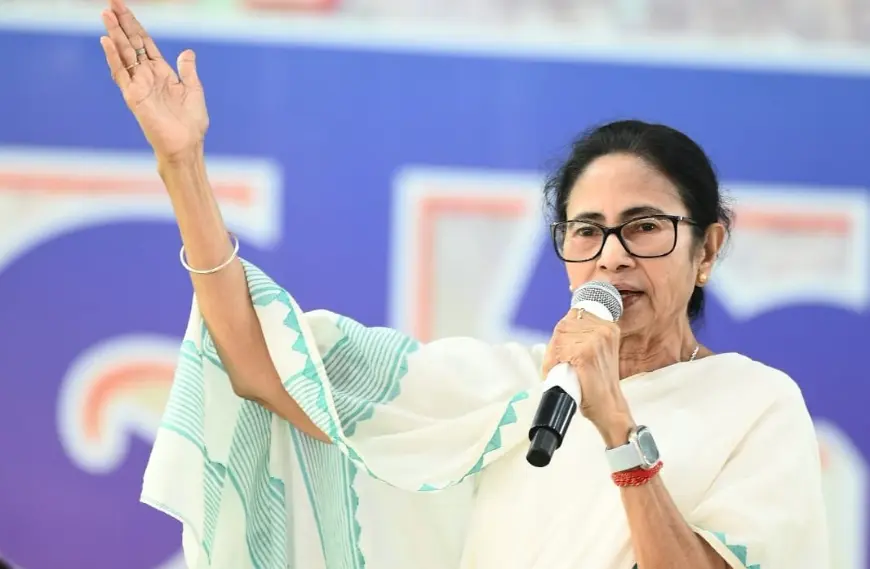
West Bengal’s political climate intensified on Thursday as CM Mamata Banerjee issued a sharp warning over the ongoing West Bengal SIR controversy, vowing to stage a dharna if even one legitimate voter is removed from the electoral rolls. Addressing supporters at a rally in Krishnanagar, she accused the Election Commission of deploying officials with partisan leanings and using the Special Intensive Revision (SIR) exercise to influence the political landscape ahead of the 2026 Assembly polls.
The renewed stand-off between the state government and the Election Commission comes as the nationwide SIR enters its second phase. The exercise, which follows a similar revision in Bihar, covers 12 states and Union Territories, including West Bengal. The Trinamool Congress has consistently challenged the SIR’s timing and intent, alleging that the process is designed to benefit the Bharatiya Janata Party.
Banerjee, who has long framed the issue as a direct threat to voter rights, told the crowd she has deliberately avoided filling in her own enumeration form. “Why should I have to prove my citizenship to a party that thrives on creating division?” she asked, taking an evident swipe at the BJP leadership. Her comments reflect a broader political battle in the state over identity, documentation, and the legitimacy of voters on Bengal’s rolls.
At the rally, Banerjee further claimed that officials from Delhi with an inclination towards the BJP were being sent to supervise district magistrates during SIR hearings. She argued that such steps erode the impartiality expected from the Election Commission and are intended to shape the electoral environment in favour of her opponents. According to Banerjee, this aligns with what she described as a long-running campaign to classify Bengalis as non-citizens and push them towards detention centres.
The Election Commission, meanwhile, has revised the SIR timeline for West Bengal, shifting the final publication of the electoral rolls to 14 February 2026. The Commission said the extension was necessary due to the extensive enumeration work and the need for thorough verification across polling stations. The announcement comes at a sensitive moment, adding further urgency to the ongoing debate over how the SIR is being implemented on the ground.
Banerjee did not hold back in her criticism of Union Home Minister Amit Shah, calling him “dangerous” and alleging that his political approach threatens the state’s social fabric. She argued that the SIR had been turned into a political tool just months before a crucial election cycle, accusing the Centre of prioritising electoral gains over democratic fairness.
Her warning was unmistakable: “If even a single eligible voter’s name is deleted, I will sit on a dharna. There will be no detention camps in West Bengal. They are so desperate for votes that they are conducting the SIR barely two months before elections.”
With Assembly polls scheduled for the first half of 2026, the confrontation between the TMC and the Election Commission is expected to intensify. The West Bengal SIR controversy has already evolved into a major flashpoint, raising questions about administrative neutrality, citizenship documentation, and the future direction of Bengal’s politics.
As the revision process continues, both sides appear firmly entrenched. For now, Banerjee’s warning sets the stage for a prolonged and politically charged dispute that may shape the state’s electoral terrain in the months ahead.
Subscribe Deshwale on YouTube
