 Deshwale
Why does wooden furniture crack in winter?
In brief · AI summary Wooden furniture cracks and doors gap in winter because wood swells when humid air adds moisture during the monsoon and shrinks when that moisture is lost. Indoor heating dries the air further, and wood shrinks unevenly, creating tension that splits surfaces and loosens joints. Keeping humidity steady, moving furniture away from heaters, and sealing all sides of wooden pieces can help limit the damage.
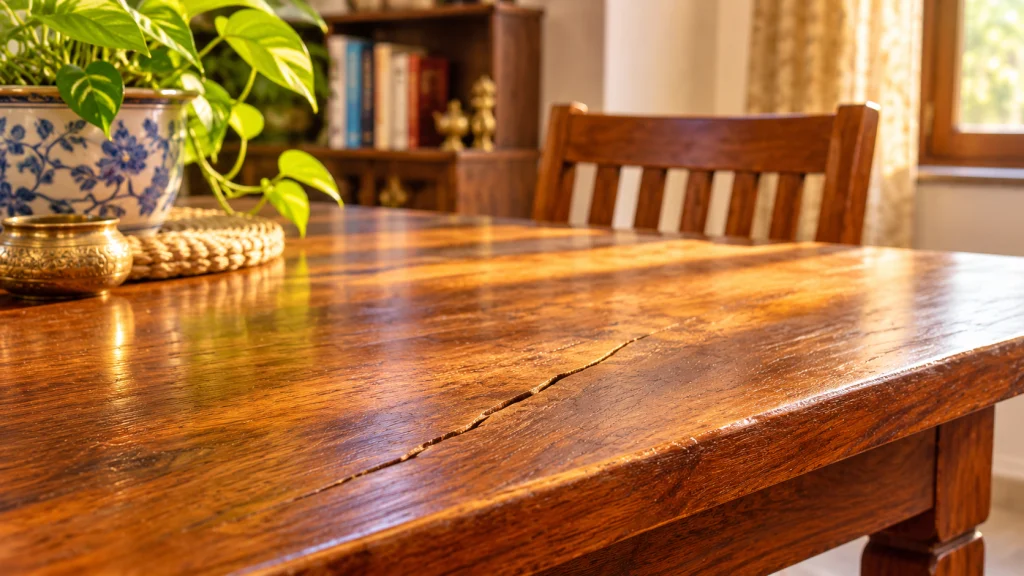
A few months ago, you probably had to lean your shoulder into the bedroom door just to get it shut. Now that the weather has cooled, the same door closes with barely a push, but there is a thin strip of light showing along its edge. Maybe the dining table has a new hairline crack, or the old chair has started creaking.
It is easy to blame the carpenter. But in most homes, this is simply the other half of a yearly cycle. Wood swells when the air is damp and shrinks when it dries out, and the shrinking phase is often the one that leaves a mark.
To understand why, it helps to know that wood never really stops behaving like a living material. It is hygroscopic, which means it keeps soaking up moisture from the air and giving it back. A cupboard made twenty years ago is still doing it today.
Every piece of wood is constantly trying to match the moisture level of the air around it. When the air is humid, the fibres take in water and expand. When the air turns dry, they let that water go and contract. Experts call this balance point the equilibrium moisture content.
Through the monsoon, humidity in much of India stays high for weeks. Doors, beds and tables slowly drink in that moisture and swell. Once the rains are gone, the air loses its dampness, and the wood begins to give the water back. That is when things start to shrink.
Here is what most people get wrong. Winter air outdoors is not always bone-dry. In Delhi, for example, humidity in December and January is fairly moderate, and those foggy mornings can feel downright damp. The capital’s driest weeks actually arrive in April and May.
The real trouble usually starts inside the house. An electric room heater or blower warms the air but adds no moisture to it. Warm air can hold far more water than cold air, so the relative humidity in a heated room falls sharply. That thirsty air pulls moisture from your skin, your plants and your teak sideboard.
Now put the two together. Wood that was swollen with monsoon moisture a few months ago is suddenly sitting in a warm, dry room for hours every evening. A table beside a heater or sunny window gets the worst of it.
If wood shrank evenly in every direction, your table would just get a tiny bit smaller. The catch is that wood moves very unevenly. Along its length, it hardly changes at all, but across its width it can shrink many times more. It even shrinks about twice as much along its growth rings as it does across them.
That uneven pull creates tension inside the wood. Imagine a solid tabletop screwed or glued firmly to its frame. As it tries to shrink, it has nowhere to go, so the stress builds up until the wood gives way along the grain. That is your crack.
The surface also dries faster than the inside. The outer layer wants to shrink while the core stays put, and tiny cracks called checks can open up on top. A crack may narrow when the air turns humid again, but it never truly heals.
Joints suffer too. As the parts of a chair or bed shrink, the joinery holding them together loosens. That explains the wobble and the creaking that seem to show up every winter.
All of this is also why carpenters tell you not to plane or trim a swollen door during the monsoon. If you shave it down in July to make it fit, it will shrink once the air dries, leaving an ugly gap by December. You end up solving a temporary problem with a permanent fix.
Solid wood made from timber that was not properly seasoned tends to suffer the most, because it still has extra moisture to lose. Plywood, engineered boards and well kiln-dried timber move less, though they are not completely safe. Veneer joints and edges can still lift or split if the finish is poor.
The good news is that you only need to keep the change slow and gentle. Wood is happiest when the humidity around it stays fairly steady, somewhere between 40 and 60 per cent.
Start by moving wooden furniture a few feet away from heaters, fireplaces and spots that get harsh direct sunlight. If the heater runs for long hours, a humidifier can put some moisture back into the room. A cheap hygrometer will tell you exactly how dry your room has become.
Check that every side of a wooden piece, including the underside and back, is properly polished or sealed. Bare patches lose moisture faster and make the wood shrink unevenly. And resist the urge to fill seasonal gaps in a door with putty, because they may close up again once the humid months return.
If a crack keeps getting wider or a joint feels loose, get a carpenter to look at it soon. A small repair done early is far cheaper than replacing a piece you love.
Subscribe Deshwale on YouTube