





Homoeopathy, the world’s second-largest medical system, is set to take center stage as India hosts its largest-ever Homoeopathic symposium on World Homoeopathy Day, observed annually on April 10th.
A Tradition of Healing
Rooted in the principle of “like cures like,” homoeopathy has been a trusted healing approach for over two centuries. In India, it holds significant importance, with more than 100 million people depending on this treatment.
India’s Homoeopathic Landscape
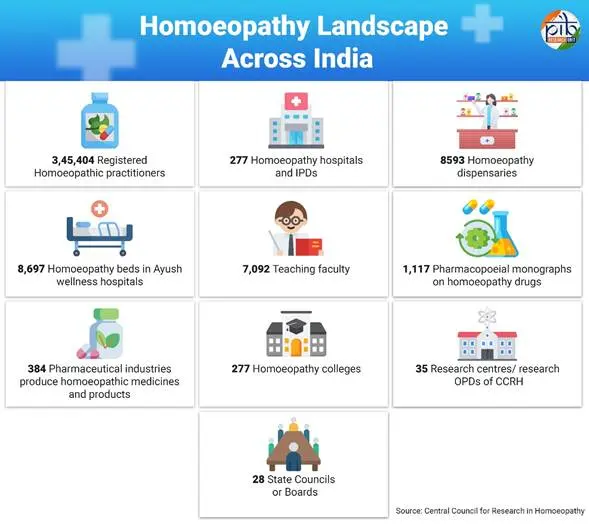
The country boasts:
- 3.45 lakh registered homoeopathy doctors
- 277 homoeopathy hospitals
- 8,593 homoeopathy dispensaries
- 277 homoeopathy educational institutions
This robust infrastructure underscores India’s commitment to holistic healthcare.
Regulatory Advancements
The National Commission for Homoeopathy (NCH) now regulates education and practice, replacing the earlier 1973 Act with the modern 2020 Act. This shift aims to modernize and reform homoeopathic education, practice, and research through a transparent and scientifically-driven regulatory framework.
Research and Quality Assurance

The Central Council for Research in Homoeopathy (CCRH) operates over 35 research centers and outpatient departments, advancing evidence-based homoeopathy. Additionally, the Pharmacopoeia Commission for Indian Medicine & Homoeopathy (PCIM&H) ensures high-quality medicines through standard pharmacopoeias and testing labs.
Symposium Highlights
The symposium, held at the Mahatma Mandir Convention & Exhibition Center in Gandhinagar, Gujarat, features insightful discussions, groundbreaking research presentations, and the country’s largest homoeopathy industry exhibition. It’s a vibrant platform for innovation, collaboration, and global recognition of Indian homoeopathy
