



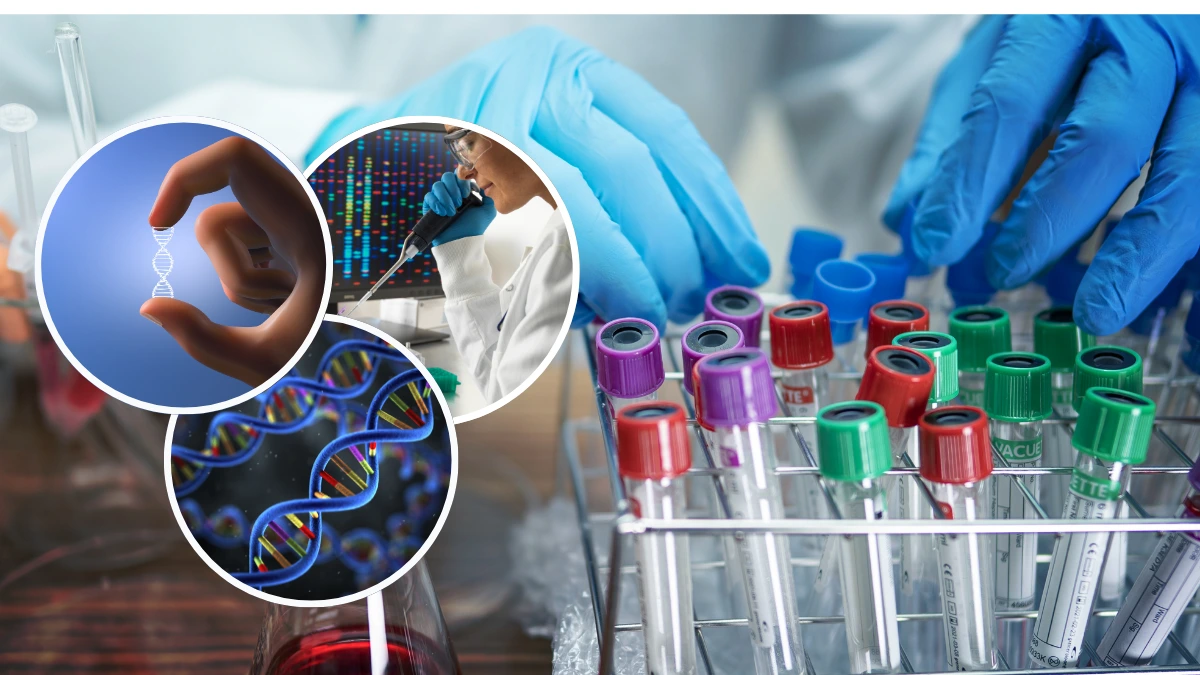
Ever thought about how police or forensic teams figure out who someone was when there’s no ID, no phone, and no clue at all? It sounds like a movie, but it happens more than you’d think. And the real hero in this story is something most of us don’t even notice: DNA.
So, what is DNA?
DNA, short for deoxyribonucleic acid, is the instruction manual for your body. It’s a chemical code found in nearly every single one of your cells. This code tells your body how to grow, function, and look, from the colour of your eyes to how tall you are. Think of it like a biological fingerprint. It’s unique to you. You get half your DNA from your mum and the other half from your dad. That’s why close relatives often look alike and share certain health traits. It’s also the key to identifying someone when all else fails.
When there’s no face, no name, just clues
Now imagine this. A body is found, but it’s not in good shape. Maybe it’s been a while. Maybe it’s been through harsh conditions. Whatever the case, it’s unrecognisable. You can’t tell who the person is by looking. Fingerprints? Not always possible. So, scientists collect what they can: a tooth, a bit of bone, or any tissue, and get to work.
They extract the DNA from those samples and create a genetic profile. Think of it like solving a code. But cracking the code isn’t enough. You need a reference — something or someone to compare it with.
This is where the family steps in
If someone’s reported missing, their family members might be asked for a DNA sample, usually a quick swab inside the cheek. Scientists compare the family’s DNA with the body’s DNA. If there’s a strong match, it could mean that the body belongs to their loved one. And because close relatives share a lot of DNA, this match can be surprisingly accurate.
Even if it’s not a direct parent or child, scientists can look for matches with siblings, cousins or even more distant relatives. The technology today is sharp enough to catch those links.
More than just solving crimes
This isn’t only about crime scenes. DNA identification is also used after natural disasters, in war zones, plane crashes or when unidentified remains turn up years later. It helps give families answers, especially when they’ve been left wondering and waiting for far too long.
But it’s not always smooth. Sometimes the DNA sample is too damaged. Sometimes no family reference is available. In those cases, it can take time, and even then, the identity might stay unknown.
Still, the success rate is going up every year thanks to better technology and growing DNA databases. What used to take months now sometimes takes days.
Silent but powerful
So the next time you see a news story about a body finally being identified, there’s a good chance that behind the scenes, DNA quietly did the hard work. It doesn’t make headlines often, but for the families who finally get closure, it means everything.
DNA isn’t just science.
It’s connection.
It’s truth.
And sometimes, it’s the only thing left to speak for someone when no one else can.
