



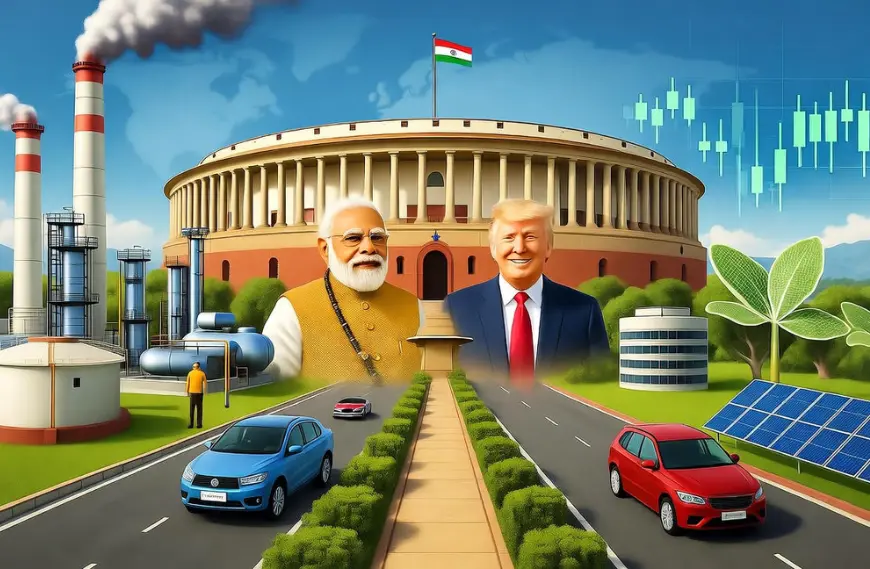
In response to U.S. President Donald Trump’s recent claim that Prime Minister Narendra Modi assured him India would cease purchasing Russian oil, the Indian government has firmly reiterated its commitment to safeguarding national interests. The Ministry of External Affairs (MEA) emphasized that India’s energy import policies are guided primarily by the need to protect the interests of Indian consumers in a volatile global energy market. Ensuring stable oil supplies at affordable prices remains a top priority for the country.
India’s decision to continue importing discounted Russian crude oil has attracted considerable international attention. Despite pressure from Western nations, India has consistently maintained that energy security and affordability take precedence over external influence. The government’s stance underscores a pragmatic approach, balancing geopolitical considerations with the economic realities faced by its citizens. Ensuring access to energy is not just an economic issue but a matter of national security, critical for sustaining industrial growth and household needs.
The U.S. administration’s decision to impose a 25% punitive tariff on Indian goods, citing national security concerns over oil imports from Russia, has added another layer of complexity to bilateral trade relations. India regards these measures as unfair and unjustified. Officials have made it clear that India’s oil import decisions are independent and guided strictly by national interests, including energy security and economic stability, rather than external pressures or political expectations.
Domestically, the issue has sparked a political debate. The opposition has criticized the government, alleging that India is yielding to U.S. demands. Congress leader Rahul Gandhi questioned the autonomy of India’s foreign policy, suggesting that decisions on critical issues like energy imports should be free from external influence. This debate highlights the delicate balance India must maintain between domestic expectations, international relations, and long-term strategic interests.
Energy analysts note that India’s approach reflects a broader strategy of safeguarding national sovereignty while managing global partnerships. By diversifying energy sources, negotiating favorable deals, and prioritizing domestic economic needs, India demonstrates a firm commitment to independent decision-making in the international arena. Russian oil plays a significant role in ensuring stable supplies at competitive rates, which directly benefits Indian consumers and industries.
In conclusion, India’s stance on energy imports demonstrates a clear commitment to national sovereignty and pragmatic policymaking. By prioritizing consumer welfare, economic stability, and energy security, India asserts its right to make independent decisions even under external pressures. This approach reaffirms the nation’s dedication to protecting its interests while navigating a complex global energy landscape, maintaining both economic resilience and geopolitical balance.
Also Read: YouTube Down: A Reminder of How Much We Depend on It
Subscribe Deshwale on YouTube
