



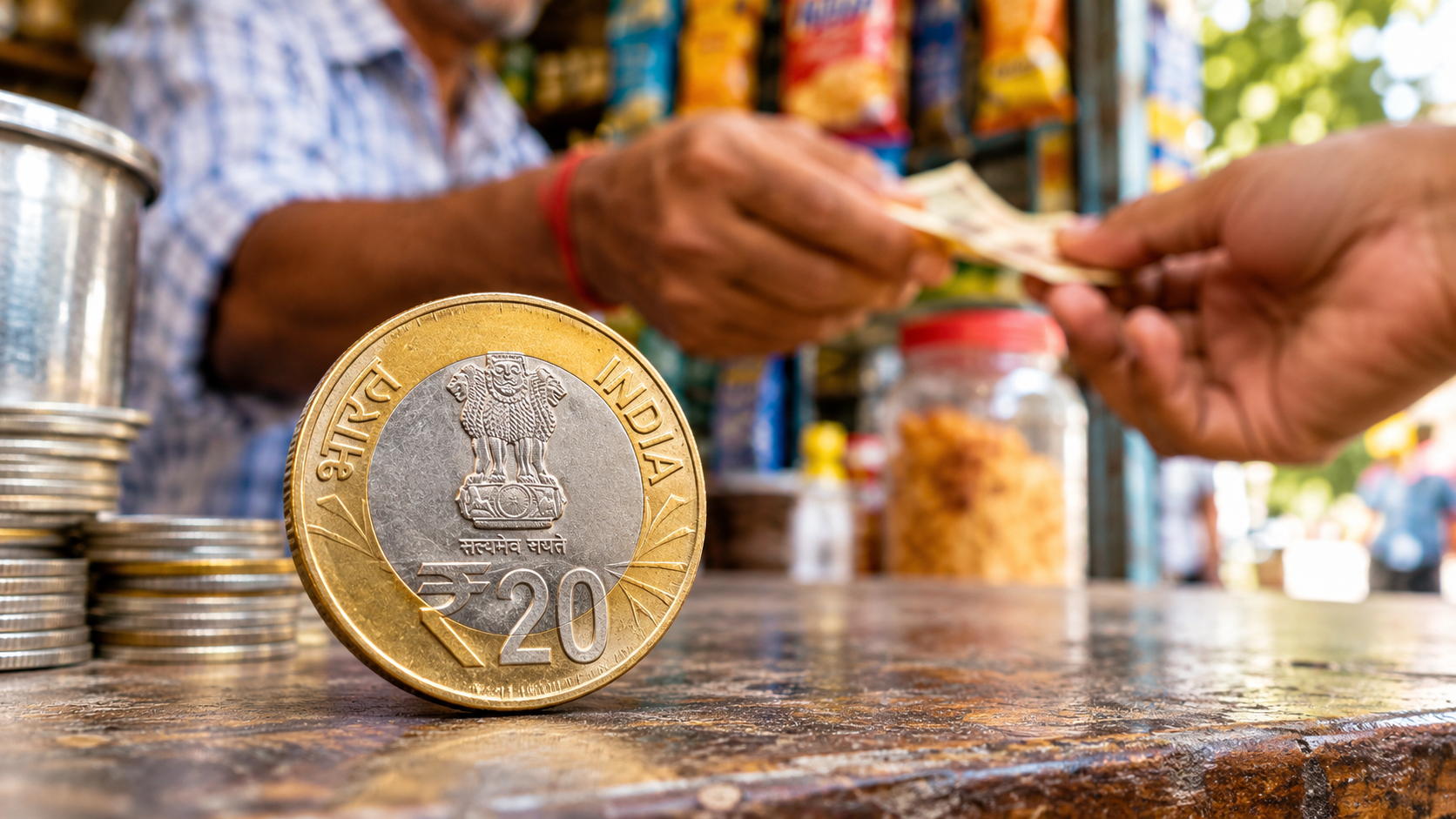
A ₹20 coin may not seem like much. It can pay for a small purchase, help someone get change at a shop or sit unnoticed in a wallet for days. We handle such coins almost every day without giving them a second thought. We trust that the money we receive is genuine.
But what happens when that everyday trust is misused?
A police investigation in Uttar Pradesh has brought attention to an alleged counterfeit ₹20 coin network that reportedly operated across several states. The case is a reminder that even something as familiar as a coin depends on a larger system of trust, responsibility and public confidence.
How the investigation unfolded
According to police reports, the investigation involved operations by both Delhi Police and Saharanpur Police.
On 8 September 2026, Delhi Police intercepted a man named Paras Jain near Mundka Industrial Area in Delhi. Police said they recovered 5,000 counterfeit ₹20 coins from his car, with a total face value of ₹1 lakh. During questioning, Jain allegedly identified Upkar Luthra as the person from whom he had obtained the coins.
A few days later, on 13 September, Saharanpur Police intercepted five men who were allegedly shifting heavy machinery from Sonipat in Haryana to Uttar Pradesh. Police recovered six machines, 6,400 counterfeit ₹20 coins worth ₹1.28 lakh and unfinished coins estimated to have a face value of around ₹5 lakh.
Investigators said the group had allegedly been operating a coin-making unit in Sonipat for around 10 months under the cover of a screwdriver manufacturing business.
The investigation continued after these arrests. Saharanpur Police later arrested Mithlesh Chaurasia in Madhubani, Bihar. Police said he was allegedly involved in arranging raw materials and labourers. This brought the number of arrests in the Saharanpur case to six. Delhi Police also made formal arrests in its connected investigation.
How were the coins allegedly made?
According to investigators, the group used heavy machines, metal rings and specially prepared dies to manufacture coins resembling genuine ₹20 pieces.
Police said the accused claimed they could produce between 10,000 and 12,000 coins a day. They also claimed that the network had circulated counterfeit coins worth more than ₹70 crore.
However, these figures have not been independently verified. Police said they could not confirm the claimed daily production capacity because the machines were not running when they were seized.
Investigators also said the coins were allegedly passed through intermediaries and distributed in different places, including small shops, toll plazas and local markets. The investigation is examining how far the network extended and how many coins may have entered circulation.
Who makes the coins we use?
There is an important difference between banknotes and coins in India. The Government of India is responsible for designing and minting coins under the Coinage Act, 2011. The country’s four government mints are located in Mumbai, Kolkata, Hyderabad and Noida. The Reserve Bank of India distributes the coins supplied by the government and puts them into circulation.
This system involves several stages, from manufacturing to distribution. It helps ensure that the coins people use every day meet official standards.
Why does this matter to ordinary people?
Most people do not examine every coin they receive. A shopkeeper may accept it while serving a customer, a bus passenger may use it for a fare, and a small vendor may collect several coins during a busy day.
That is why the issue goes beyond the value printed on a coin. Money works because people trust that it can be accepted and used by others. When counterfeit currency enters circulation, it can create difficulties for ordinary people and small businesses who may unknowingly receive it.
The case does not mean that people should become suspicious of every ₹20 coin. It does, however, show why proper investigation, public awareness and reliable currency systems matter.
A coin is small enough to disappear into a pocket, but the trust behind it is much bigger. Every time we make a payment, we depend on that trust. Protecting it is a responsibility shared by institutions, businesses and the wider public.
Subscribe Deshwale on YouTube
