



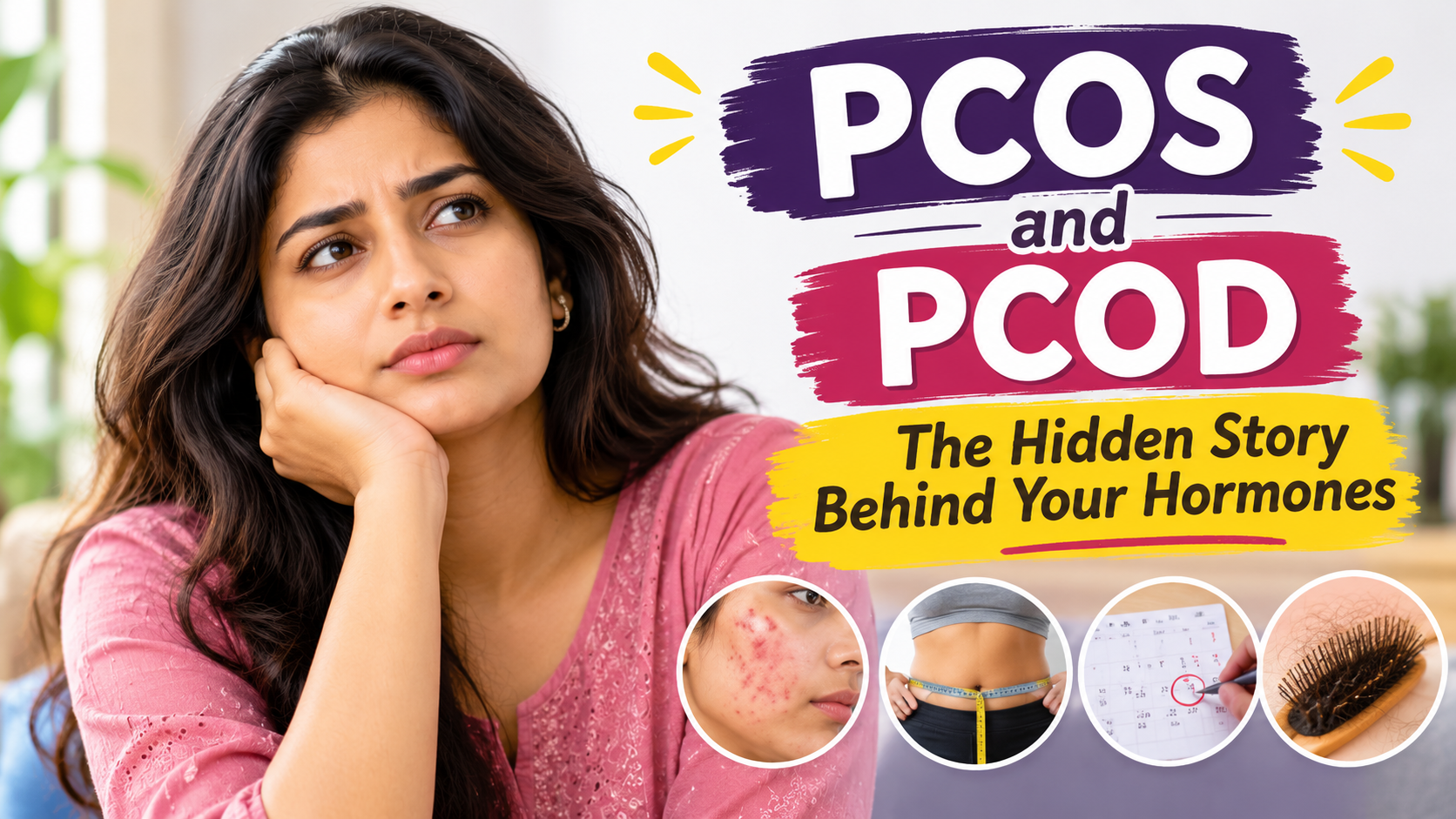
Almost everyone knows a woman with PCOS or PCOD. Maybe it is a cousin whose periods never arrive on time, or maybe it is you. Yet very few of us understand what is actually happening inside the body.
Let us start with a big update. In May 2026, a global consensus published in The Lancet renamed polycystic ovary syndrome (PCOS) as polyendocrine metabolic ovarian syndrome, or PMOS. The old name had been called misleading for years.
Why? The word “polycystic” made people think the problem is cysts on the ovaries. In reality, the so-called cysts seen on an ultrasound are small, immature follicles, not harmful cysts. Many women with the condition do not have such ovaries at all.
The new name tells the real story. “Polyendocrine” means several hormones are involved. “Metabolic” points to how the body handles sugar and energy. “Ovarian” stays because the ovaries are still part of the picture.
The rename matters for a practical reason too. Experts say the old name contributed to delayed diagnosis, scattered care and stigma. A name that reflects the whole body encourages doctors to look at the whole body.
So what goes wrong inside? Every month, the ovaries are supposed to release an egg. This needs a delicate balance of hormones. In PCOS, that balance is disturbed, and eggs are not released regularly.
One major reason is excess androgens, often called male hormones. All women make small amounts of them. In PCOS the levels rise, which can disturb ovulation and cause acne, extra hair on the face and body, and thinning hair on the scalp.
The second big player is insulin. This is the hormone that helps your cells use sugar from food. Many women with PCOS have insulin resistance, which means the body needs more insulin to do the same job.
Extra insulin can push the ovaries to make even more androgens. This keeps the cycle going, and it is why PCOS is now seen as a hormonal and metabolic condition, not just an ovarian one.
How does this show up in daily life? The most common sign is irregular periods. Some women have fewer than eight periods in a year. Others get them every 21 days or even sooner, and some stop having periods altogether.
Other signs include acne, weight gain or difficulty losing weight, and darkening of the skin on the neck folds, groin or under the breasts. Small skin tags can also appear.
Not everyone has all of these signs. The condition looks different in every woman, which is one reason so many cases are missed. The WHO estimates that up to 70 percent of women with PCOS worldwide do not know they have it.
Now, what about PCOD? In India, the two terms are often used as if they mean different things. Many people describe PCOD as milder and PCOS as more serious.
But the global diagnostic criteria do not set out PCOD as a separate condition. They describe one syndrome, which now has one new name. What matters more than the label is how severe your symptoms are and what your tests show.
So if a doctor tells you that you have PCOD, ask about your hormone levels, your blood sugar and your cycle history. Those details tell you far more than the name does.
How is it diagnosed? Doctors use the Rotterdam criteria. A diagnosis needs at least two of three features: irregular or absent ovulation, high androgen levels, and polycystic ovaries on an ultrasound.
High androgens can be shown by symptoms or by a blood test. An ultrasound alone cannot confirm the condition, and doctors also rule out other problems that cause similar symptoms.
The effects go well beyond the ovaries. Women with PCOS face a higher risk of insulin resistance, type 2 diabetes, high blood pressure, abnormal cholesterol and heart disease. Anxiety and depression are also more common in women with PCOS.
Fertility worries are real, but PCOS does not mean you cannot become a mother. It is a common and treatable cause of infertility. Many women conceive, some naturally and some with medical help.
You are also far from alone. Globally, PCOS affects about 10 to 13 percent of women of reproductive age. In India, a nationwide ICMR-backed study of women aged 18 to 40 found PCOS in about 7 percent by one set of criteria and nearly 20 percent by the Rotterdam criteria.
It is a lifelong condition, so treatment focuses on managing symptoms and preventing complications. Healthy eating, regular exercise and, where needed, weight management often help.
Doctors may also prescribe birth control pills to regulate periods, anti-androgen medicines for excess hair growth, or metformin to improve insulin sensitivity in selected patients. The right plan depends on the person.
If your periods are irregular, or you have persistent acne, unwanted hair or unexplained weight gain, do not brush it off as normal. See a gynaecologist or an endocrinologist.
The name has changed, but one thing has not. Early diagnosis and the right care can make a real difference to your long-term health.
Subscribe Deshwale on YouTube
