



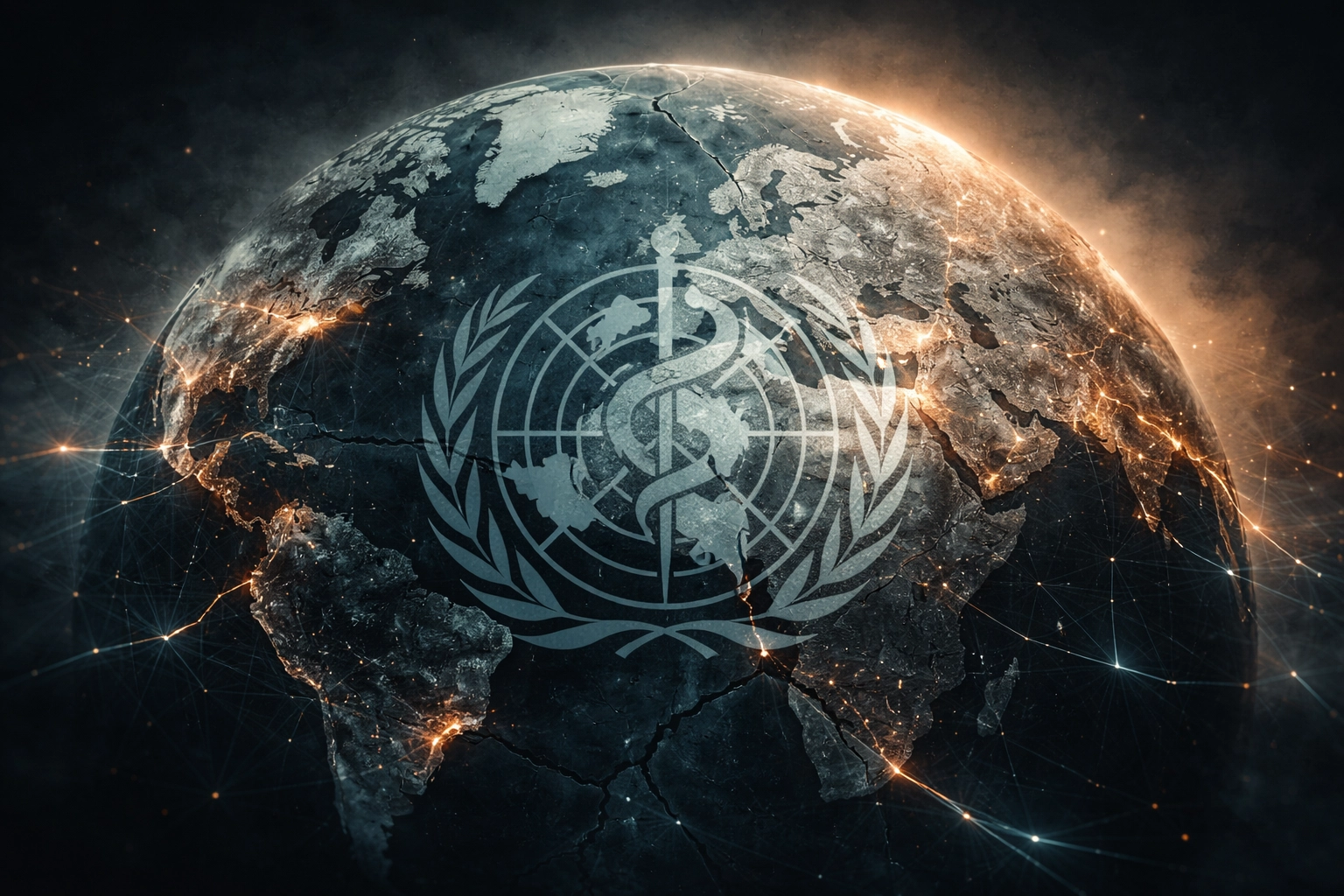
On World Health Day 2026, the message from Geneva is clear. The response from the world’s most powerful nation is not.
Every year on April 7, the world pauses to mark the founding of the World Health Organisation. There are press releases, social media campaigns, awareness drives. And every year, there is a theme: a small phrase that is supposed to capture the biggest health challenge of the moment.
This year’s theme is: “Together for Health. Stand with Science.”
It is a good theme. It is also, given everything happening in the world right now, a deeply uncomfortable one.
A Plea Dressed as a Celebration
The WHO chose this theme to celebrate scientific collaboration, the idea that when countries share research, data, and resources, everyone lives longer and safer. It sounds simple. In practice, it has never been harder to achieve.
In January 2026, the United States formally withdrew from the WHO ending nearly 80 years of membership. The US was the organisation’s single largest funder, contributing hundreds of millions of dollars every year. With that money gone, the WHO has announced it will cut roughly 2,300 jobs a quarter of its workforce by this summer.
These are the scientists, researchers, and health workers who track disease outbreaks before they become pandemics. Their absence will be felt not in Geneva, but in the villages and cities of countries that depend on early warning systems they can’t build alone.
For India, this matters more than most people realise.
Why India Cannot Afford to Look Away
India is home to over 1.4 billion people. It carries one of the world’s highest burdens of tuberculosis, diabetes, and air pollution-related illness. Its public health infrastructure, while improving, still struggles to reach the last mile: the remote district, the urban slum, the tribal hamlet.
For decades, WHO partnerships have quietly supported India’s immunisation programmes, disease surveillance networks, and health policy frameworks. The kind of unglamorous, invisible work that only gets noticed when it stops.
A weakened WHO means weaker early warning systems. It means slower responses to outbreaks. It means that the next time a new disease emerges and there will be a next time the global network that is supposed to catch it early will be running at reduced capacity.
That is not a distant, abstract problem. That is a problem with a very direct address.
The Irony at the Heart of This Day
There is something quietly ironic about asking the world to “stand with science” at the exact moment when the funding that makes science possible is being cut, the institutions that coordinate it are being weakened, and the trust that underlies it is being questioned from the highest levels of government.
Science is not a building. It is not a logo or a hashtag. It is a painstaking, expensive, collaborative, and deeply human practice. It requires long-term investment, international cooperation, and the willingness to follow evidence even when it is politically inconvenient.
All three of those things are under pressure right now.
What Standing With Science Actually Looks Like
It does not require a laboratory or a government budget. It means choosing reliable information over viral rumour. It means trusting a vaccine that took years of testing over a WhatsApp forward that took thirty seconds to write. It means understanding that the health of a child in Assam and the health of a child in Nigeria are, in ways both invisible and undeniable, connected.
The WHO was built on that understanding. It has survived wars, Cold War politics, and multiple pandemics. Whether it survives this particular moment of funding cuts, political retreat, and fractured trust depends on whether enough countries and citizens decide that global health cooperation is worth protecting.
India, with its scale, its democratic voice, and its stake in a functional global health order, has both the reason and the responsibility to be among them.
Today is World Health Day. The theme is right. Now the work begins.
World Health Day is observed every year on April 7, marking the founding of the World Health Organisation in 1948.
Subscribe Deshwale on YouTube
