 Deshwale
The Boom-and-Bust Warnings of AI
In brief · AI summary Microsoft CEO Satya Nadella warned that AI, despite its economic potential, is not immune to boom-and-bust cycles, comparing current excitement to the 1990s PC boom. He said the key is to recognise that the underlying innovation will still drive new products and infrastructure even during a downturn. The article also notes concerns about AI's high energy consumption, which Nadella acknowledged as "very high."
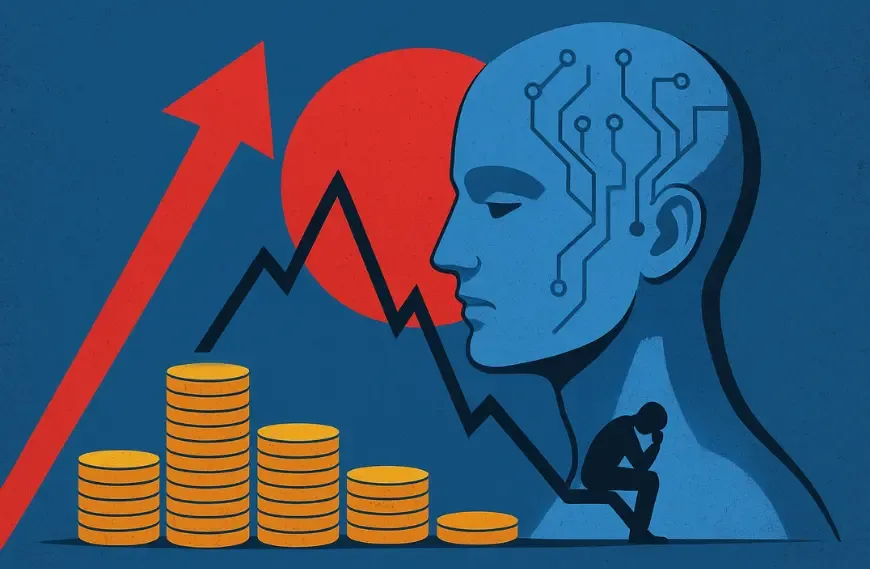
Artificial intelligence (AI) has been called the next industrial revolution, capable of reshaping economies, industries, and everyday life. But even as billions pour into Britain’s AI sector through the newly announced £31bn Tech Prosperity Deal, Microsoft CEO Satya Nadella is urging caution. His warning? AI is not immune to the classic boom-and-bust cycles that have defined every major wave of technological progress.
Microsoft’s record bet but with caveats
Microsoft’s £22bn ($30bn) investment in the UK, the company’s largest outside the United States, is designed to supercharge the country’s AI capabilities. This includes new data centres, partnerships with Nvidia and Google, and even the construction of a powerful supercomputer in Essex.
Yet, while hailing AI’s economic potential, Nadella tempered expectations. In his BBC interview, he acknowledged the risk of overhyping AI, comparing today’s excitement to the personal computer boom of the 1990s. Back then, it took almost a decade before PCs transformed the workplace. AI, he suggested, might follow a similar trajectory or faster but the journey will still include market bubbles and corrections.
Boom, bust, and reality
Technology history is littered with examples of inflated expectations followed by painful corrections:
- The dot-com bubble of the late 1990s.
- The cryptocurrency crash of 2018.
- Even the early internet faced scepticism before proving its worth.
Nadella stressed that AI is no different: “All tech things are about booms and busts and bubbles.” For him, the key is not to dismiss AI when a downturn comes but to recognise that the underlying innovation will still drive new products, new systems, and new infrastructure.
Economic promise vs. investor caution
The Tech Prosperity Deal is being sold as a ‘generational step change’ by UK Prime Minister Keir Starmer, with promises of 5,000+ jobs and billions in regional growth. However, economists and analysts remain cautious.
- Short-term risks: Overinvestment could inflate valuations beyond reality.
- Long-term gains: Like the PC or the smartphone, AI could embed itself deeply in productivity and GDP growth.
- Investor dilemma: Should they treat AI as a golden opportunity or prepare for a correction phase before stability arrives?
Energy costs and sustainability concerns
Another factor fuelling scepticism is AI’s massive energy consumption. Training large AI models and operating data centres require vast amounts of power. Campaign group Foxglove warned that Britain may end up “footing the bill” for the giants’ energy demands.
Nadella acknowledged the issue, calling energy use “very high,” but argued that investments in data centres indirectly modernise the power grid. Still, for sceptics, this is another reason to expect a pushback cycle before the sector matures.
Lessons from the past
For financial analysts, the AI sector’s trajectory looks familiar:
- Excitement and hype draw unprecedented investment.
- Structural bottlenecks (like energy, regulation, or talent shortages) slow progress.
- Market corrections revalue companies and weed out weaker players.
- Long-term consolidation allows the strongest firms to dominate.
If Nadella is right, AI’s journey will not be linear growth, it will be a volatile cycle of optimism and adjustment.
The UK’s AI boom, fuelled by the Tech Prosperity Deal and Microsoft’s landmark investment, is undeniably historic. But as Satya Nadella warns, no tech wave escapes the laws of economics. AI may transform industries as profoundly as the PC did but it will not be without booms, busts, and bubbles along the way.
For investors, policymakers, and economists, the real challenge is not to avoid the cycle but to navigate it wisely.