



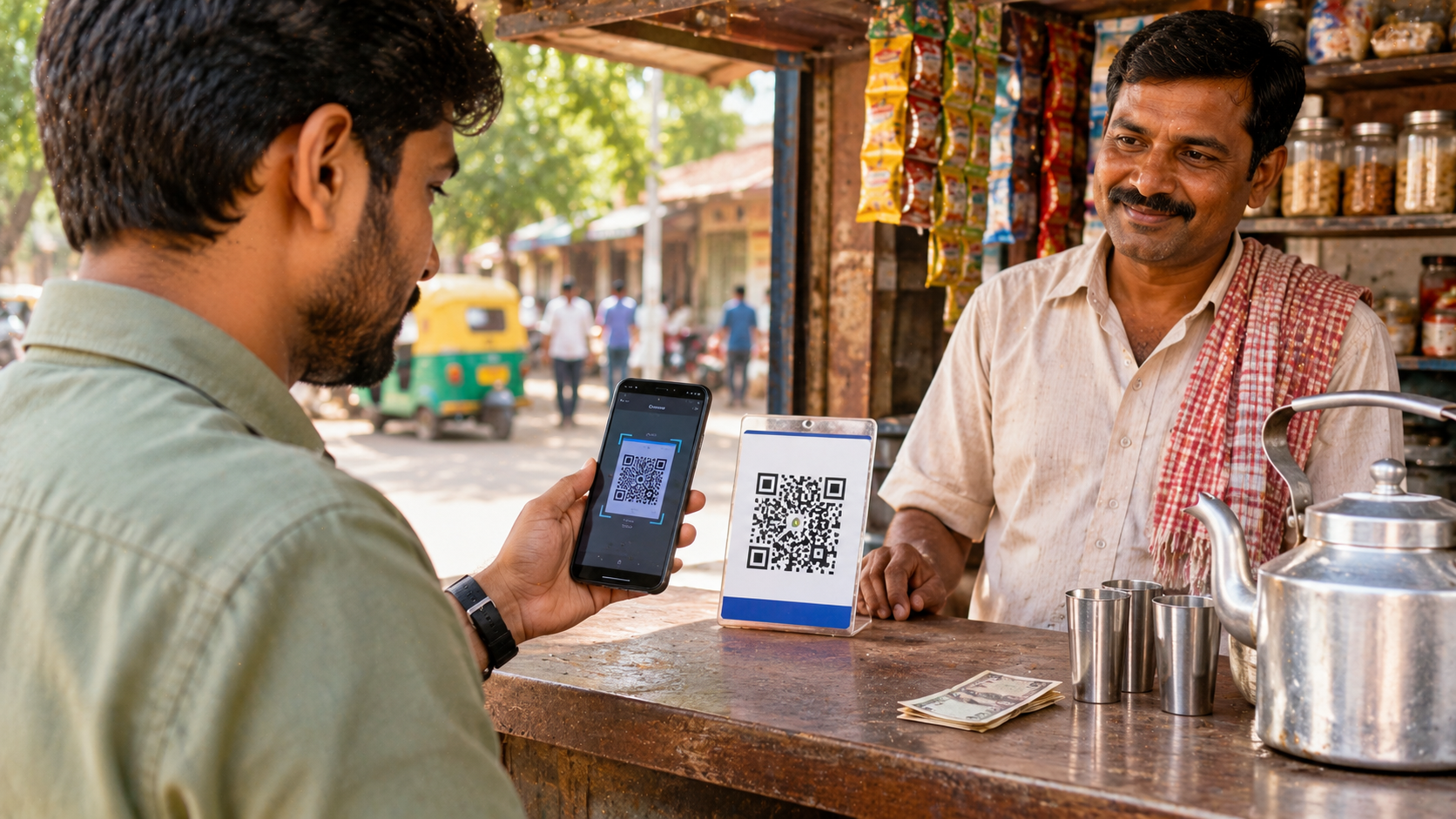
When did you last pay with a ₹500 note? If you live in a city, you may have to think hard. We scan a QR code at the chai stall, the vegetable cart, even the auto. It feels so normal now. In October 2026, UPI handled a record 25.47 billion payments, worth ₹31.53 lakh crore, according to NPCI data. For the first time, the average value of payments in a single day crossed ₹1 lakh crore. The number of payments was 23% higher than a year ago.
India is not the only one. In the United States, cash made up just 14% of payments in 2025. In 2015, it was a third. This comes from a Pew study of Federal Reserve data. Credit cards are now number one at 34%. Another Pew survey this year found that 42% of American adults use no cash in a normal week. In 2015, it was 24%. Sweden has gone even further. In the Riksbank’s latest survey, 91% of people had used the Swish payment app in the past month. Only 5% said they paid in cash for their last purchase in a shop. Fifteen years ago, it was 40%.
It is easy to see why people like it. Paying by phone is quick. For shops, cash takes time to handle and carries security risks. In Sweden, small businesses that stopped taking cash say security risk was the main reason. Next came the time needed to handle cash, and trouble in depositing the day’s takings.
But a cashless city is not the same for everyone. Pew found that 58% of people in homes earning $100,000 or more make none of their purchases with cash in a normal week. For homes earning under $30,000, it is 24%. Age also matters. In South Korea, the central bank’s 2025 report shows that people aged 70 and above spent 32.4% of their monthly spending in cash. For people in their twenties, it was 14.7%. In a 2025 survey by the central bank there, 45.8% of adults were against a cashless society. Only 17.7% were for it.
Even in the US, many people do not use cash by choice. Pew’s data shows that 70% of cash payments are made by people who say they would rather pay another way. Pew does not explain why, but it suggests that many people may be using cash because they have to, not because they want to.
India has a strange puzzle. UPI keeps setting new records, but cash keeps growing too. RBI data shows that the cash in circulation reached ₹43.16 lakh crore on 23 October 2026. That is 13.7% more than last year. It has more than doubled since the 2016 note ban. RBI Deputy Governor S C Murmu has called this a puzzle. He said cash is still important for villages, low-income families, older people and small businesses. Economist Jayati Ghosh says many poor people still do not have smartphones, so they cannot use UPI. She thinks cash will not disappear, but its share of payments will keep falling. People also keep cash as savings and as a backup, not just for shopping.
Then comes a question nobody likes to ask. What if the system stops working? On Monday, 16 November, a software bug at JPMorgan Chase slowed payments across several US banks. Chase said its customers still had access to their accounts and money. Some users, however, said they could not get in. By about 6:30 pm Eastern time, the bank said payments were going through normally again. It was a short problem. But it showed how much we depend on a few systems working every single minute.
Sweden has started asking the same question. Almost half of the people in the Riksbank’s survey feel bad about falling cash use. About one in three people who wanted to pay in cash in a shop found that the shop did not take it. Seven in ten households say they could live without cash, especially younger people and people with higher incomes in big cities. People who say they need cash talk about internet failures and being ready for a crisis or war.
So Sweden is now pushing back a little. The Riksbank says households should keep more than one way to pay in case digital payments fail. As one example, it suggests around SEK 1,000 in cash per adult. A law that came into force on 1 July 2026 says grocery stores and pharmacies must take cash at staffed counters, with some exceptions. The same day, a plan agreed by the central bank and market players went live. It lets people pay by card even when the internet is down, for essential goods like food, medicine and fuel.
So what happens when nobody carries cash? Life gets faster for most of us. But some people get left behind, and all of us depend on networks and servers working perfectly. India, Sweden and the US show the same thing. A cashless city sounds like the end of cash, but the places doing it best are keeping a backup. So the next time you scan a QR code, enjoy the speed. Just keep a little cash in your wallet.
Subscribe Deshwale on YouTube
