 Deshwale
AI Ethics & Transparency in Short-form Video: YouTube’s Balancing Act
In brief · AI summary YouTube has introduced SynthID invisible watermarks, developed by Google DeepMind, and AI content labels on Shorts to increase transparency about AI-generated content. The article notes that ethical concerns remain, including consent, copyright, and fairness for smaller creators, and that stronger checks, independent oversight, and possibly new laws may be needed.
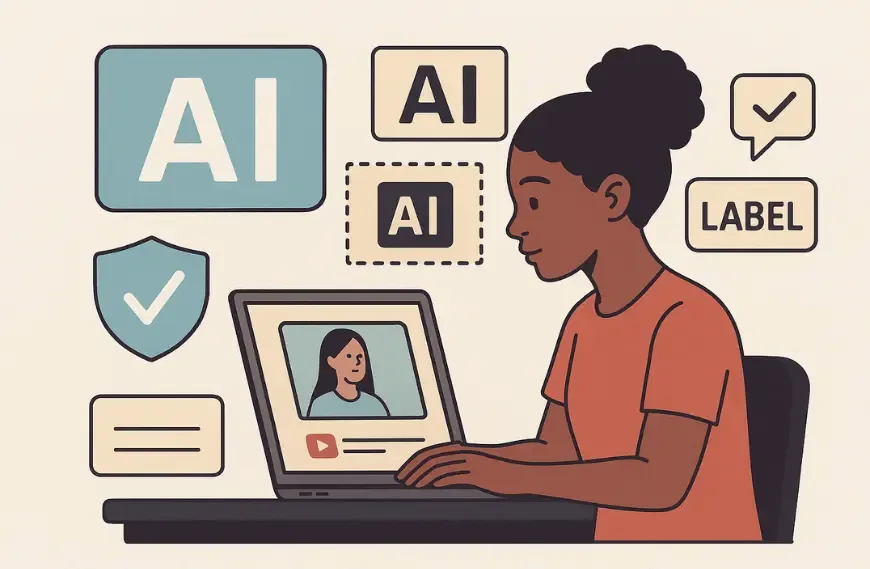
Artificial intelligence (AI) is reshaping the way people create and consume content online. On YouTube, the rise of Shorts has made short-form video one of the most popular formats for creators. To keep up with demand, YouTube has rolled out a new set of AI tools that allow users to generate images, video effects, and even full clips with just a few clicks. While these tools make creativity more accessible, they also raise serious questions about ethics and transparency. If viewers cannot tell what is real and what is synthetic, trust in online media could easily collapse.
YouTube’s solution: synthID and content labels
To reduce confusion, YouTube is introducing two main safety features: SynthID watermarks and AI content labels.
SynthID, developed by Google DeepMind, is an invisible digital watermark that can be embedded directly into AI-generated images and videos. Although the watermark cannot be seen by the human eye, it can be detected using special tools. This means that even if a video is shared widely, platforms can still verify that it was created with AI.
At the same time, YouTube is asking creators to clearly label AI content. Viewers will be shown notices on Shorts when AI tools have been used, helping them understand the nature of what they are watching. Together, these measures are meant to increase transparency and limit the chances of audiences being misled.
The push for transparency comes at a time when AI-generated media is becoming extremely realistic. Deepfakes, synthetic voices, and AI-generated scripts are already spreading online. Without clear signals, people could mistake fabricated content for authentic recordings. This creates risks of misinformation, political manipulation, fraud, and reputational harm. By adding watermarks and labels, YouTube hopes to maintain trust between creators and audiences, ensuring viewers know when technology has shaped the content.
Ethical challenges ahead
Despite these efforts, ethical concerns remain.
- Consent: If AI is used to imitate a person’s likeness or voice without permission, does it violate their rights?
- Copyright: Creators worry that their original work is being used to train AI systems without credit or payment.
- Fairness: Smaller creators fear they may be overshadowed by mass-produced AI Shorts, which can be created quickly at scale.
These challenges show that labelling is only one piece of the puzzle. The bigger debate is about how society sets rules for AI creativity.
Are current safeguards enough?
Critics argue that invisible watermarks like SynthID may not be useful for ordinary viewers. Labels, meanwhile, rely heavily on creators being honest about their use of AI. Stronger checks, independent oversight, and even new laws may be required to protect both audiences and creators.
YouTube’s new tools offer exciting opportunities for creators to experiment and grow. But as Satya Nadella recently warned about AI, technology always comes with cycles of hype and caution. By using watermarks and labels, YouTube is taking a step in the right direction. Still, the bigger conversation around consent, copyright, and creative fairness must continue. For now, the golden rule is simple: use AI, but stay transparent with your audience.