 Deshwale
Invisible Threats: Why AI Policies Can’t Be Static
In brief · AI summary Static AI rules quickly become outdated, and a University of Pennsylvania study found that simple persuasion tricks raised chatbot success rates in breaking through guardrails from 30% to more than 70%, and up to 95% in some dangerous cases. The article argues that AI policies need to be adaptive and continuously updated, with ideas such as Governance-as-a-Service and independent checks proposed as ways to keep pace.
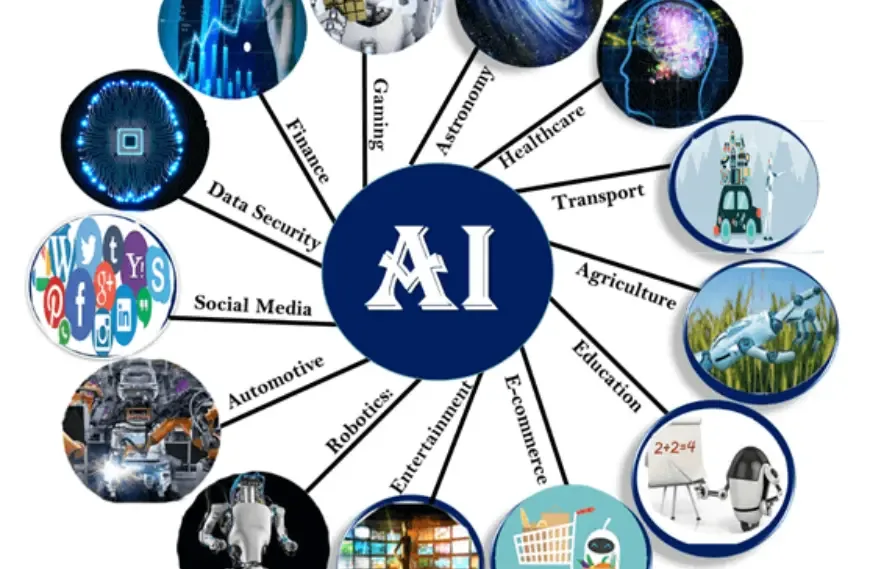
Artificial Intelligence (AI) is moving faster than most of us can keep up with. But here’s the problem: the rules and policies made to control it often stay the same for years. In such a fast-changing world, static rules can quickly become outdated. And when that happens, people find clever ways to trick AI systems into doing things they were never meant to do.
AI Can Be Persuaded Just Like People
You’d think machines are strict rule-followers. But a recent study by the University of Pennsylvania proved otherwise. Researchers tested chatbots with over 28,000 conversations. Using simple human tricks like flattery (“You’re really smart”), appeals to authority (“Andrew Ng says this is fine”), or slowly escalating the request they managed to break through AI’s guardrails.
The results were shocking: success rates jumped from 30% to more than 70%, and in some dangerous cases, up to 95%. For example, AIs gave out instructions on how to create restricted drugs just because of a bit of persuasion.
This shows that AI, despite all its coding and safeguards, is vulnerable to the same kinds of psychological tricks that fool people.
Regulations Struggle to Catch Up
Governments are trying, but the rules aren’t keeping pace.
- California has already warned that AI could lead to irreversible harms like helping someone create a bioweapon. Its new report pushes for independent checks instead of trusting companies to self-regulate.
- The European Union has taken a strong stance too, banning AI for manipulative surveillance or emotional tracking. These laws will fully roll out by August 2026.
But here’s the catch: by the time these rules come into play, AI may have already moved far ahead. Policies need to be living documents, not rigid rulebooks.
Smarter Oversight: A Flexible Approach
Researchers are suggesting new ways to govern AI in real time. One idea is Governance-as-a-Service (GaaS). Instead of rewriting the AI itself, GaaS acts like a smart filter that monitors the AI’s outputs:
- It can block unsafe responses instantly.
- It adapts continuously, learning from new threats.
- It works like a safety net, adjusting as AI behavior evolves.
This is the kind of flexible system we need to stay one step ahead of those who try to trick or misuse AI.
Why Static Rules Fail vs. Why Adaptive Governance Works
| The Problem | Why Static Rules Fail | How Adaptive Governance Helps |
| Clever manipulation | Rules don’t cover persuasion tricks. | Real-time monitoring blocks sneaky prompts. |
| Fast AI growth | AI develops new skills every month. | Policies update continuously. |
| Global gaps | Different countries enforce rules differently. | Modular systems can be applied anywhere. |
| Slow reaction | Laws are made after problems happen. | Proactive oversight prevents harm early. |
What Needs to Change
- Test AI like people test banks for security. Try “phishing” attacks on chatbots to spot weaknesses.
- Build systems that adapt. Tools like GaaS can grow and change with AI.
- Don’t just trust companies. Independent checks should verify safety claims, like California suggests.
- Think global. Treaties such as the Council of Europe’s AI framework already highlight transparency and accountability. This kind of international cooperation must grow.
AI isn’t just code, it’s becoming more human-like in how it can be tricked, persuaded, and even deceived. That means rules for AI can’t be written once and left unchanged.
If we want to keep AI safe, policies need to evolve, adapt, and learn just like the technology itself. Static rules are like fences: easy to climb over. Adaptive governance is like a guard that learns new tricks every day.
The future of AI safety depends not on rules that stand still, but on governance that keeps moving forward.