 Deshwale
Ajit Pawar: The Operator Who Ran Maharashtra’s Engine, and the Silence After the Crash
In brief · AI summary Ajit Pawar, a long-serving and influential Maharashtra politician, died when his chartered Learjet crashed near Baramati airport on Wednesday, killing all five people on board. The article describes him as an effective political operator who built power through cooperatives, Baramati, and irrigation portfolios, including a term as irrigation minister from 1999 to 2010. It also notes that he served as deputy chief minister six times, more than anyone else in Maharashtra's history.
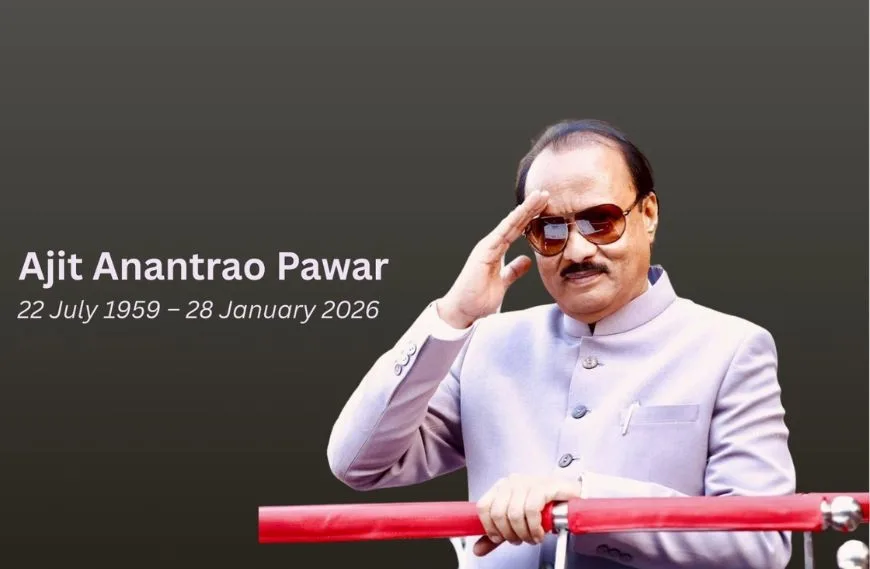
In the unforgiving arithmetic of Maharashtra politics, few figures were as indispensable, as resented, and as ruthlessly effective as Ajit Anantrao Pawar. When news broke on Wednesday morning that his chartered Learjet had crashed near Baramati airport, killing all five on board, disbelief travelled faster than grief. In Mantralaya, files stopped moving. In party offices, phones rang without answers. Across western Maharashtra, the first reaction was not shock, but a quieter, more unsettling realisation.
Ajit Dada is gone. The man who made governments hold. The man who made rebellions dissolve. The man who understood where power actually lived. Maharashtra had lost its most reliable political mechanic. And the engine he kept running is already beginning to sputter.
For over three decades, Maharashtra has moved through every political phase imaginable. Coalition stability. Ideological churn. Splits, betrayals, reunions. The musical chairs of 2019 and the controlled chaos of 2022. Through all of it, Ajit Pawar remained a constant. Not as a moral compass. Not as a mass leader. But as an effective, sharp operator.
He was never the orator who moved crowds. He never claimed ideological purity. He delivered. Or, at the very least, he created the impression of delivery. And in a state shaped by drought, debt, and factionalism, that mattered far more than doctrine.
Ajit Pawar understood early that Maharashtra is not governed from podiums. It is governed through systems. Cooperatives. District banks. Irrigation files. Bureaucratic pressure. Late-night calls. Silent assurances. He spoke that language fluently.
Ajit Pawar was born on 22 July 1959 in Deolali Pravara, in what was then Ahmednagar district, now Ahilyanagar. He grew up in the long shadow of his uncle, Sharad Pawar. But proximity to power did not mean protection from responsibility.
After his father’s early death, Ajit dropped out of college. The decision was practical, not sentimental. It shaped him. He became impatient with abstraction. Suspicious of idealism. Focused on outcomes. Sharad Pawar became the national strategist. Delhi-facing. Coalition-minded. A thinker in decades. Ajit Pawar stayed home. He built the machine. One of the most workaholic and dependable political machines.
The Pawar family’s political roots lie deep in the cooperative movement. Sugar factories. Milk unions, credit societies, district banks. Ajit Pawar did not inherit control over these institutions. He learned them. In the early 1980s, he joined the board of a sugar factory. Later, he chaired the Pune District Central Cooperative Bank for 16 years.
These were not ceremonial positions. In western Maharashtra, cooperatives are power. They decide credit. Ajit understood one central truth: Control resources, and votes will follow. This understanding defined his politics for the rest of his life.
Ajit Pawar formally entered electoral politics in 1991, winning a by-election from Baramati after Sharad Pawar vacated the seat to become defence minister. He never lost it. Seven assembly victories followed. Baramati became synonymous with the Pawar name. But Ajit did not treat it as a legacy seat. He treated it as a workshop.
Under his able leadership, Irrigation projects, sugar mills, schools, roads, administrative access… Everything was centralised. Nothing was left to chance. With that, Baramati became proof of concept. This is what concentrated power could achieve. It also became the envy and resentment of rivals across Maharashtra.
Ajit Pawar’s longest and most consequential tenure was as irrigation minister between 1999 and 2010. In Maharashtra, water is not a policy issue. It is survival. Whoever controls irrigation controls politics in its rawest form. Ajit pushed dozens of major projects. So, canals expanded, budgets ballooned and promises multiplied. Then came the allegations. The so-called irrigation scam erupted in the early 2010s. Claims of massive irregularities. Figures as high as ₹70,000 crore were thrown around. Ajit dismissed them as fantasy. He argued the entire irrigation budget was smaller.
Some investigations gave him clean chits. Others dragged on. In 2012, political pressure forced him to resign as deputy chief minister. But he returned. That return said more about Maharashtra politics than any probe ever could. To his supporters, the allegations were vendetta. To critics, proof of systemic rot. The truth lay somewhere in between.
What mattered politically was this: Ajit Pawar remained electorally untouched.
Ajit Pawar was not polite. He did not pretend to be. His 2013 remark during a drought, asking whether he should “urinate in the dam” to fill it, was condemned widely. Yet it revealed something fundamental about him. He had no patience for symbolism. No tolerance for performative politics. His speeches were functional. Often crude. Rarely inspiring. His real language was administrative power. The file that moved. The call that came at midnight. The crisis was quietly resolved. Within the political class, this earned him a reputation.
Ajit Pawar served as deputy chief minister six times. More than anyone else in Maharashtra’s history. Under Prithviraj Chavan. Briefly, infamously, under Devendra Fadnavis in 2019. Under Uddhav Thackeray’s Maha Vikas Aghadi. And again after the 2023 realignment. Each time, he held heavyweight portfolios, from Irrigation, finance, planning, excise to rural development. Yet the top job eluded him. That unfulfilled ambition hung over his career. It partly explains his restlessness. His impatience. His willingness to gamble.
The 80-hour government of November 2019 made Ajit Pawar a national punchline. But it also revealed his political DNA. He was willing to risk embarrassment for leverage. The episode did not end his career. It sharpened him.
In July 2023, Ajit Pawar executed the most consequential move of his life. He split the Nationalist Congress Party. He took 41 MLAs. He joined hands with the BJP and the Eknath Shinde-led Shiv Sena. The Mahayuti government was stabilised overnight. Sharad Pawar’s organisation was shattered. The Election Commission later awarded Ajit Pawar’s faction the party name and symbol. It was classic Ajit Pawar. Calculated. Surgical. Unsentimental. Why sit in opposition when power was available? For him, the answer was obvious.
The relationship between Sharad Pawar and Ajit Pawar defined a generation of Maharashtra politics. For years, it worked seamlessly. Sharad thought long-term. Ajit executed. Vision and muscle. But tensions simmered. Ajit did not want to remain the permanent deputy. Sharad worried about legacy. The 2023 split formalised what had been brewing for years. In the months before Ajit’s death, there were faint signs of rapprochement. Joint appearances. Civic-level cooperation. Nothing concrete. Now, grief may succeed where ambition failed. Or it may deepen the fracture.
Ajit Pawar’s death leaves behind a vacuum that is both personal and structural. There is no obvious successor. Not Sunetra Pawar. Not Parth or Jay Pawar. Not any lieutenant. He alone combined grassroots control, administrative authority, and political intimidation. The network he built will not vanish. But it will fragment.
In the short term, the Mahayuti government faces instability. Ajit was the glue that held the NCP faction together. Without him, MLAs become vulnerable. Cabinet portfolios will be renegotiated. By-elections could turn bitter. In the medium term, western Maharashtra will be contested fiercely. Sugar factories. Cooperatives. Rural loyalties. Everything is up for grabs. In the long term, Ajit Pawar’s death may mark the beginning of the end for a certain style of politics. One built on personal authority and control over physical resources.
Whether Maharashtra can function without such operators is an open question.
Ajit Pawar was not a saint. His hands were deep in the system. Controversy followed him. But he never pretended otherwise. He did not cloak power in morality. He exercised it openly. And often, effectively. Maharashtra functioned, in part, because men like him kept the machinery oiled. With his death, the machinery does not stop. But it creaks.
Files will pile up. Alliances will fray. Promises will hang. The state will muddle through. It always does. But the silence Ajit Pawar leaves behind is louder than any speech he ever gave. He was not the visionary Maharashtra needed. Nor the reformer it deserved. He was the operator it relied on. And now, the operator is gone.
Subscribe Deshwale on YouTube