 Deshwale
Bharat Bandh’s Costly Legacy
In brief · AI summary Bharat Bandh is India's nationwide shutdown protest, rooted in post-independence opposition to economic and social policies. These shutdowns disrupt transport, banking, and trade, and a 2012 bandh caused Rs. 12,500 crore in losses, according to CII estimates. The article argues that bandhs strain the economy and raise questions about their efficacy.
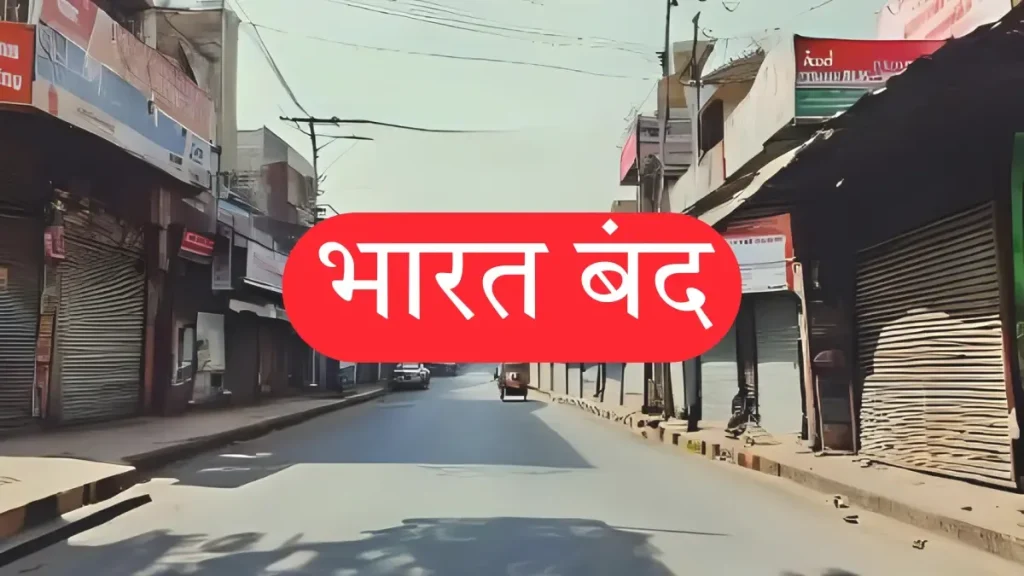
Bharat Bandh, India’s form of nationwide strike, has roots in post-independence protests against economic and social policies. From the 2010 fuel price bandh to the 2025 labour strike, these shutdowns disrupt transport, banking, and trade, costing billions. A 2012 bandh caused Rs. 12,500 crore in losses, per CII estimates. Recent protests, like the 21 August 2024 SC/ST reservation bandh, highlight ongoing tensions. While voicing public dissent, bandhs strain India’s economy, raising questions about their efficacy.
India’s streets fall silent. Shops shutter, trains halt, and markets freeze. This is the Bharat Bandh, a powerful protest rooted in the nation’s struggle for justice. Literally meaning “India closed,” it’s a call for a nationwide shutdown, a collective cry against policies deemed unfair. From fuel price hikes to labour reforms, from reservation disputes to farmer woes, bandhs have shaped India’s socio-economic landscape. Yet, each strike carries a heavy price, draining billions from the economy. This is the story of Bharat Bandh, its history, and the colossal losses it leaves behind.
The concept of a bandh predates independence, born in the crucible of India’s freedom struggle. Mahatma Gandhi’s non-cooperation movement in the 1920s urged citizens to boycott British goods and institutions, a precursor to modern bandhs. “Disobedience is the true foundation of liberty,” Gandhi once said, capturing the spirit of collective resistance. Post-1947, bandhs evolved into tools for political and social demands, often led by trade unions, farmers, or opposition parties. They became India’s unique form of civil disobedience, blending protest with disruption.
By the 1980s, bandhs grew frequent, driven by economic woes. The Licence Raj, a web of bureaucratic controls, stifled growth, sparking unrest. A 1984 railway strike, one of the largest, crippled transport for weeks, costing millions. The 1991 economic crisis, triggered by a balance-of-payments deficit, led to liberalisation under P.V. Narasimha Rao. This shift, while boosting GDP, fuelled discontent among workers fearing job losses. Bandhs became their weapon, a way to demand fair wages and job security.
Fast forward to the 21st century, and bandhs took on new causes. The 2010 Bharat Bandh, called by the NDA and Left parties, protested fuel price hikes. Markets closed, roads emptied, and businesses stalled. The Confederation of Indian Industry (CII) estimated losses at Rs. 3,000 crore, a staggering hit for a single day. This wasn’t just about petrol; it was a clash over economic reforms seen as pro-corporate. The public, caught between rising costs and disrupted services, felt the squeeze.
In 2012, another bandh shook the nation. Opposing FDI in retail and diesel price hikes, opposition parties united in protest. Shops downed shutters, and transport ground to a halt. The CII pegged losses at Rs. 12,500 crore, equivalent to $2.25 billion then. Adi Godrej, CII president, urged reforms to continue, saying, “Good economics seldom makes for good politics.” Yet, the bandh’s impact lingered, with small traders and daily-wage workers hit hardest. It exposed a truth: bandhs hurt the very people they aim to protect.
The 2020s brought fresh waves of unrest. The 2020 farmers’ protest against three agricultural laws led to a Bharat Bandh on 8 December. The Samyukta Kisan Morcha (SKM) mobilised millions, blocking highways and markets. The Hindu reported disruptions in Punjab, Haryana, and Delhi, with shops closed and trains delayed. Economic losses were estimated at Rs. 7,000 crore by industry bodies. Farmers, fearing corporate takeover of agriculture, stood firm. The bandh’s success, as Akhilesh Yadav noted, “unnerved the ruling party,” showing the power of collective action.
In 2021, another bandh marked four months of the farmers’ agitation. From 6 AM to 6 PM, SKM shut down Punjab and Haryana, with partial impact elsewhere. The Economic Times noted normalcy in cities like Delhi, but rural areas saw chakka jams, road blockades that crippled transport. Losses were harder to quantify, but the unorganised sector, small shops, daily wagers, bore the brunt. The protest highlighted a growing rural-urban divide, with farmers demanding a legal guarantee for Minimum Support Price (MSP).
The 2022 bandh, held on 28-29 March, saw trade unions like AITUC rally against labour codes. Amarjeet Kaur, AITUC General Secretary, reported coal belts in Jharkhand and Chhattisgarh shut down. Losses touched Rs. 10,000 crore, per industry estimates, as mining, banking, and transport stalled. The codes, meant to streamline labour laws, were seen as anti-worker, sparking nationwide fury. This bandh wasn’t just a strike; it was a warning against policies sidelining the working class.
Fast forward to 2024, and bandhs took a new turn. On 21 August, Dalit and Adivasi groups called a Bharat Bandh against a Supreme Court ruling on SC/ST reservation sub-classification. Hindustan Times reported closures in Gujarat’s tribal and Dalit areas, with a goods train blocked in Surendranagar. Losses were estimated at Rs. 5,000 crore, impacting small businesses most. Mayawati, BSP leader, backed the bandh, citing “anger against the verdict.” This protest wasn’t just economic, it was a fight for social justice.
The latest bandh, planned for 9 July 2025, promises similar disruption. Over 25 crore workers, backed by 10 trade unions and SKM, will strike against “anti-worker, anti-farmer policies,” per The Tribune. Banking, mining, and transport face major halts. Harbhajan Singh Sidhu of Hind Mazdoor Sabha predicts “strong participation across sectors.” Early estimates suggest losses could exceed Rs. 15,000 crore, given India’s $3.9 trillion economy. The bandh’s timing, amid rising inflation, amplifies its impact.
Each bandh leaves a scar on India’s economy. The unorganised sector, employing 90% of the workforce, suffers most. Daily wagers lose income, small shops lose sales, and supply chains falter. A 2016 demonetisation bandh cost Rs. 10,000 crore, per ASSOCHAM, as cash shortages crippled markets. The GST rollout in 2017 sparked another bandh, with traders protesting complex compliance. Losses hit Rs. 8,000 crore, with rural markets worst affected.
Yet, bandhs are more than economic events, they’re democratic reckonings. Kashmir Life called the 2025 bandh “not a breakdown, but a voice for those crushed by systems.” They force governments to listen, whether on fuel prices or reservations. But the Supreme Court’s 1998 ban on forced bandhs, upheld in 2004 with fines on BJP and Shiv Sena, limits their scope. Only voluntary closures are permitted, yet enforcement remains tricky.
The economic toll is undeniable. India’s GDP, fourth-largest globally at $3.9 trillion in 2025, faces setbacks with each shutdown. Wikipedia notes that bandhs disrupt transport, banking, and retail, sectors vital to growth. The 2020 lockdown, while not a bandh, showed how closures cripple small enterprises, with 40% of MSMEs reporting losses. Bandhs amplify this, as seen in Gujarat’s 2024 protests, where markets shut entirely in tribal areas.
Critics argue bandhs are outdated in a globalised economy. India’s growth, at 6.2% in Q3 FY25 per IBEF, relies on stability. Bandhs deter investors, as seen post-2012 when FDI inflows dipped briefly. Yet, supporters see them as vital for marginalised voices. Farmers, workers, and Dalits use bandhs to demand justice, from MSP guarantees to reservation rights. The tension between disruption and dissent defines their legacy.
Looking ahead, bandhs will likely persist. Issues like unemployment, at 7.8% in 2024 per CMIE, and rural distress fuel unrest. The 2025 bandh’s focus on labour codes and privatisation reflects deeper anxieties. The Economic Times notes unions’ demands for minimum wages and social security, ignored since 2023. As India aims for a $5 trillion economy by 2027, balancing growth with equity remains the challenge.
Bharat Bandh is India’s pulse, chaotic, costly, yet vital. It’s a mirror to the nation’s struggles, from colonial resistance to modern inequality. Each strike costs billions, but the bigger cost is silence. As workers, farmers, and communities rise, the question looms: will India find a way to hear them without shutting down? The answer lies in the streets, where history continues to unfold.