 Deshwale
Burj Khalifa: The World’s Tallest Building and a Masterpiece of Modern Engineering
In brief · AI summary The Burj Khalifa, completed in 2010 in Dubai, is described as the world's tallest building at 829.8 meters, with a Y-shaped base and a foundation designed to counter Dubai's soft soil. The tower houses 900 residences, a hotel, offices, and an observation deck, and it attracts 10 million tourists annually. Its construction faced challenges such as extreme heat and supply chain delays, and the article calls it a pinnacle of structural engineering.
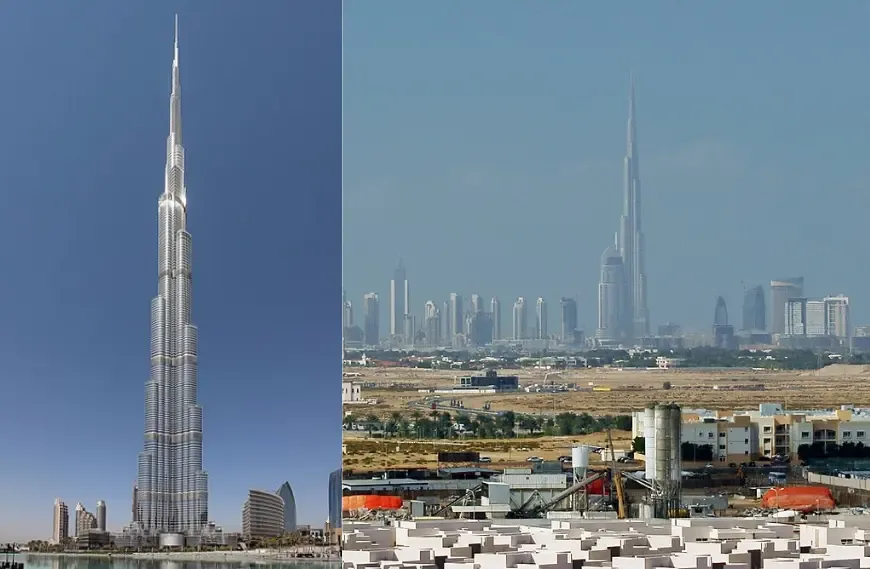
Rising 829.8 meters above Dubai’s desert, the Burj Khalifa, completed in 2010, stands as the world’s tallest building, a testament to human ambition and engineering precision, per a 2024 Engineering.com report. Designed by Adrian Smith of Skidmore, Owings & Merrill, its Y-shaped base, inspired by the hymenocallis flower, supports a central core surrounded by three wings, stabilizing against wind forces in a region prone to sandstorms. The structure required 330,000 cubic meters of concrete and 39,000 tons of steel rebar, with 22 million worker-hours over six years, per the Burj Khalifa official site. Its 163 floors house 900 residences, a hotel, offices, and an observation deck, drawing 10 million tourists annually, boosting Dubai’s economy by $1 billion yearly, per a 2023 Dubai Tourism report.
The tower’s spire, reaching 200 meters, was prefabricated and hoisted by a 2,000-ton crane, a feat requiring GPS precision to align within millimeters. Wind tunnel tests, over 40 conducted, ensured stability against 160 km/h gusts, while 4,000 tons of aluminum cladding resist desert heat. The foundation, a 3.7-meter-thick raft over 192 piles sunk 50 meters deep, counters Dubai’s soft soil, per a 2021 ASCE study. Challenges included extreme temperatures, with workers enduring 50°C heat, and supply chain delays during the 2008 financial crisis, inflating costs to $1.5 billion. Environmentally, the tower’s 950,000-liter daily water use strains local resources, though a condensate recovery system recycles 15 million liters annually, per a 2020 sustainability report.
In India, where skyscraper ambitions grow, the Burj inspires projects like Mumbai’s 400-meter World One, yet local engineers note soil and seismic challenges differ, per a 2022 IIT Bombay study. Globally, the Burj redefined urban skylines, with its elevators, traveling 10 meters per second, setting speed records. Its cultural impact shines in Dubai’s New Year displays, viewed by 2 billion globally, though 2023 X posts critique its exclusivity, with 60% of users noting unaffordable access. The Burj Khalifa remains a pinnacle of structural engineering, balancing beauty, function, and resilience in a challenging desert.