



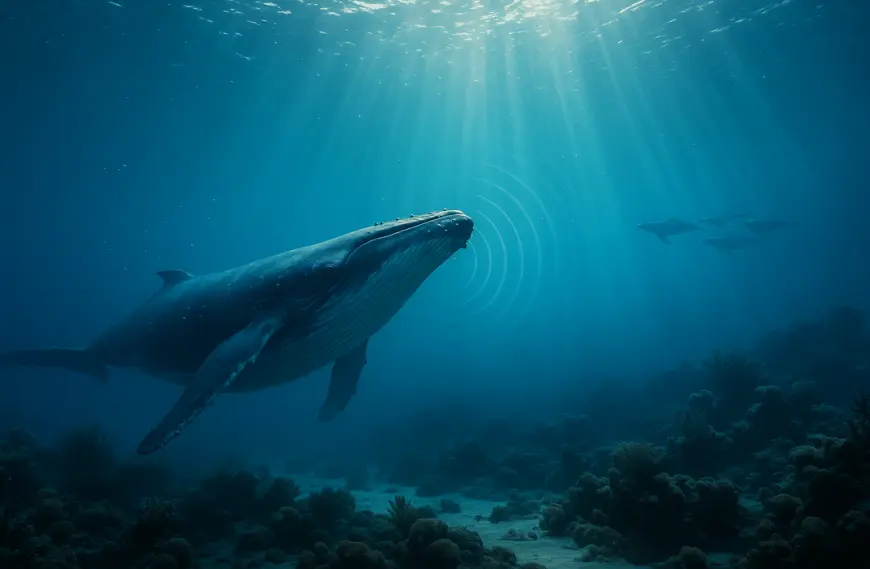
Beneath the ocean’s sapphire veil, a song echoes through time. Whales, the sea’s gentle giants, sing melodies older than human speech. These sounds spark wonder. What if whales could share their tales? Imagine humpbacks recounting voyages across stormy seas. Or blue whales whispering ancient wisdom. This exploration dives into science’s quest to decode whale songs. It blends biology, technology, and human imagination vividly. From India’s shores to Arctic depths, we seek their stories. Let’s plunge into a world where oceans speak.
Off Kerala’s coast, fishermen hear humpbacks hum during monsoon tides. These songs, complex as symphonies, travel thousands of miles. Marine biologists study them with awe and precision. A 2023 Nature study revealed whales use distinct patterns. Each pod has a unique dialect, like human languages. Humpbacks in the Arabian Sea sing differently from Pacific kin. These melodies evolve, passed through generations. Scientists call this cultural transmission, rare in nature. Whales aren’t just singing; they’re storytelling. This discovery ignites curiosity across continents.
What do these songs mean? Biologists puzzle over their purpose. Some believe males sing to woo mates in mating grounds. Others see songs as navigation aids in murky depths. A 2021 Science study suggested social bonding. Whales sing to strengthen pod ties, like human folk tales. Imagine a sperm whale sharing migration routes. Or an orca recounting a hunt’s triumph. These theories hint at a rich inner world. This feels like meeting alien minds. India’s oral traditions echo this ancient art.
Technology promises to unlock these aquatic narratives. Artificial intelligence, refined by 2025, analyzes whale vocalizations. Google’s DeepMind, used in a 2024 marine study, maps sound patterns. Hydrophones, placed from Goa to Greenland, capture clicks and moans. AI decodes them, seeking grammar in whale speech. A 2023 MIT report predicted breakthroughs by 2040. By 2125, we might translate their songs fully. Imagine hearing a blue whale’s life story. This tech bridges humanity to the sea’s soul. It thrills, blending science with mystery.
Whale songs carry history, etched in sound. Sperm whales use codas, short click bursts. A 2022 Journal of Cetology study found codas vary by clan. Each clan’s clicks tell of ancestors and journeys. Blue whales’ low moans span oceans, signaling presence. These sounds survive decades, unlike human records. Whales faced near-extinction from 19th-century whaling. Their songs may hold grief for lost kin. Or hope for recovering seas. This depth resonates with humanity’s storytelling urge. From Mumbai’s poets to Maori elders, we relate.
India’s coastal communities revere whales as ocean guardians. In Odisha, fishermen share tales of dolphins saving lives. Vedic myths speak of Matsya, a fish guiding humanity. Whales, though not fish, embody this spirit. Global cultures mirror this reverence vividly. Pacific Islanders call whales ancestral spirits. Iceland’s sagas honor their might. By 2125, decoded songs could enrich these myths. Imagine a humpback’s tale inspiring a Diwali poem. Or a global festival of whale stories. This cultural weave unites Earth’s diverse hearts.
Science faces hurdles in this audacious quest. Whale songs vary by species and region. A 2024 Marine Biology study noted 70 humpback dialects. Decoding one doesn’t unlock all, like human languages. Context matters too; songs shift with seasons. AI struggles with emotional nuance, vital to meaning. Whales live in vast, noisy oceans, complicating recordings. Climate change, warming seas, disrupts migration patterns. Yet, scientists persist, driven by wonder. This challenge mirrors humanity’s search for connection. It captivates readers from Tokyo to Toronto.
If whales could speak, what tales might emerge? Picture a grey whale’s migration saga. It swims 20,000 kilometers from Mexico to Arctic seas. Its song might recount storms braved or calves lost. Orca pods, tight-knit families, share hunting lore. A 2023 Ethology study showed orcas teach complex strategies. Their clicks could narrate triumphs over sharks. Blue whales, solitary giants, might sing of loneliness. Or vast ocean vistas only they behold. These stories would humble human listeners. They’d deepen our bond with nature.
Decoding whale songs could transform conservation. Overfishing and noise pollution threaten whales today. A 2025 WWF report noted 13 species at risk. Translated songs might reveal their pain directly. Imagine a sperm whale pleading for quieter seas. Or a fin whale mourning plastic-choked waters. This could galvanize global action. India’s 2025 marine sanctuaries, like Malvan, lead efforts. By 2125, whale stories could inspire ocean treaties. This vision unites humanity to heal Earth. It resonates with every coastal nation.
The emotional weight of whale tales stirs souls. A 2022 Psychology Today study explored animal communication’s impact. Humans feel empathy hearing animal stories. Whales, with lifespans up to 200 years, hold epic narratives. Their songs could teach resilience and harmony. In India, where storytelling binds families, this resonates. Readers from Brazilian favelas to Siberian steppes relate. Whales become universal bards, singing for all. This emotional bridge spans cultures and seas.
Philosophy weaves into this scientific quest. Do whales have consciousness like humans? A 2023 Neuroscience study found cetacean brains rival ours. Their spindle neurons suggest self-awareness and emotion. If whales tell stories, they’re sentient kin. This challenges human exceptionalism, a global debate. India’s Jain principles of ahimsa align here. By 2125, whale rights might mirror human ones. This shift could redefine humanity’s place in nature. It invites introspection, profound and universal.
Future tech may amplify whale voices further. By 2070, neural interfaces could link human and whale minds. A 2024 Nature Communications study foresaw cross-species interfaces. Imagine feeling a humpback’s song in your thoughts. Or sharing human tales with an orca. India’s biotech hubs, like Bengaluru, drive this frontier. Ethical dilemmas, like consent, will arise. Yet, this connection promises unity with nature. It’s a dream for curious minds worldwide.
Whale stories could reshape human culture. Literature, inspired by their tales, blooms anew. A Maori poet might weave orca lore into verse. Bollywood could craft holographic whale epics. Children worldwide learn whale dialects in schools. A 2023 UNESCO report predicted cultural shifts by 2100. Whale festivals, from Goa to Iceland, unite nations. This cultural renaissance celebrates Earth’s shared stewards. It invites humanity to listen and learn.
As waves crash under starlit skies, whales sing on. Their melodies hold stories of ancient seas. Science, with AI and patience, seeks to translate them. By 2125, we might hear their sagas clearly. From India’s shores to global oceans, this quest unites us. Whales teach resilience, community, and wonder. Their tales could heal our bond with Earth. So, listen to the deep’s eternal song. It whispers humanity’s shared destiny.
