



By Kalpana Shah
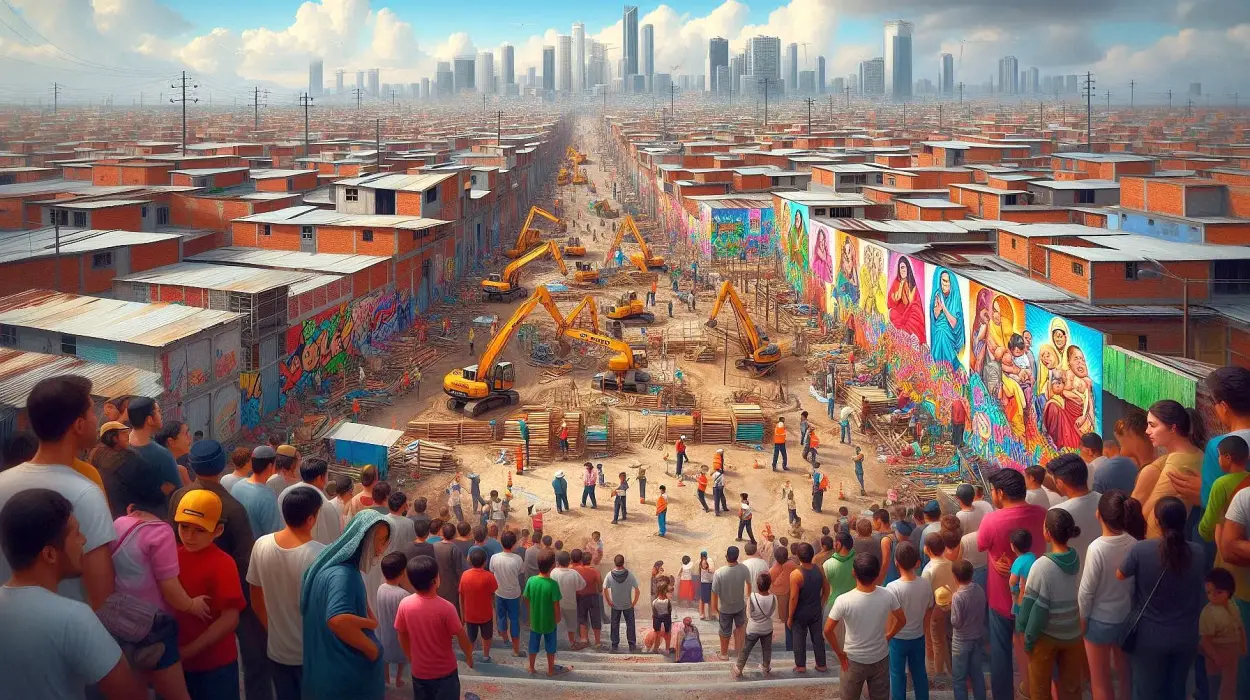
In the heart of Mumbai, nestled between Bandra and Sion, lies Dharavi. Dharavi is a place as layered and complex as the city it inhabits. Often mislabeled as just ‘Asia’s largest slum,’ Dharavi is so much more than that. It is a living, breathing economy, a mosaic of cultures, and a paradox of poverty and productivity. And when such a large land parcel is due for a revamp, a complete overhaul, there is no question of it not attracting the attention of all.
But Dharavi is not the only such location in the world where such an ambitious redevelopment plan has been undertaken. There are other cities in the world which have and are seeing such a redevelopment. We will discuss that today.
Dharavi, a settlement of around 600 acres, is home to between 600,000 and 10 lakh people. It is on the cusp of a transformation unlike anything Mumbai has seen. The Dharavi Redevelopment Project, spearheaded by the Adani Group in partnership with the Maharashtra government, aims to rebuild this densely packed universe into a modern township. The grand redevelopment plan, promising 350 square feet homes to its lawful inhabitants, commercial spaces to businesses working there, and upgraded infrastructure, all over 17 years, is soon to go on the fast track. With an eye-popping budget of ₹25,000 crore for rehabilitation alone, this is not just another slum upgrade. This is India’s largest urban renewal effort and possibly one of the world’s boldest.
Across the globe, other cities too have attempted similar feats, from Mexico City’s Neza-Chalco-Itza to Karachi’s Orangi Town, each with its own model of ambition, failure, and success. So how does Dharavi’s future compare? Let’s take a global tour.
1. Neza-Chalco-Itza, Mexico City—The giant that grew
Population: ~ 40 lakhs
Area: ~2,500 acres
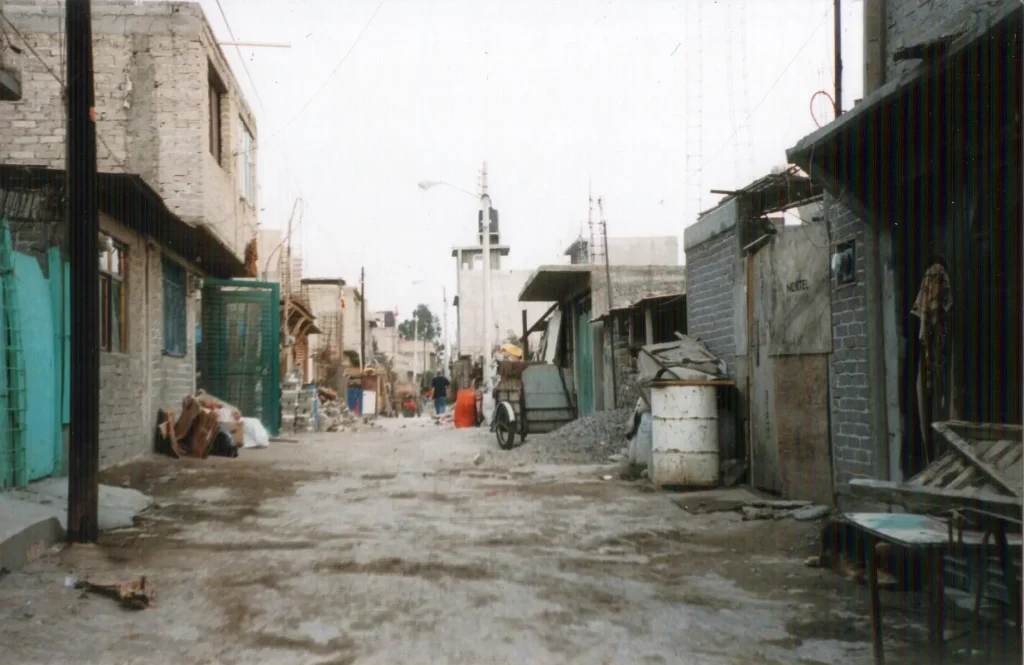
In the eastern outskirts of Mexico City lies a sprawling urban jungle called Neza-Chalco-Itza, often considered the world’s largest slum. Spread over an area more than four times that of Dharavi, Neza evolved not from planning but from the pressures of rural migration and housing shortages. Since the 1980s, redevelopment has taken place there, not in one grand swoop, but in piecemeal, localised efforts.
- Roads were paved.
- Water pipes laid.
- Electricity legalised.
- Most significantly, land rights were granted through a massive titling programme.
Today, Neza isn’t a slum in the conventional sense. It’s a dense, low-income, semi-formal city with businesses, homes, and pride. It’s a textbook example of in-situ development, where people didn’t move, the services did.
So, what can Dharavi learn from it? Or mainly, the state government, the Adani Group, and Navbharat Mega Developers Private Limited, a special purpose vehicle created to make the Dharavi dream a reality? Don’t bulldoze communities; upgrade them. Neza’s slow, steady titling process could guide Dharavi’s messy land rights maze.
2. Mukuru, Nairobi—Planning with, not for, the people
Population: ~ 7,00,000
Area: ~ 600 acres
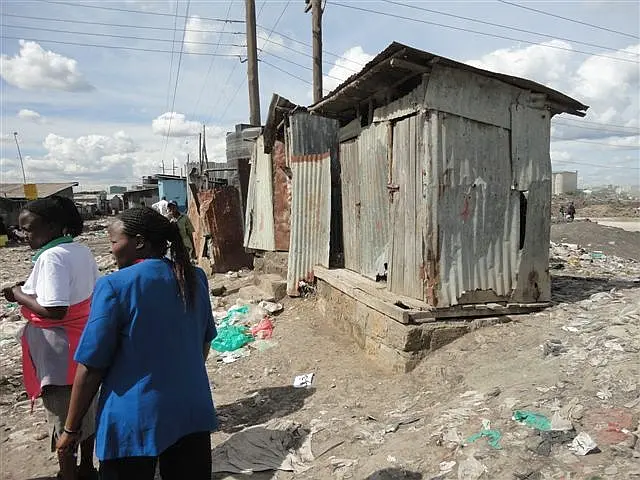
In the heart of Nairobi’s industrial zone sits Mukuru, a slum eerily similar to Dharavi—same size, same population, same challenges. But what sets Mukuru apart is how it’s being redeveloped.
In 2017, Mukuru was declared a Special Planning Area, triggering a radical new approach: the residents would map their own slum. Yes, you read that right! Over 250 community volunteers surveyed every toilet, water tap, and power line. NGOs like Slum Dwellers International backed them, and the Nairobi County government stood by. What followed was a bottom-up miracle:
- 3,800 pit latrines replaced by flush toilets.
- 1,000 households got piped water.
- Roads and drains to stop flooding.
- 13,000 housing units approved — low-rise, in-situ, and built for continuity.
And what are the lessons for Dharavi to learn from it? True transformation begins with trust. Mukuru’s participatory model is a reminder that community is not an obstacle — it is the foundation.
3. Rocinha, Rio de Janeiro—Dreams, cable cars, and caution
Population: ~ Between 1,00,000 and 2,00,000
Area: ~ 350 acres
Perched on the steep slopes of Rio de Janeiro, Rocinha is Brazil’s most famous favela. Though smaller than Dharavi, it pulsates with the same informal energy, shops, schools, and services, all built outside the formal grid.
Brazil’s federal government launched the PAC Urban Integration Project in 2008, pouring over $400 million into Rocinha. Results?
- Roads widened.
- Sanitation networks expanded.
- A cable car system was introduced (yes, really!) to help people scale the hill faster.
- Schools, clinics, and parks were built.
The project made headlines but wasn’t perfect. The cable car fell into disuse. Crime fell, then rose again. Residents protested against evictions and relocations, especially when homes were demolished.
Here is what Dharavi should consider from this: Infrastructure alone doesn’t solve inequality. Sustainable development means consistent maintenance and people-first planning.
4. Orangi Town, Karachi—DIY urbanism that worked
Population: ~ 10 lakhs
Area: ~ 1,400 acres
Across the border, Orangi Town in Karachi holds a mirror to Dharavi: big, chaotic, thriving on informal economies. But it also holds a masterclass in self-help urbanism.
When the state failed to provide sewerage in the 1980s, residents took it upon themselves. Led by the visionary Akhtar Hameed Khan, the Orangi Pilot Project (OPP) was born. With minimal external funding. This is what all those efforts have done to the area:
- Locals dug 8,000+ sewer lines.
- Built over 96% household toilets.
- Created schools, health clinics, and cottage industries.
- Documented and trained communities to replicate the model elsewhere.
And lessons for Dharavi are these: Community empowerment isn’t idealism; it’s practical governance. Instead of top-down demolition, Dharavi could adopt bottom-up collaboration.
5. Kibera, Nairobi – A promise delayed
Population: Between 5,00,000 and 10,00,000
Area: ~ 630 acres
Kibera, often romanticised and vilified, is Nairobi’s other major slum. Like Dharavi, it’s centrally located and politically sensitive.
Since 2004, the Kibera Slum Upgrading Project, supported by UN Habitat, has aimed to fix it. But despite good intentions, progress has been sluggish:
- Only 1,800 new homes built in over a decade.
- Access to water and toilets is still below 25%.
- Frequent clashes between residents and authorities over evictions.
Dharavi can look into this: Big promises are easy. Execution is hard. Even with UN support, lack of transparency, trust, and timely delivery can stall dreams.
Dharavi’s Moment: Big bets, big risks
Now, let’s circle back to Dharavi.
At ₹25,000 crore, this is a mega project, with private sector muscle and government ambition. But unlike the global examples, it comes with:
- Single developer control (Adani Group)
- Strict eligibility rules (residents must prove they have lived there since 2000)
- High rise housing plans, which may clash with the area’s low rise social fabric
- Concerns of displacement, especially among businesses and renters
From someone who has lived in Dharavi for 40 years and runs a tailoring unit to another who manufactures leather goods and is fearing loss of livelihood — the anxiety is real.
Add to that:
- Legal tangles over land ownership
- Environmental PILs citing threats to Mahim Nature Park
- Criticism of a top-down approach, where local voices remain muted
With what has already been done in other parts of the world, Dharavi can certainly get inspiration. With that, its redevelopers can consider being more humane and considerate to the original inhabitants of the locality. Across continents, five key lessons emerge:
- In-Situ First: Redevelop within the slum, not by uprooting it. Mexico’s Neza and Mukuru show that continuity breeds success.
- Empower Communities: Let people be planners. Mukuru and Orangi thrived because residents designed their own future.
- Legal Clarity: Secure land rights, like in Neza, to reduce fear and encourage investment.
- Respect Informal Economies: Don’t kill the very industries that sustain the place. Dharavi’s leather, pottery, and recycling sectors must be preserved.
- Avoid Vertical Ghettoes: High rises may look modern but often fail to nurture community. Incremental, low-rise housing, like Mukuru’s, may serve better.
The Dharavi Dilemma: Transformation or Erasure?
The Dharavi project sits on a knife-edge. It can become a global model, an Indian masterclass in inclusive urbanisation. Or, if mishandled, it could join the list of grand plans that left people behind.
It’s not about cement and steel. It’s about livelihoods, dignity, and continuity. It’s about recognising that ‘slum’ is not a dirty word! It’s a starting point, not a stigma.
As the bulldozers prepare, so must the policymakers. Dharavi is not just a redevelopment site. It’s a living city within a city, and it deserves to be rebuilt not just on paper, but with people.
