 Deshwale
Digital ID for Every Day: How the New Aadhaar App Streamlines Verification
In brief · AI summary The new Aadhaar app from UIDAI lets residents store and share their Aadhaar identity digitally, with features such as face authentication, biometric locking, and QR-code based sharing. The app supports up to five linked Aadhaar numbers under one registered mobile number and is available on Android and iOS. It is meant to reduce paperwork and waiting at hotels, banks, and telecom services, though it does not replace all functions, such as changing demographic details or ordering a new physical card.
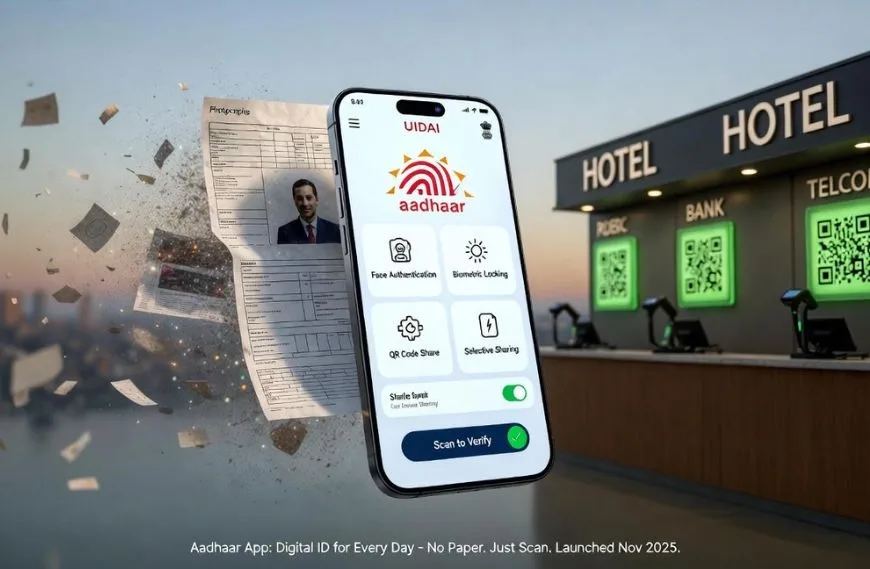
In everyday life, proving who we are often means carrying paper copies of identity documents, filling forms at banks, or showing cards at hotel reception. The launch of the new Aadhaar app by UIDAI promises to change that. With this app, the usual administrative friction check‑in at hotels, bank verifications, and submitting photocopies may become a thing of the past.
The new mobile application allows residents to store and share their Aadhaar identity digitally. The app supports multiple profiles (up to five linked Aadhaar numbers under one registered mobile number) and is available on both Android and iOS.
Key features include face authentication, biometric locking, QR‑code based sharing of verifiable credentials, and selective sharing of identity details (for example name and photo only, not address).
For hotels, banks and other service providers the benefits are tangible. Instead of manually checking photocopies of identity cards or waiting for staff to compare documents, the app allows guests or customers to present a QR code or digital credential. That may speed up check‑in, reduce error risk and cut waiting time.
Imagine arriving at a hotel after a long day of travel. With the digital Aadhaar app, you no longer need to find your physical Aadhaar card, hand over a photocopy, or stand in line for manual verification. You simply share the required credential on your smartphone. The hotel’s front desk scans and verifies the code. The process becomes quicker and smoother.
Similarly, when opening a bank account or completing KYC for a telecom connection, customers can use the app to share their Aadhaar details digitally and selectively. This means less paperwork for the customer and less administrative burden for the institution.
Importantly, the app offers users more control. You can choose what information to share. If an organisation only needs your name and photo, you can mask your address or date of birth. You can also lock biometric usage (such as fingerprint or face) to prevent unauthorized use.
By enabling up to five profiles under one mobile number, the app also helps families. One person managing multiple Aadhaar cards means less hassle for households.
In cities, where time is tight and services move fast, this app may make everyday tasks easier. For frequent travellers who often stay in hotels, the faster check‑in process means less waiting. For daily banking, telecom or other services, the streamlined identity sharing means less form‑filling and fewer queues. Urban citizens often juggle many service interactions; this reduction in friction offers real benefits.
Furthermore, for service providers in busy sectors, digital verification reduces the burden of manual document handling. That can translate into better customer experience, faster turnaround and fewer mistakes.
The app is powerful but it does not replace all functions. For example, it does not allow all demographic changes (like name or date of birth) or ordering a new physical Aadhaar card via the app. Some services will still require visits to enrolment centres. Users and institutions should understand the scope of the app so expectations remain aligned.
Service providers should also ensure they have the scanning and verification systems in place and that staff are trained. Digital tools only deliver if the on‑ground process supports them.
This launch marks a strong step towards digitising identity and reducing physical paperwork in daily life. By enabling secure, convenient, and selective sharing of Aadhaar credentials, it paves the way for smoother service delivery across sectors. The hotel‑check‑in, bank‑KYC, telecom onboarding and many other experiences stand to gain.
For urban consumers and service industry operators alike the message is clear: identity verification no longer means photocopies, stacks of forms or manual cross‑checks. With the new Aadhaar app, the journey is shifting towards fast, digital and friction‑free.
As we move into a more digital world, carrying multiple physical identity cards and submitting multiple paper copies should fade away. The new Aadhaar app offers real‑time, on‑phone identity sharing. Hotels, banks and other service points can adopt it to deliver faster, better service. For users, the relief comes in fewer forms, less waiting and more security. The paperwork burden is finally being addressed one scan at a time.
Subscribe Deshwale on YouTube