 Deshwale
No Internet, No Social Media: How Eritrea Continues Life Without Digital Connectivity in the 21st Century
In brief · AI summary Reports indicate that about 99% of Eritreans do not use the internet or platforms such as Instagram, YouTube, or WhatsApp. Key barriers include scarce, slow infrastructure and high costs, with an hour of Wi-Fi costing around 100 Eritrean Nakfa. Banking and commerce still depend largely on physical money, as ATMs are few and cashless transactions are rare.
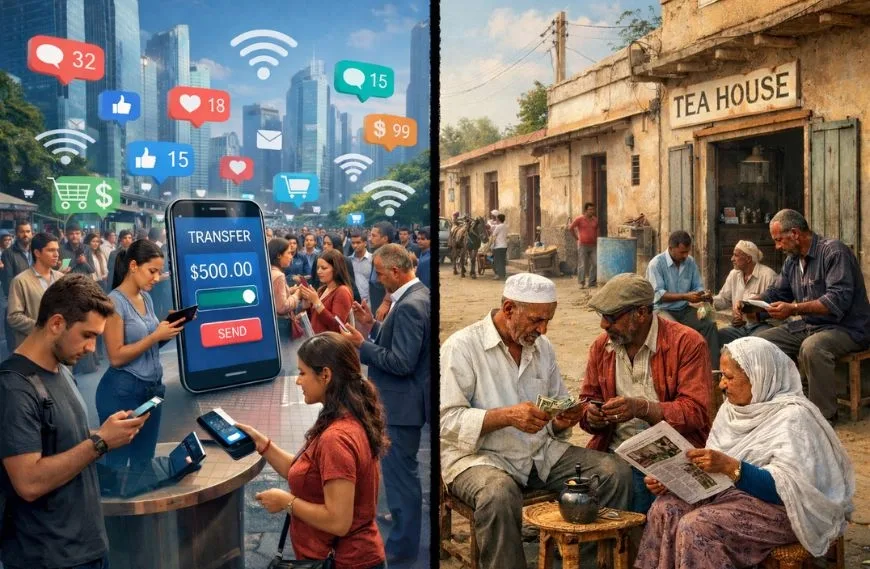
In an age where smartphones, social media, and online services dominate daily life, Eritrea offers a rare glimpse into a world largely untouched by digital technology. Located along the Red Sea in East Africa, the country has seen extremely limited internet adoption, leaving the majority of its population disconnected from the digital networks that dominate global society.
The capital, Asmara, exemplifies this trend. Here, traditional methods of communication, commerce, and daily living continue to define everyday life. Reports indicate that approximately 99% of Eritreans do not use the internet, nor do they access popular platforms such as Instagram, YouTube, or WhatsApp. While most nations rely heavily on digital tools for banking, shopping, and social interaction, Eritreans largely maintain routines reminiscent of the mid-20th century.
A key barrier to connectivity is the scarce and slow internet infrastructure. Public Wi-Fi exists in only a few cafes, and even there, speeds are far below international standards. Costs remain prohibitive: an hour of Wi-Fi can cost around 100 Eritrean Nakfa, a price far beyond the reach of many citizens given the nation’s low average income.
The absence of digital infrastructure extends into financial systems. ATMs are few, cashless transactions are rare, and most commerce continues to depend on physical money. For many Eritreans, digital services remain a distant concept rather than an everyday convenience.
This reliance on traditional systems places Eritrea in stark contrast with the rest of the world. As nations embrace digital banking, mobile applications, and online commerce, Eritrea preserves a lifestyle more closely aligned with the 1950s.
Analysts describe Eritrea as a unique case study in the 21st century—a country navigating modern life while deliberately or circumstantially maintaining minimal dependence on the internet, digital tools, and social media. The situation underscores global disparities in technological adoption and provides insight into how societies can function outside of digital ecosystems.
For those tracking global digitalisation trends, Eritrea stands as a reminder that progress is uneven and that cultural, economic, and infrastructural factors continue to shape access to technology around the world.
Subscribe Deshwale on YouTube