 Deshwale
Future of Dining: AI, Robotics, and Automation in Restaurants
In brief · AI summary AI, robotics, and automation are reshaping how restaurants prepare, serve, and deliver food, with AI used for personalized recommendations, demand forecasting, and menu design. Robotic fryers, arms, and servers reduce human error and handle repetitive tasks, while smart kiosks, cloud platforms, and testing of autonomous vehicles and drones extend automation to ordering and delivery. The article concludes that the future of dining will be hybrid, with technology handling efficiency and humans providing connection and creativity.
By: Prathamesh Amrute
The restaurant industry is entering a transformative phase where technology is no longer a backstage player but a central protagonist. Artificial intelligence (AI), robotics, and automation are reshaping how food is prepared, served, and experienced. For business leaders and restaurateurs, this evolution is not just about efficiency—it’s about redefining brand identity, customer engagement, and the economics of dining.
AI is increasingly being used to personalize customer experiences. Recommendation engines, similar to those in e-commerce, now suggest dishes based on past orders, dietary preferences, or even mood indicators. Chatbots handle reservations and inquiries, while predictive analytics help restaurants anticipate demand and optimize inventory. For example, AI-driven platforms can analyze weather patterns, local events, and historical data to forecast foot traffic. This allows managers to staff appropriately and reduce waste. In fine dining, AI is even being used to design menus that balance flavor profiles with nutritional goals, offering a blend of artistry and science.
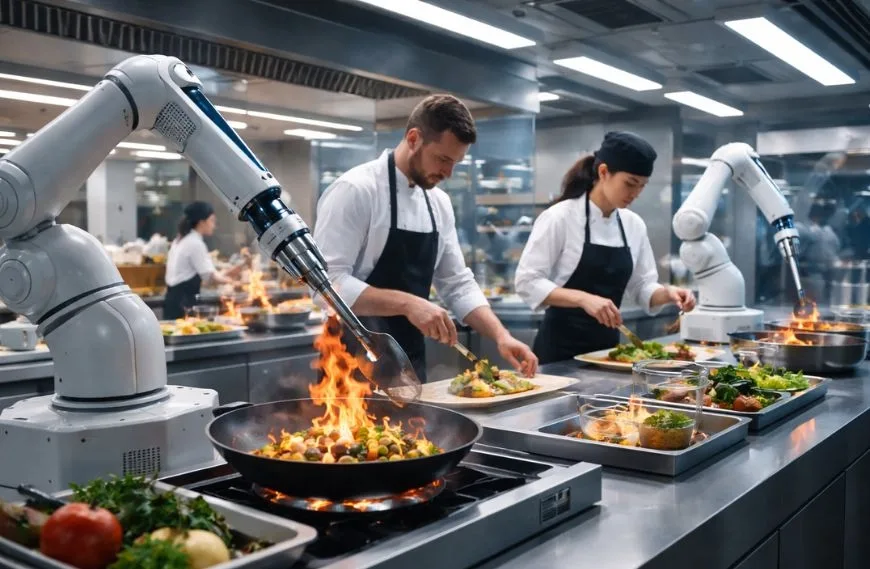
Robotics are moving from novelty to necessity. Automated fryers, robotic arms that flip burgers, and machines that craft sushi rolls are becoming more common. These innovations reduce human error, ensure consistency, and allow staff to focus on higher-value tasks such as customer interaction. Front-of-house applications are equally compelling. Robotic servers and buses are being deployed in high-volume settings, particularly in Asia and North America. While they may not replace human warmth, they excel in repetitive tasks, freeing human staff to deliver personalized service.
Automation extends beyond cooking and serving. Smart ordering kiosks, mobile payment systems, and automated inventory management are now standard in many chains. Cloud-based platforms integrate these systems, giving managers real-time visibility into operations. Delivery, a critical growth area, is also being transformed. Autonomous vehicles and drones are being tested to bring meals directly to customers’ doors. Combined with AI-driven logistics, these systems promise faster, more reliable service while reducing labor costs.
Technology is not just about efficiency—it’s about creating memorable experiences. Imagine a restaurant where AI recognizes a returning guest, recalls their favorite wine, and suggests a new dish based on their preferences. Or a robotic bartender that crafts cocktails with precision while engaging customers in light conversation. These innovations enhance convenience and novelty, but they also raise questions about authenticity. Will diners miss the human touch? Successful brands will be those that strike a balance—using technology to elevate service without eroding the emotional connection that makes dining special.
For restaurateurs, the adoption of AI and robotics is both an opportunity and a challenge. Upfront investment can be significant, but long-term savings in labor, waste reduction, and efficiency are compelling. Moreover, early adopters gain a competitive edge by positioning themselves as innovators. From a strategic perspective, automation allows scalability. Chains can replicate processes across locations with minimal variation, ensuring brand consistency. At the same time, smaller restaurants can use AI-driven insights to compete more effectively, tailoring experiences that rival larger competitors.
Despite the rise of machines, the human element remains irreplaceable. Hospitality is, at its core, about connection. Technology should augment, not replace, this essence. The future of dining will likely be hybrid robots handling repetitive tasks, AI guiding decisions, and humans delivering empathy and creativity.
The integration of AI, robotics, and automation is not a distant vision—it is happening now. From kitchens to customer interactions, technology is redefining the restaurant landscape. For business leaders, the imperative is clear: embrace innovation, but never lose sight of the human touch. The restaurants of tomorrow will be judged not only by the quality of their food but by how seamlessly they blend efficiency, personalization, and authenticity. In this new era, the future of dining is as much about algorithms and automation as it is about flavor and fellowship.
Author Bio: (Prathamesh Amrute has extensive experience in the hospitality management industry. He completed postgraduate studies in Hospitality Management at a prominent college in Toronto, Canada)
Subscribe Deshwale on YouTube