




The Ganga River, revered as a goddess in India and a lifeline in Bangladesh, weaves through the heart of South Asia, carrying with it not just water but the hopes, fears, and futures of millions.
For decades, its flow has been a source of both unity and discord between India and Bangladesh, two nations bound by geography and history. In 1996, after years of fraught negotiations, the Indo-Bangladesh Ganga Water Treaty was signed, a landmark agreement aimed at sharing the river’s precious dry season flow.
As the treaty approaches its 2026 expiration, it stands as a testament to diplomatic perseverance, yet it remains shadowed by unmet expectations and environmental challenges. It is a critical document not just in the history of Indo-Bangladesh relations, but also for the geopolitics of the South Asian region.
The background of the treaty
The Ganga, one of the world’s most significant and sacred rivers, flows through both India and Bangladesh. The river is a lifeline for over 500 million people, providing water for irrigation, drinking, and industrial use. However, the distribution of water between India and Bangladesh has been a long-standing issue due to the fact that the Ganga crosses international borders and forms the boundary between the two countries.
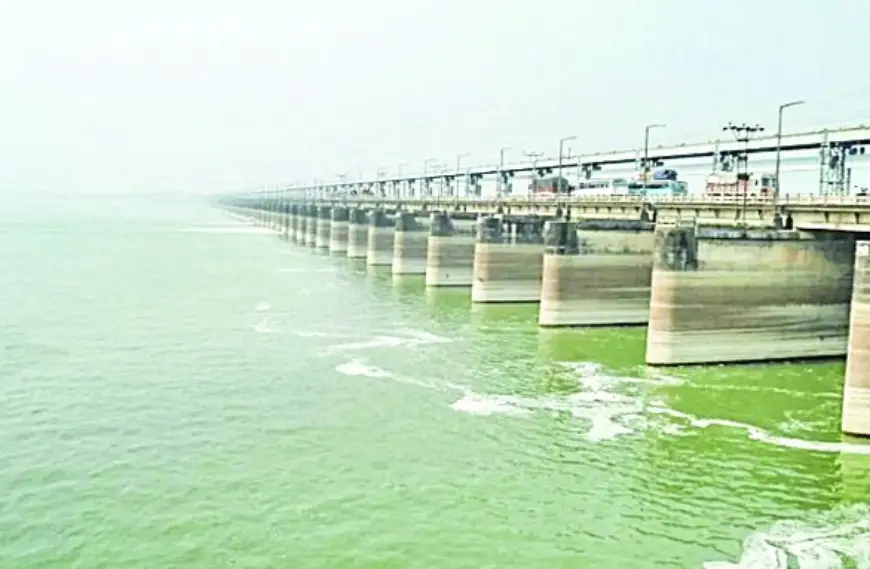
Before the treaty, the issue was mainly about the diversion of water by India, particularly through the Farakka Barrage, located in the Murshidabad district of West Bengal. This barrage, constructed by India in 1975, was intended to divert water to the Hooghly River to maintain the Kolkata Port’s navigability. However, this led to significant concerns in Bangladesh, as it reduced the flow of water into the country, especially during the dry season, threatening agriculture and livelihoods.
The solution came in the form of the Indo-Bangladesh Ganga Water Treaty, which was signed on December 12, 1996, under the leadership of then Indian Prime Minister H.D. Deve Gowda and Bangladesh Prime Minister Sheikh Hasina. The treaty established an arrangement for the sharing of the Ganga’s waters and set out provisions for the management of the river’s flow.
The treaty’s framework: A delicate balance
The treaty’s core is its water-sharing formula, applied from January 1 to May 31, when Ganga flows are lowest. Based on historical averages, it allocates water as follows:
- Flow ≤ 70,000 cusecs: Split 50:50 between India and Bangladesh.
- Flow between 70,000-75,000 cusecs: Bangladesh receives 35,000 cusecs; India gets the rest.
- Flow ≥ 75,000 cusecs: India receives 40,000 cusecs, Bangladesh gets the excess.
- Critical period (March 11- May 10): Each country is guaranteed 35,000 cusecs in alternating 10 day periods.
Positive Impacts: A foundation for cooperation
For India
The treaty has been a diplomatic triumph for India, cementing its role as a responsible upper riparian state. By committing to share Ganga waters, India strengthened bilateral ties with Bangladesh, fostering trust during a period of warming relations. “The treaty is a cornerstone of our friendship,” said India’s Ministry of External Affairs in a 2017 report, noting its “satisfactory” operation. It has facilitated cooperation on other fronts, like trade and energy, with Bangladesh becoming a key partner in India’s “Neighborhood First” policy.
For Bangladesh
For Bangladesh, the treaty was a historic victory, securing its first long-term claim to Ganga waters. “Establishing our rights was the goal,” says Malik Fida A. Khan, a JRC member, in a 2022 Dialogue Earth interview. Data from the JRC shows Bangladesh received its stipulated share in most years, supporting irrigation in its southwest districts, particularly Kushtia and Jessore. This has bolstered food security, with rice production in these areas rising 20% since 1996, per Bangladesh’s Ministry of Agriculture.
Negative Impacts: Strains and shortfalls
For India
The treaty’s rigid formula poses challenges for India, particularly in West Bengal. Chief Minister Mamata Banerjee has repeatedly flagged its impact, writing to Prime Minister Narendra Modi in 2024 that the treaty “has huge implications for the people of West Bengal.” Diverting water to Bangladesh reduces flows to Kolkata Port and the National Thermal Power Corporation at Farakka, risking silt buildup and power shortages. A 2019 study estimated silt accumulation at 2 million tonnes annually, threatening the Hooghly’s navigability.
Climate change exacerbates these issues. Erratic monsoons and upstream withdrawals in Uttar Pradesh and Bihar unregulated by the treaty have lowered flows at Farakka, forcing India to balance treaty obligations with domestic needs. “We’re caught between fairness to Bangladesh and our own survival,” says West Bengal irrigation official Manish Jain. The treaty’s lack of a minimum flow guarantee complicates planning, especially during droughts.
For Bangladesh
Bangladesh’s grievances are more severe. A 2019 study in Water Policy found that Bangladesh received less than its guaranteed share in 94 of 300 10-day periods from 1997-2016, particularly during March-April, when agricultural demand peaks. “The treaty’s based on outdated flow data,” says Khan. “Climate change and upstream abstractions have reduced flows, leaving us short.” This underflow has slashed crop yields in Bangladesh’s southwest, with farmers like Abdul Rahman in Jessore lamenting, “My paddy fields will dry up by April.”
Politically, the treaty is a lightning rod. The BNP and other factions call it biased toward India, fueling anti-Indian sentiment. “India controls the barrage, so we are at their mercy,” says a BNP spokesperson in a 2025 The Hindu interview. Recent political upheaval in Bangladesh, with Sheikh Hasina’s ouster in 2024, adds uncertainty to renewal talks.
The positive aspects of the treaty for India and Bangladesh
1.Strengthening bilateral ties
The signing of the Ganga Water Treaty marked a significant step in the diplomatic relations between India and Bangladesh. It demonstrated that both nations could collaborate on managing shared resources, an issue that had the potential to strain bilateral relations. The treaty was seen as a model for peaceful water-sharing agreements and helped foster trust between the two countries.
2.Addressing Bangladesh’s water scarcity
For Bangladesh, the treaty was a critical development, as it ensured a reliable supply of water for agriculture, drinking, and sanitation, particularly during the dry season. The Ganga is the lifeblood of Bangladesh’s agricultural sector, and the treaty’s provisions helped safeguard the livelihoods of millions of farmers who depend on the river for irrigation.
3.Improved relations on other issues
The Ganga Water Treaty was part of a broader effort to improve bilateral relations between India and Bangladesh, particularly in the 1990s. It paved the way for cooperation in other areas, including trade, security, and border management, demonstrating the potential of cooperation in shared resource management.
4.Environmental benefits
By ensuring that the Ganga’s flow was maintained through Bangladesh, the treaty also helped protect the river’s ecosystem. The reduced flow of water due to the diversion at the Farakka Barrage had led to environmental degradation, affecting fish populations and the broader ecosystem in the region. The treaty’s implementation helped mitigate some of these impacts.
Challenges and criticism of the treaty
Despite its positive impact, the treaty has faced significant criticism and challenges from both sides. Some of these issues remain unresolved and continue to create tensions between India and Bangladesh.
1. Unequal water distribution
One of the main criticisms of the treaty is that the water-sharing formula does not provide an equitable distribution of the Ganga’s waters. While the treaty grants Bangladesh 40,000 cusecs during the dry season, India has argued that this amount is insufficient to meet Bangladesh’s growing water needs. Moreover, the treaty’s provisions are not always followed, with India sometimes being accused of not releasing the agreed upon amount of water.
2. Impact on Indian interests
From India’s perspective, the treaty has sometimes been viewed as a compromise that benefits Bangladesh more than India. Critics have argued that India’s interests are not always adequately protected, particularly in terms of maintaining the Ganga’s flow for domestic use. There have been concerns about the environmental and agricultural impact of releasing large amounts of water to Bangladesh, especially during lean seasons when water availability is low.
3. Delayed implementation and Non-compliance
Despite the treaty’s establishment in 1996, the implementation of its provisions has been slow at times, with disagreements over data-sharing, water distribution, and maintenance of the agreed flow rates. These delays have created friction, with both countries accusing each other of not fulfilling their commitments. The lack of transparency and timely exchange of information has also been a concern.
4. Political sensitivities
The Ganga Water Treaty is highly sensitive in both India and Bangladesh, and political considerations often affect its execution. In Bangladesh, there are domestic political pressures to ensure that the treaty’s provisions are strictly followed, while in India, there is often resistance from local communities, particularly in West Bengal, which are concerned about water shortages caused by the treaty’s terms.
The way forward
Looking forward, the Indo-Bangladesh Ganga Water Treaty can be seen as both a success and a work in progress. While it has facilitated peaceful cooperation between India and Bangladesh, there is still room for improvement, particularly in terms of ensuring more equitable water distribution and addressing the growing water scarcity issues on both sides of the border. The future of the treaty will depend on continued dialogue, better data sharing, and perhaps even revising the water-sharing arrangements to reflect the changing realities of water usage, population growth, and climate change.
As India and Bangladesh continue to manage the Ganga’s waters, the world will be watching closely, not just as a case study of transboundary water diplomacy but also as a reflection of how countries can cooperate to tackle the pressing challenges of the 21st century.
In conclusion, the Indo-Bangladesh Ganga Water Treaty remains one of the most significant agreements between the two nations. While it has facilitated cooperation in managing the Ganga’s waters, it continues to evolve in the face of changing environmental conditions and political pressures. It provides valuable lessons for other regions with shared water resources, demonstrating that, even in a world of scarce resources, diplomacy and negotiation can lead to mutually beneficial outcomes.
