 Deshwale
The Golden Empire of Mali: Wealth, Knowledge, and the Legend of Mansa Musa
In brief · AI summary Mali, one of the medieval world's richest West African empires, controlled trade in gold, salt, and ivory, and its ruler Mansa Musa (ruled 1312–1337) became famous for his wealth and his 1324 pilgrimage to Mecca. Timbuktu grew into a center of scholarship, with Sankore University and hundreds of private libraries. By the 15th century, internal conflicts and rising powers like the Songhai had weakened Mali, though its legacy endures.
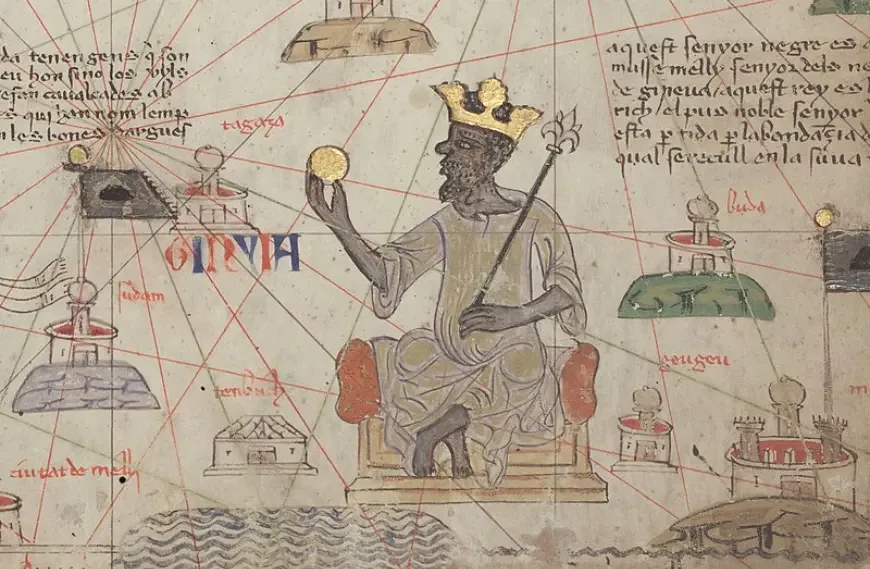
In the heart of West Africa rose the Empire of Mali, one of the medieval world’s richest and most influential civilisations. At its height in the 14th century, Mali controlled vast trade networks in gold, salt, and ivory – and produced Mansa Musa, the richest man in recorded history.
The Birth of a Great Empire
Founded in the early 13th century by Sundiata Keita, Mali unified smaller kingdoms and expanded to cover much of modern Mali, Senegal, Gambia, Guinea, and Niger. Its power rested on controlling trade routes linking West Africa to North Africa and Europe.
Mali’s cities like Timbuktu, Gao, and Djenné became centres of commerce, learning, and religion.
Mansa Musa: The World’s Wealthiest Man
Mansa Musa (ruled 1312–1337) elevated Mali’s fame across continents. In 1324, he made a legendary pilgrimage to Mecca, travelling with tens of thousands of attendants and so much gold that he reportedly crashed economies along his route by flooding markets with his wealth.
This journey put Mali on European maps and in the chronicles of Islamic and Christian scholars.
Centres of Knowledge
Timbuktu’s Sankore University and hundreds of private libraries made the city a beacon of scholarship, preserving texts on astronomy, medicine, law, and philosophy. Manuscripts from the Mali era continue to be rediscovered today, offering glimpses into a sophisticated intellectual tradition.
Trade and Culture
Caravans of camels carried salt, gold, slaves, and kola nuts through the Sahara to cities like Cairo and Marrakech. Mali’s diverse population included Mandé, Fulani, and Tuareg peoples, whose languages and cultures interwove to form a rich mosaic.
Islam spread through trade and royal patronage, but traditional African beliefs coexisted with Islam for centuries.
Decline and Legacy
By the 15th century, internal conflicts and rising powers like the Songhai weakened Mali. Yet its memory endures in oral histories, the architectural marvels of Timbuktu, and stories of Mansa Musa’s dazzling wealth.
Historian Dr. Michael Gomez writes: “Mali’s golden age demonstrates Africa’s capacity for empire, innovation, and global influence long before European colonisation.”