 Deshwale
The Hidden Risks of Space-Based Data Centres and Orbital Cloud Computing
In brief · AI summary Experts warn that space-based data centres face unresolved risks, including latency from the distance data must travel, heightened cybersecurity threats, and costly or impossible hardware repairs in orbit. Concerns also include radiation damage, unclear legal liability and insurance, and abandoned systems adding to space debris. Goldman Sachs projects that global data centre power demand could rise by up to 165 per cent by 2030, while critics argue that enthusiasm for space-based facilities risks outpacing governance, security planning and technical maturity.
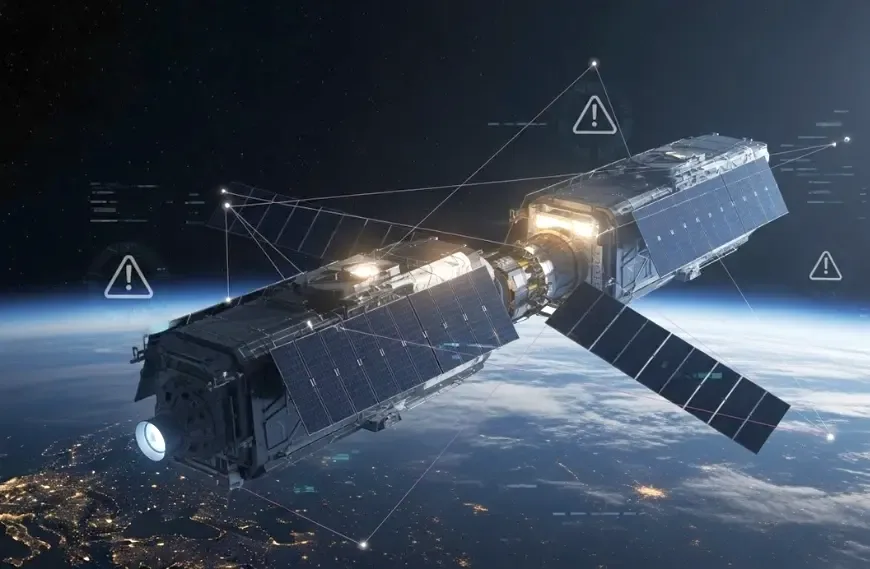
The idea sounds almost futuristic perfection: limitless solar power, no land constraints, no local emissions. Yet behind the excitement surrounding space-based data centres, a quieter debate is taking shape among engineers, cybersecurity experts and infrastructure planners. As technology companies explore orbit and even the Moon as the future home of cloud computing, unresolved technical and security risks are raising serious questions about whether the leap is coming too soon.
While firms like Google, alongside other industry leaders, are testing the feasibility of off-Earth computing, experts warn that moving critical digital infrastructure beyond the planet introduces a new class of vulnerabilities, many of which have no clear solutions yet.
Latency: The invisible performance barrier
One of the most immediate challenges facing space-based data centres is latency. Even with high-speed laser-based optical links, data must still travel thousands of kilometres between Earth and orbiting systems. For applications such as real-time AI inference, financial trading, healthcare systems or critical government services, even milliseconds of delay can have serious consequences.
Unlike terrestrial cloud networks, where latency can often be mitigated through regional data centres, space infrastructure offers far fewer opportunities for proximity optimisation. The physics of distance remains unavoidable, no matter how advanced transmission technology becomes.
Cybersecurity in an uncharted domain
Cybersecurity risks multiply once computing moves off-planet. Satellites are already known targets for jamming, spoofing and signal interception. Turning them into fully fledged data centres dramatically raises the stakes.
Unlike Earth-based facilities, space-based data centres cannot be quickly isolated, physically secured or manually inspected after a breach. Any vulnerability, whether in communication links, onboard software or hardware firmware, could be exploited remotely, with limited options for immediate response.
Security specialists also warn that existing cybersecurity frameworks were never designed for orbital infrastructure, leaving major gaps in incident detection, response time and accountability.
Repairs: When a server failure means a space mission
On Earth, hardware failure is inconvenient. In orbit, it can be catastrophic. Traditional data centres rely on constant human intervention, technicians replacing components, upgrading systems and responding to emergencies around the clock.
For space-based data centres, even a minor malfunction could require a dedicated space mission to fix. That brings enormous cost, logistical complexity and long delays. In many cases, companies may simply have to abandon failed systems entirely, raising concerns about both reliability and space debris.
The lack of rapid physical access fundamentally changes the economics and risk calculations of cloud operations.
Human intervention is not an option
Automation is essential in space computing, but it is also a vulnerability. Without on-site engineers, all system management must be handled remotely or autonomously.
If AI-driven control systems themselves malfunction, there may be no practical way to intervene. This creates a paradox: space-based data centres are designed to support AI workloads, yet they must rely heavily on AI just to function safely.
Risk analysts caution that cascading failures, where one fault triggers multiple system breakdowns, could be far harder to contain in space than on Earth.
Radiation and hardware degradation
Although companies report testing chips for radiation tolerance, long-term exposure to cosmic radiation remains a serious concern. Over time, radiation can degrade semiconductors, corrupt data and shorten hardware lifespan.
Unlike Earth-based facilities, where equipment can be rotated and replaced, space-based data centres must operate for extended periods with limited redundancy. This raises questions about long-term reliability, data integrity and maintenance costs that remain largely theoretical.
The legal and insurance grey zone
Another unresolved issue is responsibility. If a space-based facility fails, leaks data or causes orbital damage, liability becomes complex. International space law prohibits national sovereignty claims over space, but offers limited clarity on commercial accountability.
Insurance markets for orbital infrastructure are still evolving, and large-scale data centres introduce risks that insurers have never priced before. Until clearer legal frameworks emerge, companies operating space-based data centres may face unpredictable financial exposure.
Environmental risks don’t disappear, they move
Supporters argue that off-Earth computing reduces environmental harm on the ground. Critics counter that this may simply relocate risk rather than eliminate it.
Rocket launches carry their own environmental costs. Abandoned satellites contribute to orbital congestion, increasing the likelihood of collisions. Over time, poorly managed space-based data centres could exacerbate the growing problem of space debris, threatening both commercial and scientific missions.
The push towards space infrastructure is driven by genuine pressures: soaring AI demand, strained power grids and rising climate scrutiny. Goldman Sachs projects global data centre power demand could rise by up to 165 per cent by 2030, a figure that has alarmed policymakers and utilities alike.
But infrastructure decisions made today will shape digital systems for decades. Critics argue that enthusiasm for space-based data centres risks outpacing governance, security planning and technical maturity.
A frontier that demands caution
There is little doubt that space will play a growing role in future computing. Falling launch costs and rapid advances in satellite technology make experimentation inevitable. Yet experts stress that experimentation must not be mistaken for readiness.
For cybersecurity professionals, IT decision-makers and risk analysts, space-based data centres represent both extraordinary potential and unprecedented danger. The cloud’s next frontier may well be above our heads, but its risks remain firmly grounded in reality.
As Aazeem continues to track the intersection of technology, policy and infrastructure, one message is clear: before the cloud leaves Earth, its safeguards must be stronger than ever.
Subscribe Deshwale on YouTube