




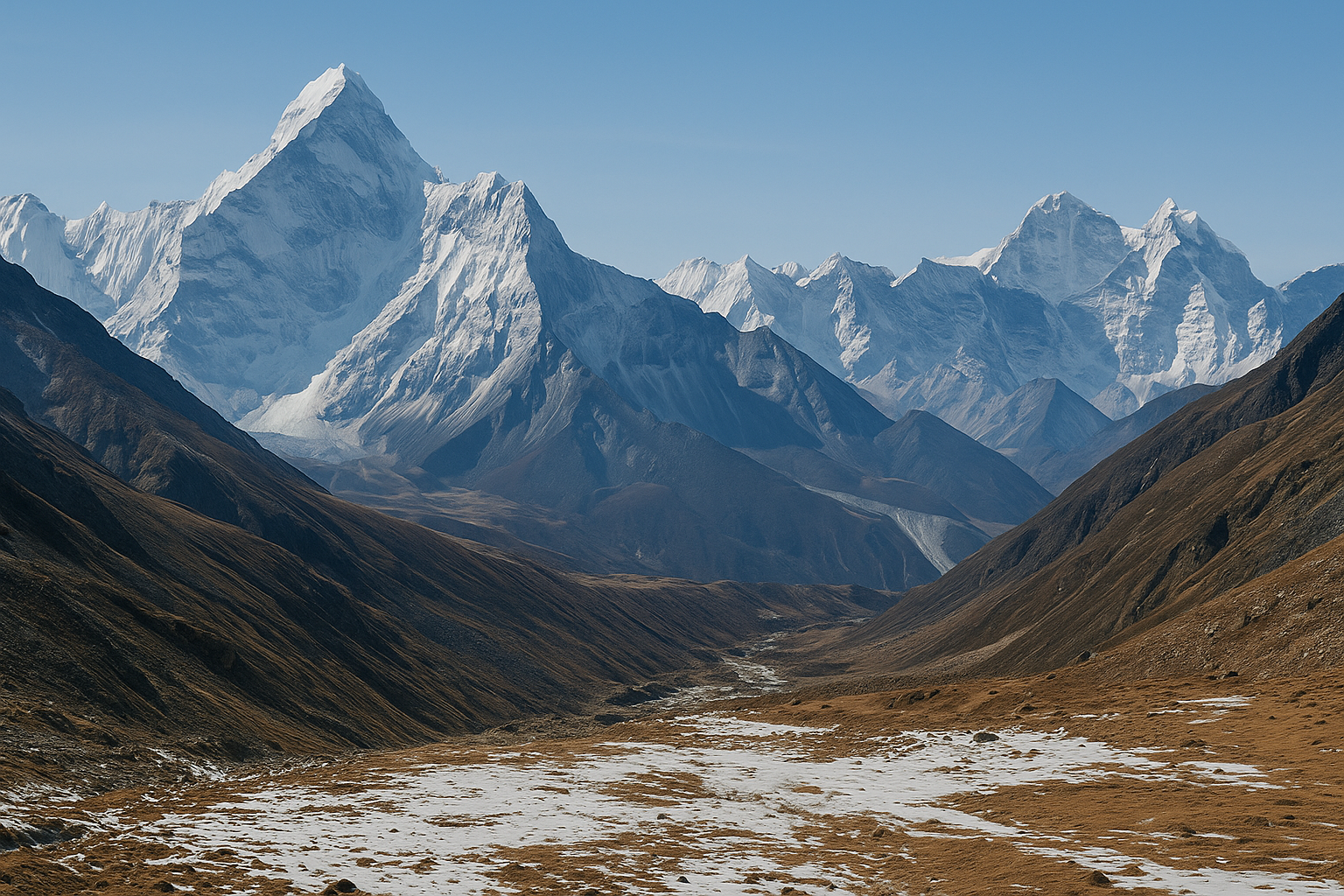
Let’s talk about something that doesn’t make the headlines often, but it really should. Snowfall across the Hindu Kush-Himalayan region has hit its lowest level in 23 years. And that’s not just about climate, it’s about water, food, and survival for nearly two billion people who rely on this snowmelt for their daily needs.
The latest report, released by the International Centre for Integrated Mountain Development (ICIMOD), says that snow across this vast mountain range is now 23.6 percent lower than usual. This isn’t just a one-off. It’s the third year in a row we’re seeing this worrying trend.
What’s going on in the mountains?
This region stretches from Afghanistan right through to Myanmar and holds one of the largest stocks of ice and snow outside the Arctic and Antarctic. So, when it snows less or melts faster, that directly affects rivers, agriculture, and drinking water all across South and Southeast Asia.
According to the lead scientist behind the report, Sher Muhammad, snowfall came late this year, barely starting in January. And even when it did, it wasn’t enough to keep things stable.
The snow is what feeds major rivers like the Ganges, Brahmaputra, Mekong, and Salween. When there’s not enough of it, river levels drop, and people start depending more on groundwater, which creates a whole new set of problems.
Drought risks rising
Some countries in the region have already raised drought warnings. That means this isn’t a future problem, it’s a now problem. From delayed harvests to lack of drinking water, many communities are already struggling with what comes after a poor snow season.
ICIMOD is urging countries to act fast. Better water management, early warning systems for drought, and strong cross-border cooperation are going to be key. Without it, the risk of water shortages, crop failure, and worsening heatwaves will only grow.
Climate change is no longer a debate
Pema Gyamtsho , ICIMOD’s Director General, didn’t mince words. He said carbon emissions have already locked the region into a future where snow irregularities are here to stay. That means leaders need to think long-term and come up with strong, science-based climate policies—not just temporary fixes.
And just in case you’re wondering if this is a one-off disaster, the United Nations’ weather agency confirmed last month that Asia is facing the brunt of climate-related disasters. Five of the past six years have seen the fastest retreat of glaciers ever recorded.
