




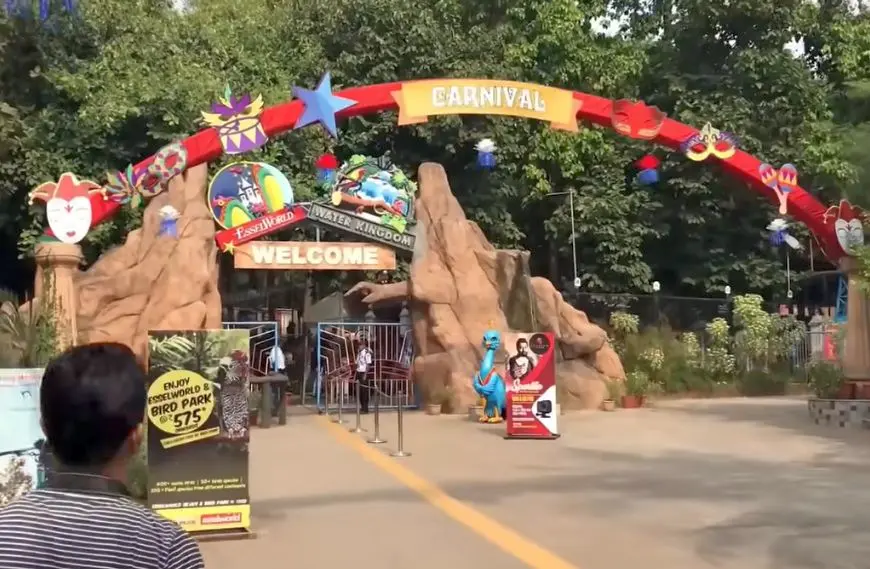
Are you a fan of amusement parks? Ever played in a water park and felt the thrill of the rides? If yes, then you surely know about EsselWorld. The nostalgic dream destination of every child.
It was not just an amusement park. For many of us, it was a whole childhood wrapped in jingles, rides, and day-long trips where time did not matter. But before it became this magical destination, its story started somewhere very, very different – with a small-town boy named Subhash Chandra.
Subhash’s family was under the burden of a loan of 3.5 lakh rupees, which in those days was a huge amount. Because of this financial pressure, his family told him higher education was not possible. He dropped out of studies, and at just 15 years old, joined his family business to help out. He was hardworking, determined, and honestly, a dreamer. In the early 80s, he set up a packaging company called Essel Propack, which became India’s first company to manufacture laminated plastic tubes for toothpaste. That was already a game-changing moment. But Subhash wanted something bigger.
People loved watching circuses in those days, because back then there were hardly any other sources of entertainment. One day, an idea struck him – why should not India have a world-class amusement park like the ones abroad? Something colourful, grand, and exciting. A place where people could forget their worries and simply laugh. This wild thought began to take shape in 1983, when he chose Gorai village in Mumbai to bring his vision to life. And by 1989, after six long years of planning, battling rules, and overcoming countless hurdles, EsselWorld finally opened its gates to the public. It was India’s first full-scale amusement park, and also the biggest.
Sure, Delhi already had Appu Ghar, but honestly, EsselWorld was on another level. Bigger, bolder, flashier. But with something new comes trouble. EsselWorld was hit with problem after problem. The government did not even recognise amusement parks as a proper category in law back then. Which meant they were constantly mislabelled under random categories. It resulted in insane taxes and legal issues. Import duties on rides from abroad, octroi tax from the local municipal corporation, entertainment tax on tickets, and if that was not enough, random raids by revenue departments. At one point, 15 to 20 different departments of Mumbai’s BMC had slapped cases on EsselWorld. Imagine trying to build happiness, but every second day, a notice lands at your office.
Media controversies did not help either. News channels started reporting that Gorai locals were not given jobs at the park, when in reality more than 70% of the staff were locals themselves. This false narrative made things tougher. But instead of giving up, EsselWorld leaned on two things. The marketing and the innovation.
The 90s changed everything. TVs entered every home, and EsselWorld ran advertisements so catchy that they became part of pop culture. The line – ‘EsselWorld mein rahunga main, ghar nahi jaunga main.’ was not just a jingle, it was a movement. Kids sang it, schools booked trips, and families planned vacations around it. And in 1998, EsselWorld doubled its magic by launching Water Kingdom, which became Asia’s biggest water theme park. Suddenly, wave pools, massive slides, artificial rivers, everything was at India’s doorstep. People could not get enough.
Over the years, the park kept reinventing itself. Hair-raising rides like Shot-N-Drop and Top Spin. Spooky attractions like Tunnel Twister and Monsters in the Mist. Ice skating rinks, bowling alleys, disco floors – What else could you want? For schools and corporate outings, it became the go-to spot. Visitors crossed more than 17 lakh annually by 2013, and it felt unstoppable.
In 2019, to celebrate 30 years of joy, EsselWorld launched something truly unique – the country’s first walk-through Bird Park. It was magical. More than 60 species and 500 exotic birds, surrounded by over 200+ special plants and trees. Visitors could walk among them, feed them, and connect with nature in a way no theme park had offered before. It was not just an attraction, it was educational, it was conservation-focused, and it gave people yet another reason to fall in love with EsselWorld. By then, over 30 crore visitors had experienced its magic since opening.
And then came the darkest days. Even before 30 years were complete, cracks had started showing. Competition was stiff – Imagica, Wonderla, and others had entered the market with bigger budgets, shinier rides, and stronger marketing. Suddenly, EsselWorld’s charm began to look… old. Upgradation became the biggest issue. While newer parks kept modernising, EsselWorld lagged behind, weighed down by its legacy and ongoing legal battles.
The controversies grew louder. Land acquisition for the 700-acre project was labelled questionable. Allegations surfaced about illegally cutting mangroves for expansion. FIRs were filed, penalties were charged. The brand’s image, once glowing with family fun, slowly became entangled in negative headlines. And when the parent group, Essel Group, got dragged into financial fraud controversies with SEBI and the Enforcement Directorate investigating, things got worse.
Then came Covid-19. The ultimate killer. Social distancing, lockdowns, bans on gatherings – it destroyed everything amusement parks stood for. For two long years, Essel’s gates stayed closed. And when they reopened, it was not the same. Families had less money, priorities had shifted, and the magic had vanished. Rising costs, corroding rides near the salty sea air, fewer crowds, contract-based staff replacing loyal ones – it felt hollow. Finally, the heartbreaking announcement landed on their official website: “We are temporarily closed until further notice.”
Temporarily. But we all know what that really means.
So will EsselWorld ever open again? Hard to say. To restore it would need massive renovation because the salt-laden Mumbai air has already eaten through the metal rides. The cost of revamping it to world-class standards in today’s competitive market would be staggering. Unless a passionate investor or the group itself decides to pour in heavy money, it might just stay in our memories.
But what memories they are. The laughter of kids in Water Kingdom waves. The thrill of dropping from 190 feet on the Shot-N-Drop. The joy of feeding birds in 2019’s Bird Park. School trips, cotton candy, birthday parties, long walks by the rides, sitting exhausted but happy at the end of the day – that’s what EsselWorld gave to millions.
It’s not just an amusement park story. It’s the story of India’s first big dream of entertainment. The story of a man, Subhash Chandra, who dared to bring fun into our lives when no one even imagined it. EsselWorld may be “temporarily closed” on paper, but in reality, it will live forever – in jingles, in photographs, and in the hearts of those who once screamed their lungs out there before heading home with a smile that lasted for days.
Because honestly, no park, no ride, no competitor can ever really replace the feeling of shouting out loud: EsselWorld mein rahunga main ghar nahi jaunga main.
