




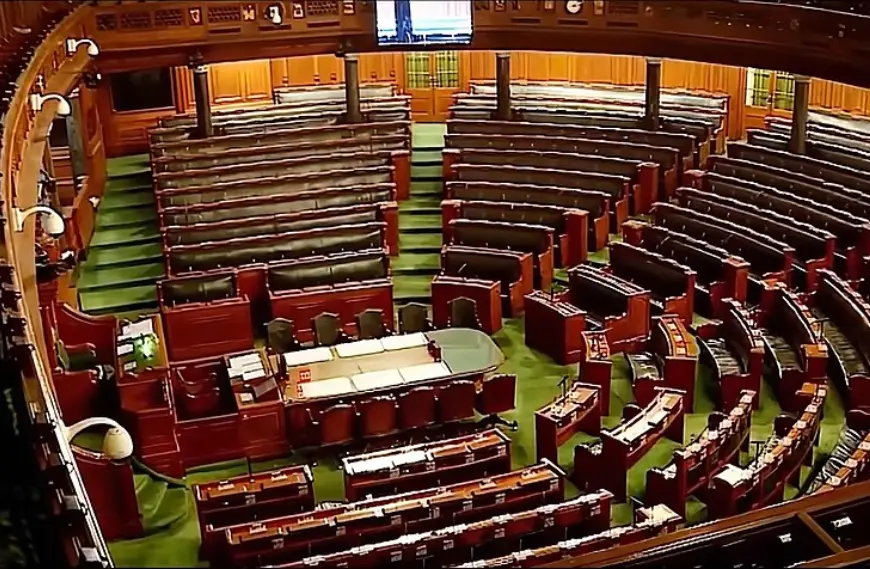
The Indian Parliament is the heartbeat of the country’s democracy. It’s where representatives from across India gather to debate, legislate, question, and guide the nation’s progress. But how exactly does it work? Let’s break down its structure, history, sessions, and how laws are passed .
A Quick Look at the Structure
The Indian Parliament consists of two Houses:
- Lok Sabha (House of the People) – The lower house, where members are directly elected by the people of India.
- Rajya Sabha (Council of States) – The upper house, representing the states and union territories, with members elected by the legislative assemblies.
There’s also the President of India, who plays a crucial role in the functioning of Parliament, especially in the legislative process.
As of 2025, the Lok Sabha has 543 elected members, while the Rajya Sabha has 245 members. The Speaker heads the Lok Sabha, and the Vice President of India is the ex-officio Chairperson of the Rajya Sabha.
A Bit of History
India’s parliamentary system is deeply rooted in the British Westminster model, adopted after independence in 1947. The first general elections were held in 1951–52, and the first Lok Sabha was formed in 1952. Over the decades, the Parliament has grown not just in size but in its role as a forum for fierce debate, dissent, and policymaking.
Parliamentary Sessions – What Happens and When?
Parliament doesn’t sit throughout the year. Instead, it meets in three key sessions:
- Budget Session (February to May) – Focuses on the Union Budget and financial planning for the year.
- Monsoon Session (July to September) – Takes up major legislation and policy discussions.
- Winter Session (November to December) – Reviews pending bills and debates national issues.
The President of India summons Parliament for these sessions and has the power to dissolve the Lok Sabha when required.
The Heart of the Matter: Lawmaking
Lawmaking is one of the core functions of the Indian Parliament. Here’s how a bill becomes a law in India:
When a bill is introduced, it is first tabled in either the Lok Sabha or the Rajya Sabha. This bill can be proposed by a minister (government bill) or by any other member of Parliament (private member’s bill). Once introduced, the bill undergoes several readings and is often sent to committees for detailed review.
After discussions, the bill is put to a vote. If it passes in one House, it moves to the other. Both Houses must approve it. Once both Houses pass the bill, it is sent to the President for assent. After the President signs it, the bill becomes an official law.
This entire process allows for scrutiny, debate, and suggestions at multiple stages making democracy more participatory and accountable.
Types of Bills
Parliament handles different types of bills:
- Ordinary Bills – Deal with general matters and require approval from both Houses.
- Money Bills – Only introduced in the Lok Sabha and deal with taxation, borrowing, and government spending.
- Financial Bills – Similar to Money Bills but may contain non-financial elements too.
- Constitutional Amendment Bills – Propose changes to the Constitution and need a special majority to pass.
- Private Member’s Bills – Introduced by MPs who are not ministers, highlighting important public issues.
As of 2025, very few private member’s bills have become law, but they remain important tools for raising public debates.
Key Functions Beyond Lawmaking
Apart from making laws, Parliament has four major functions:
- Deliberative – Debates on issues of national and public importance.
- Executive Control – The government is accountable to Parliament. It must answer questions and defend policies.
- Financial Control – No taxes or expenditure can happen without Parliament’s approval.
- Amending the Constitution – Major constitutional changes need to be passed by Parliament with a two-thirds majority.
Milestones & Reforms Over Time
- 1970s: Televising Parliament began, making proceedings more transparent.
- 1991: Post-liberalisation, Parliament dealt with economic reforms and policy shifts.
- 2006: Introduction of e-governance tools like PRS Legislative Research to help MPs make informed decisions.
- 2019: Record number of bills passed in a single session under the 17th Lok Sabha.
- 2023: Introduction of the new Parliament House building under the Central Vista Project.
- 2025: Growing calls for digitisation, real-time public access to legislative updates, and use of AI in research support for MPs.
Challenges Facing Parliament in 2025
- Disruptions: Frequent walkouts and adjournments affect productivity.
- Low Attendance: Especially in committee meetings.
- Lack of informed debate: Often due to poor research and short discussion time.
- Pending Bills: Over 100 bills remain under review as of 2025.
Despite these issues, there’s also increased citizen awareness, digital transparency, and media coverage driving more accountability.
Final Thoughts
The Indian Parliament isn’t just a grand building in Delhi, it’s the engine that drives Indian democracy. Every session, every debate, and every vote matters. As voters, understanding how it works is the first step toward holding our representatives accountable.
As India moves into a future with rising political engagement, technology, and young voices, Parliament will continue to evolve while staying rooted in the principles laid down in 1950.
