 Deshwale
HSRP NUMBER PLATES IN INDIA: FROM CONCEPT TO EXECUTION, RULES, AND MORE
In brief · AI summary High Security Registration Plates (HSRP) were introduced to curb theft and fraud by standardising number plates and linking each one to a central database, as required under Rule 50 of the Central Motor Vehicles Rules, 1989. As of January 2026, Maharashtra reported 27 lakh vehicles non-compliant with HSRP, and driving without one can attract fines of ₹5,000 to ₹10,000.
India’s roads teeming with over 300 million registered vehicles, yet millions lack standardised security features. As of January 2026, Maharashtra alone reports 27 lakh vehicles non-compliant with High Security Registration Plates (HSRP), prompting strict enforcement. Introduced to curb theft and fraud, HSRP transforms vehicle identification. This article explores its concept, execution, rules, and evolving landscape amid 2026 crackdowns.
Image idea: A photo of a modern vehicle displaying an HSRP with visible hologram and snap locks.
The Concept Behind HSRP
HSRP emerges from the need for tamper-proof vehicle registration. Traditional plates, often duplicated, fuelled crimes like theft and hit-and-runs. The concept standardises plates nationwide, linking each to a central database for traceability.
Rule 50 of the Central Motor Vehicles Rules, 1989, mandates this system. It ensures uniformity in design, size, and font, preventing alterations. Authorities track vehicles easily during investigations.
The idea draws from global practices but adapts to India’s vast fleet. It promotes road safety and reduces fake registrations, estimated at 5% in some regions.
Historical Evolution of HSRP
HSRP’s journey began in 2012 with pilot implementations. The Ministry of Road Transport and Highways (MoRTH) notified amendments in December 2018, making HSRP mandatory. Vehicle manufacturers supply plates for new registrations.
By April 2019, all new vehicles required HSRP. Older ones faced phased retrofitting. States like Delhi led early adoption, while others extended deadlines.
In 2025, Telangana set September 30 as the cutoff for old vehicles. Nationwide push intensified, with over 50% of vehicles yet to comply by late 2025. 2026 marks the enforcement era, with no extensions in key states.
Key Features of HSRP
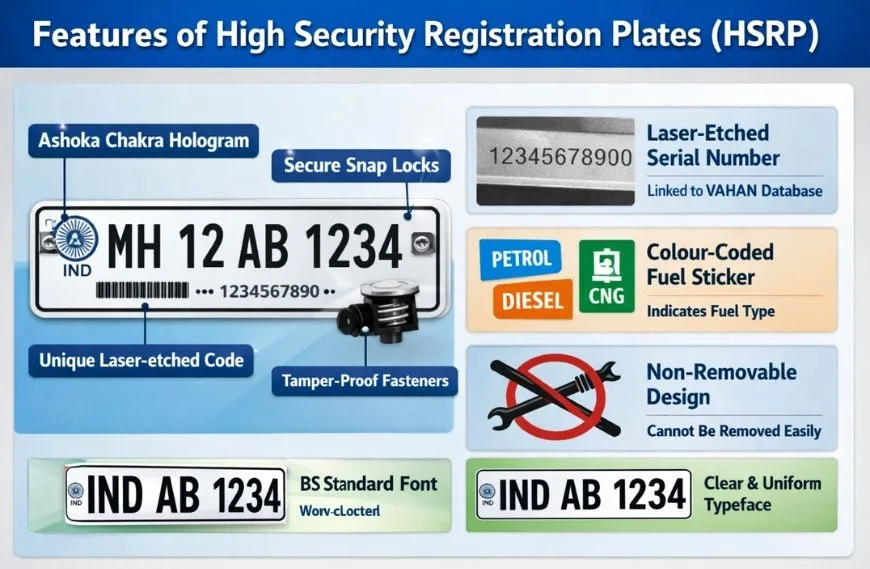
HSRP plates use aluminium for durability. A chromium-based hologram depicts the Ashoka Chakra, deterring counterfeits. Laser-etched serial numbers link to the VAHAN database.
Snap locks secure plates permanently, requiring breakage for removal. A third registration mark, a colour-coded sticker, indicates fuel type: blue for petrol, orange for diesel.
Fonts follow BIS standards, ensuring readability. These features prevent tampering, with market projections showing 6.8% CAGR from 2026 to 2033. Plates resist weather and last for vehicle lifetimes.
The Execution Process: Applying for HSRP
Owners apply online via portals like SIAM or state RTO websites. They provide registration number, chassis, and engine details from the RC book.
Owners select vehicle type, such as two-wheeler, car, or commercial. Fees range from ₹300 for bikes to ₹700 for cars, plus home delivery charges. Payment completes the booking.
Authorized dealers install plates. They affix front and rear plates with snap locks and apply the sticker on the windshield. The process takes 30-45 minutes.
For old vehicles, Maharashtra received 1 crore applications by January 2026. Bookings post-deadline are still possible, but fines apply during checks.
Installation and Verification Steps
Dealers verify documents on-site. They drill holes precisely for snap locks, ensuring no damage. Sticker placement follows guidelines inside the windshield for cars.
Post-installation, data uploads to the central registry. Owners receive confirmation via SMS. Verification involves scanning the hologram or checking serial numbers.
In busy hubs like Mumbai, mobile teams offer doorstep service, embodying desi jugaad for convenience. Delays occur due to high demand, but 2026 sees streamlined processes.
Rules and Regulations Governing HSRP
MoRTH mandates HSRP for all vehicles under CMV Rules. New vehicles receive them at purchase, while older ones must retrofit.
Plates display English numerals and letters only; fancy fonts are not allowed. Front plates have a white background, and rear plates are yellow for commercial vehicles.
Colour-coded stickers are compulsory for BS-IV and above vehicles. Non-removable fixation prevents swaps. States enforce compliance via RTOs, following uniform national standards.
Penalties for Non-Compliance
Driving without HSRP invites fines from ₹5,000 to ₹10,000. Repeat offences escalate penalties.
In Karnataka, enforcement started in October 2025 for pre-2019 vehicles. Maharashtra began checks after December 2025, with no extensions.
RTOs may withhold services like RC renewal until compliance. Over 60% of vehicles in Pune lacked HSRP by February 2025, risking widespread fines.
Recent Developments and Updates
As of February 2026, enforcement ramps up nationwide. Maharashtra’s deadline ended on December 31, 2025, with 27 lakh defaulters facing action.
Karnataka mandates HSRP for pre-2019 vehicles, with penalties from early 2025. Telangana’s September 2025 cutoff has seen full implementation.
MoRTH explores GPS integration for enhanced tracking. Over 1,000 daily applications in Pune highlight a surge in compliance.
Challenges in Implementation
Logistics strain supply chains, with delays in rural areas. Fake HSRP vendors have emerged, prompting vigilance.
Awareness gaps persist, especially among two-wheeler owners. Costs burden low-income groups, though subsidies are being discussed.
Despite hurdles, HSRP reduces crimes, with police reporting easier tracking. The future may integrate HSRP with FASTag for seamless verification.
Future Outlook for HSRP
By 2030, full compliance is expected, with digital plates on the horizon. Market growth at 6.8% CAGR signals investment in technology.
States like Maharashtra plan awareness drives. Integration with Vahan 4.0 enhances data accuracy.
HSRP paves the way for smarter roads, blending security with efficiency. As chai stalls buzz with compliance talks, HSRP is embedding into daily life.
Subscribe Deshwale on YouTube