 Deshwale
India Dives Into Atomic-Level Chip Race
In brief · AI summary A team of 30 scientists at the Indian Institute of Science in Bengaluru is working to develop angstrom-scale semiconductor chips, using 2D materials instead of regular silicon. The researchers plan to build a dedicated lab with cleanrooms and chip-fab technology on the IISc campus. The project is part of a wider Indian push to strengthen its semiconductor sector, though the article notes that such advanced technology will take time to achieve.
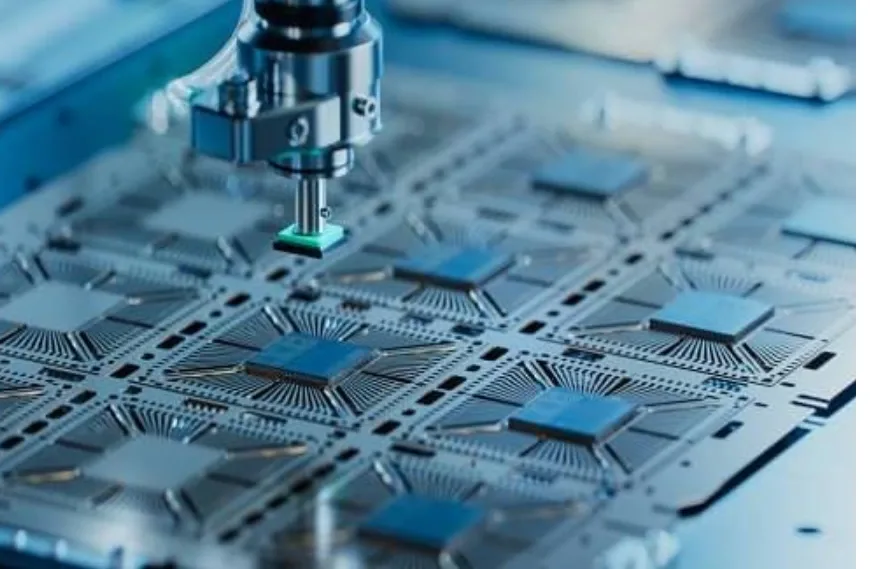
Big moves are happening in Bengaluru. A team of 30 scientists at the Indian Institute of Science (IISc) is working on something that could change the game in tech — the world’s smallest semiconductor chip. And no, this isn’t sci-fi. It’s very real and very, very tiny.
We’re talking angstrom-scale chips. That’s one-tenth of a nanometre. To put it in perspective, a human hair is about 80,000 nanometres thick. These chips are so small they operate almost at the atomic level.
So why all the fuss? Because this stuff powers everything. From smartphones and laptops to electric cars and defence tech, semiconductors are the invisible engines behind modern life. And right now, most of the cutting-edge chip manufacturing happens outside India.
But IISc’s team wants to change that.
Instead of using regular silicon, which has its limits when you shrink things down too much, these researchers are turning to 2D materials — super-thin, flexible substances that are just one atom thick but can carry electricity like a boss. These materials could help make chips faster, cooler, and way more energy efficient.
The idea is to use this breakthrough to design chips that are smaller but pack more power, speed, and efficiency. And they’re planning to build a dedicated lab for it — complete with cleanrooms and chip-fab tech — right inside the IISc campus.
This isn’t some solo project either. It’s part of a bigger push by India to boost its semiconductor game. With global chip shortages and supply chain worries, every country wants to make its own chips. India doesn’t want to just catch up — it wants to leap ahead. This project could put India on the tech map in a massive way.
Globally, chip leaders are still working around the 3 nanometre mark. Going angstrom-scale? That’s like jumping from horse carts to hyperloops. It means India’s not just following — it’s taking the lead.
Yes, it’ll take time. This level of tech needs crazy precision and world-class infrastructure. But the foundation is being laid. And if these scientists pull it off, India could be supplying chips for everything from electric vehicles to AI processors, all made at home.
So yeah, the chip race just got real — and India’s not on the sidelines anymore.