 Deshwale
Water cut follows missile test by Pakistan
In brief · AI summary India has stopped water flow from the Baglihar dam on the Chenab river to Pakistan, hours after Pakistan tested a surface-to-surface missile, with officials saying the sluice gates were closed as part of regular maintenance. India also plans to restrict water from the Kishanganga project on the Jhelum river, which Pakistan has long opposed under the Indus Waters Treaty.
Water cut follows missile test by Pakistan
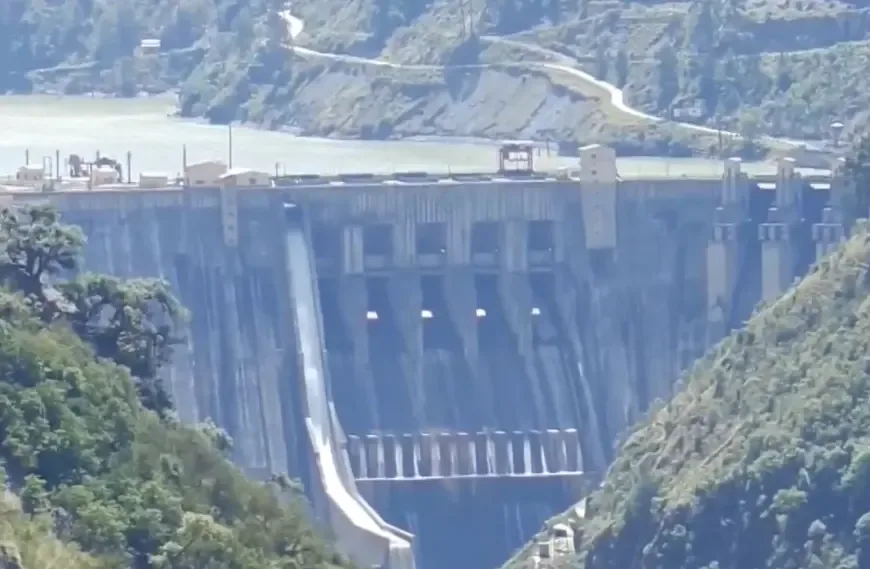
India has taken a sharp step in its ongoing tensions with Pakistan. The government has stopped the flow of water from the Baglihar dam on the Chenab river, cutting supply to Pakistan. This move came just hours after Pakistan tested a surface-to-surface missile.
Officials confirmed that sluice gates at the Baglihar hydro project were closed. The process began on Saturday as part of regular maintenance. However, the timing suggests a strong political signal from India.
India is also planning to restrict water from the Kishanganga project, which affects the Jhelum river. Both rivers are part of the Indus water system shared between the two countries under a decades-old treaty.
Kishanganga dam next in line
The Kishanganga hydel plant, located in the Gurez Valley of Jammu and Kashmir, will soon be shut for major repairs. This will stop any flow from the project to areas downstream in Pakistan.
Pakistan has long opposed the designs of both Baglihar and Kishanganga dams. It claims the structures breach the terms of the Indus Waters Treaty, signed in 1960.
India recently paused the implementation of the treaty following the terror attack in Pahalgam on April 22, which killed several tourists. Since then, the government has been reviewing how best to use river water for domestic needs.
Centre prepares new water plans for Indian states
Officials from the Jal Shakti ministry met with the Home Ministry to discuss ways to improve water access for Indian states, especially in the north. Around 50 engineers from the National Hydroelectric Power Corporation (NHPC) have already reached Jammu and Kashmir to lead these operations.
A senior NHPC official shared that India is also advancing work on several hydropower projects in the region. These are all located along the Chenab river and its tributaries.
Four power projects set for completion by 2028
There are four major projects under development, Pakal Dul (1,000 MW), Kiru (624 MW), Kwar (540 MW), and Ratle (850 MW). All of them are joint ventures between NHPC and the Jammu and Kashmir State Power Development Corporation (JKSPDC).
Prime Minister Narendra Modi laid the foundation stones for these between 2018 and 2022. As of now, Pakal Dul is two-thirds complete, Kiru is halfway through, and Kwar and Ratle are still in early phases.
The coffer dam for Ratle, a temporary barrier used during construction, is nearly finished. Work picked up pace in 2023 and is expected to wrap up by late 2028.
Pakistan objects, World Bank reviews project
Pakistan has raised objections over the Ratle and Kishanganga projects. In June 2024, a team from Pakistan visited the Ratle site in Drabshalla, along with a neutral expert from the World Bank. The visit was part of ongoing reviews tied to the water treaty.
Despite concerns, India is moving forward. The combined capacity of the four projects is 3,014 MW. Once fully operational, they are expected to generate over 10,500 million units of electricity each year.
Jammu and Kashmir holds a massive hydropower potential of 18,000 MW. So far, only about a quarter of that has been tapped. Most of the energy potential lies in the Chenab basin, followed by the Jhelum and Ravi basins.
Looking ahead
India’s recent actions mark a turning point in its river policy with Pakistan. Blocking water from the Chenab river is not just a technical move, it’s a clear message. As work speeds up on these hydropower projects, India is pushing to secure both its energy future and its control over shared river resources.