



India is intensifying efforts to combat cancer with stronger healthcare policies, increased funding, and advancements in research. With cases rising, the government is focusing on early detection, accessible treatment, and affordability.
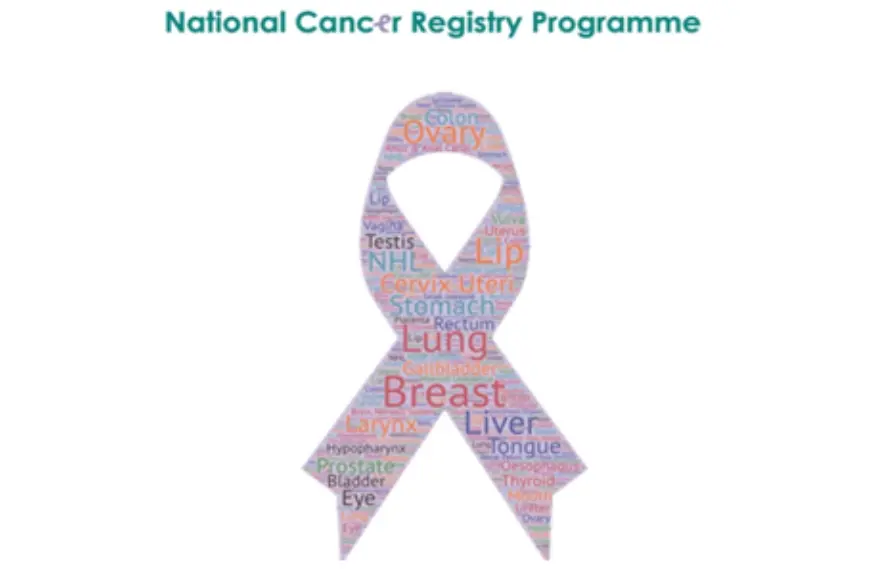
The National Cancer Registry Programme under the Indian Council of Medical Research (ICMR) has been tracking cancer trends since 1982. It provides critical data for policy decisions. The National Institute of Cancer Prevention & Research develops screening guidelines under the National Programme for Prevention and Control of Cancer, Diabetes, Cardiovascular Diseases, and Stroke (NPCDCS).
Budget Boost for Cancer Care
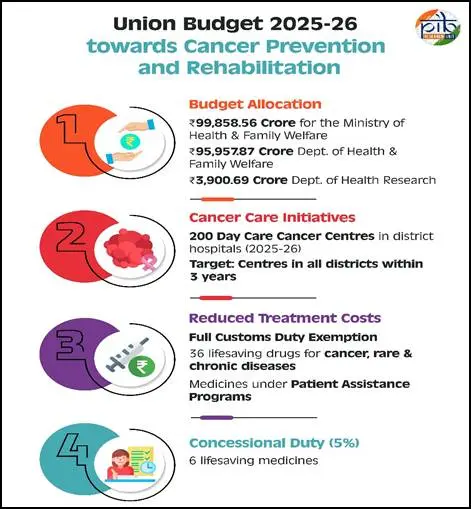
The Union Budget 2025-26 highlights the government’s commitment to cancer care. The Ministry of Health and Family Welfare received ₹99,858.56 crore, with ₹95,957.87 crore allocated to the Department of Health and Family Welfare and ₹3,900.69 crore to the Department of Health Research.
As part of its healthcare strategy, the government plans to establish Day Care Cancer Centres in district hospitals over the next three years. In 2025-26, 200 centres will be set up. To lower treatment costs, 36 lifesaving drugs for cancer, rare diseases, and chronic conditions are now exempt from basic customs duty. Additionally, six other medicines will attract a reduced duty of 5%, while certain drugs under pharmaceutical Patient Assistance Programmes will be fully exempt.
Expanding Cancer Treatment Facilities
Under NPCDCS, the government has integrated cancer screening into primary healthcare services. Efforts to strengthen infrastructure include:
- 770 district NCD clinics
- 233 cardiac care units
- 372 district day care centres
- 6,410 community health centre NCD clinics
To improve specialised cancer care, the government has expanded the tertiary cancer care network. Currently, India has 19 State Cancer Institutes and 20 Tertiary Care Cancer Centres. Key institutions such as the National Cancer Institute in Jhajjar and the Chittaranjan National Cancer Institute in Kolkata are leading cancer research and treatment.
Improving Access to Affordable Cancer Treatment
Since its launch in 2018, the Ayushman Bharat scheme has provided financial protection to cancer patients. It covers chemotherapy, radiotherapy, and surgical oncology. So far, over 90% of registered cancer patients have received treatment under this scheme.
The Health Minister’s Cancer Patient Fund offers financial aid of up to ₹5 lakh for economically weaker patients. The maximum assistance cap is ₹15 lakh. The scheme operates through 27 Regional Cancer Centres, each receiving ₹50 lakh in revolving funds.
To standardise cancer care, the government has strengthened the National Cancer Grid. Established in 2012, it now connects 287 institutions across India. The grid treats over 750,000 new cancer patients annually, covering more than 60% of the country’s total cancer burden. It also collaborates with Ayushman Bharat to regulate cancer treatment costs.
Advancements in Cancer Research
India achieved a major breakthrough in April 2024 with the launch of NexCAR19, its first indigenously developed CAR-T cell therapy. Created by IIT Bombay, Tata Memorial Centre, and ImmunoACT, this therapy provides an affordable alternative for blood cancer treatment, reducing reliance on expensive imports.
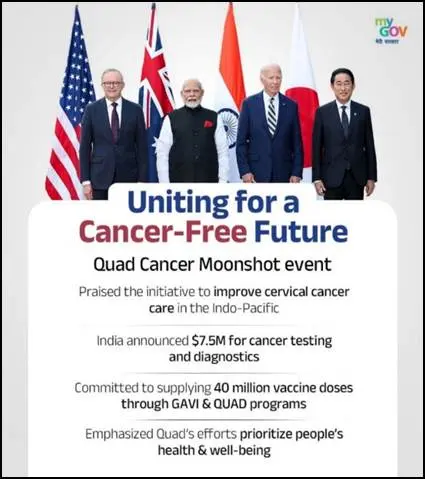
The country is also partnering with the US, Australia, and Japan in the Quad Cancer Moonshot initiative. Launched in September 2024, the programme aims to eliminate cervical cancer in the Indo-Pacific region. It focuses on expanding screening, vaccination, and research.
Meanwhile, in January 2025, the Advanced Centre for Treatment, Research, and Education in Cancer (ACTREC) announced a major expansion. This move aims to accelerate oncology research, improve patient care, and advance treatment options.
Raising Cancer Awareness
The government is actively promoting cancer awareness through multiple initiatives. Community outreach programmes, media campaigns, and national observances like Cancer Awareness Day and World Cancer Day encourage prevention.
Several initiatives further reinforce preventive healthcare:
- Ayushman Aarogya Mandir promotes wellness activities at the community level.
- The Eat Right India campaign encourages nutritious food choices.
- The Fit India Movement promotes physical activity.
- The Ministry of AYUSH organises yoga programmes to improve overall health.
With cancer cases increasing, India is taking a multi-pronged approach. Strengthening prevention, early detection, infrastructure, financial aid, and research will help improve outcomes and reduce the disease’s burden.
