




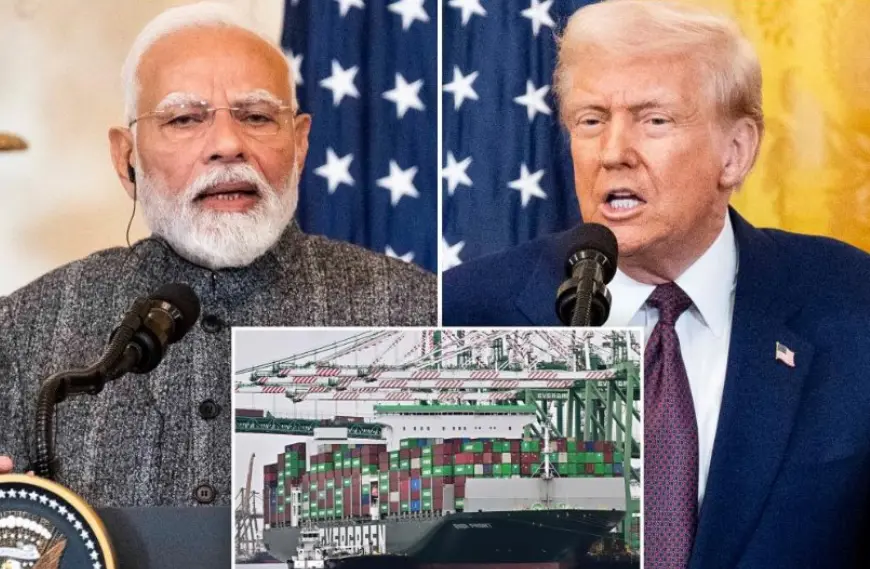
India has agreed on terms with the United States for a new trade deal following extensive negotiations. The agreement, reportedly fast-tracked after intervention from the Prime Minister’s Office (PMO), aims to resolve tariff disputes and boost bilateral trade. However, concerns remain over the potential impact of new reciprocal tariffs imposed by the US under its trade policies.
Key highlights of the India-US trade deal
The agreement focuses on reducing trade barriers, addressing tariff concerns, and expanding market access for both nations. India has committed to lowering tariffs on select US goods, while Washington is expected to ease restrictions on certain Indian exports.
Despite these developments, US President Donald Trump has emphasised his administration’s stance on reciprocal tariffs, targeting countries with high import duties on American goods. India, however, remains firm, with government reports suggesting minimal impact on GDP from these changes.
Sectors affected by tariff adjustments
While the deal brings new opportunities, certain Indian industries face challenges:
- Pharmaceuticals – India hopes for faster US approvals on generic drugs, a key export sector.
- Agriculture – Some Indian farm products may see lower tariffs in the US.
- Automobiles – Indian carmakers could face higher import duties on US-bound exports.
- Textiles – The deal may offer better access for Indian textile products in the US market.
- IT Services – The agreement may help ease restrictions on technology trade and services.
India’s stand on reciprocal tariffs
India has downplayed the impact of the US’s tariff policies, citing economic resilience and a strong domestic market. Analysts believe that while some sectors may experience short-term disruptions, the broader economy is well-positioned to absorb the changes.
What’s next?
The trade deal marks a step towards stronger economic ties between India and the US. As both sides finalise details, industries will closely watch how tariff adjustments affect trade flows. The focus remains on ensuring balanced growth and protecting key sectors from adverse effects.
