



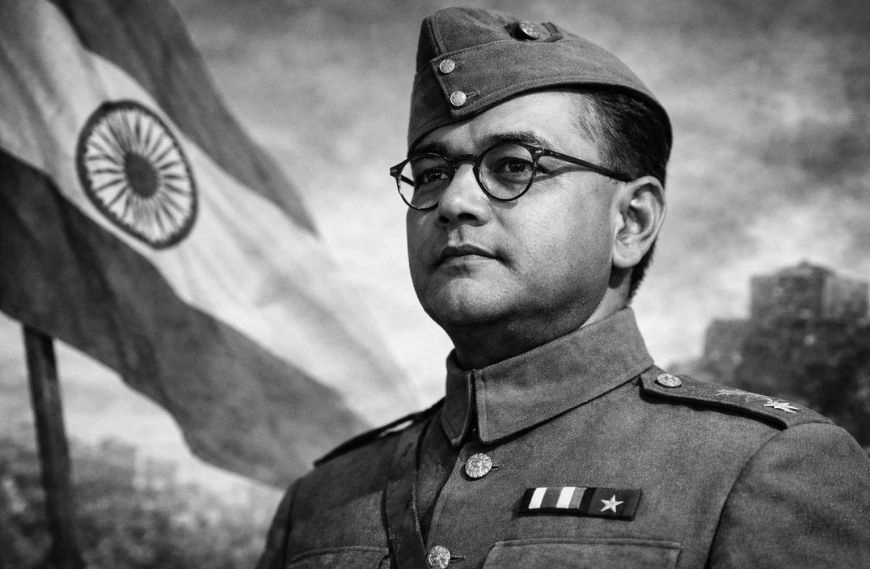
Today, India remembers Netaji Subhas Chandra Bose on his birth anniversary, honouring one of the bravest leaders of the freedom movement. His life was defined by sacrifice, courage, and an unbreakable commitment to independence. Even decades later, his ideas, actions, and patriotism continue to inspire generations of Indians to serve the nation with pride and responsibility.
Leader of the Indian National Army
Subhas Chandra Bose became the leader of the Indian National Army during World War II. He believed that India could be freed through armed struggle if required. Despite facing many hardships, his courage and dedication never weakened.
Commitment After Leaving Congress
Subhas Chandra Bose remained committed to India’s independence even after leaving the Indian National Congress. Although he had differences with several leaders, he never stepped away from the freedom movement. His focus stayed firmly on ending British rule.
The Famous Call for Sacrifice
His powerful slogan, “Give me blood, and I shall give you freedom,” inspired millions of Indians. It reflected his fearless spirit and deep love for the nation. The slogan became a symbol of sacrifice and bravery.
Resignation from Indian Civil Services
In 1919, Bose secured the fourth rank in the Indian Civil Services examination in England. However, he resigned in 1921 because he did not want to serve the British government. This decision showed his strong commitment to India’s freedom.
Respect from National and Global Leaders
German and Indian officials in Berlin referred to Bose as the “Prince among Patriots.” Mahatma Gandhi also called him the “Patriot of Patriots,” despite their ideological differences. These titles reflected the respect he earned across the political spectrum.
Marriage and Family Life
While in Europe, Bose married Emilie Schenkl in 1937. They later had a daughter named Anita Bose Pfaff, who became an economist in Germany. Emilie supported Netaji’s mission even though they lived far apart.
Renaming of Andaman and Nicobar Islands
In 1943, Bose renamed the Andaman and Nicobar Islands as Shaheed and Swaraj. This act symbolised martyrdom and self-rule. It was a strong message against British control.
Arrests and Daring Escape
Between 1921 and 1941, Bose was imprisoned more than ten times by the British authorities. In 1941, he escaped from house arrest at his residence in Kolkata and travelled secretly to Gomoh, then to Peshawar and Kabul, before finally reaching Germany.
Bharat Ratna Controversy
After independence, Bose was awarded the Bharat Ratna. However, his family declined the honour because it was declared posthumously. They wanted the truth about the plane crash mystery to be investigated first.
Belief in Armed Resistance
Bose believed that Mahatma Gandhi’s policy of non-violence alone was not enough to achieve independence. He supported armed resistance against British rule. This belief shaped his leadership of the Indian National Army.
Spiritual and Ideological Inspiration
Subhas Chandra Bose drew inspiration from the Bhagavad Gita throughout his life. He was also deeply influenced by Swami Vivekananda’s teachings. These ideas strengthened his sense of nationalism and service to society.
Netaji’s legacy reminds the nation that freedom was achieved through immense struggle and sacrifice. His fearless leadership, strong ideals, and love for the motherland remain timeless. As India moves forward, remembering Subhas Chandra Bose is not just about honouring history, but about carrying his spirit of unity, discipline, and national service into the future.
Subscribe Deshwale on YouTube
