



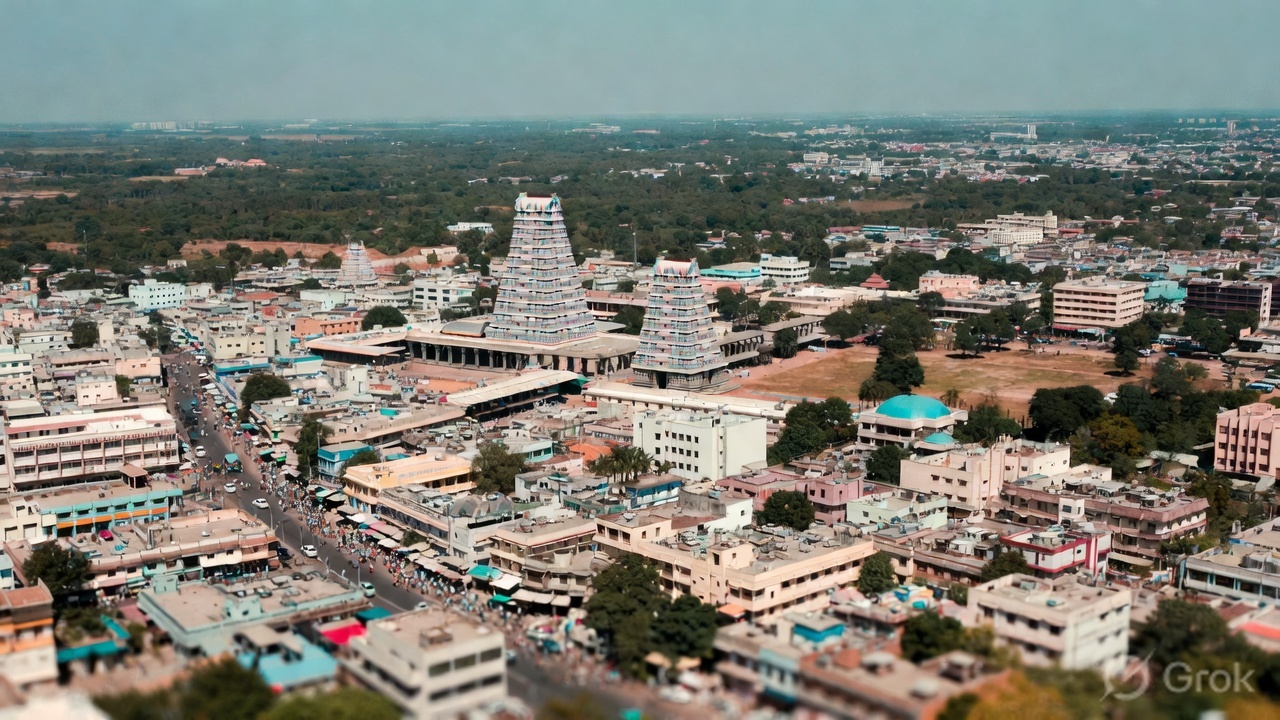
On 10 March 2026, the Union Cabinet chaired by Prime Minister Narendra Modi approved a decision that the people of southern Tamil Nadu had been waiting for with the particular, patient frustration of those who have been asking for something reasonable for a very long time. Madurai Airport was formally declared an International Airport. The announcement, made by Union Minister Ashwini Vaishnaw, took less than two minutes to deliver. The journey to that moment had taken the better part of sixteen years.
That gap between the dream and the declaration is not unique to Madurai. It is the story of how India’s aviation system actually works: layered, deliberate, sometimes frustrating, and ultimately consequential in ways that ripple far beyond the runway. To understand what Madurai has just received, one must first understand what India means by an international airport, what it takes to become one, and why the distinction matters enormously to the cities and the millions of people who depend on these airports for their economic and personal lives.
The City That Never Forgot Its Wings
Madurai is no stranger to aviation. The airfield was first used by the British Royal Air Force during the Second World War in 1942. After the war ended, the strip served a more peaceful purpose, ferrying copies of The Hindu newspaper, printed in Chennai, to readers in Madurai. The airport opened for commercial passenger flights in 1952, with the first scheduled service, a Fokker Friendship aircraft on the Madras to Madurai to Trivandrum route, departing in 1956.
Indian Airlines connected the city to Bombay and Madras in fits and starts. Regional carriers came and went. The airport occasionally thrived, occasionally languished. The runway was strengthened and lengthened in the mid 1970s to take Boeing 737s. A new integrated passenger terminal, built at a cost of Rs 1.29 billion, was inaugurated in September 2010 as part of the Airports Authority of India’s programme to modernise 35 non metro airports. The city was ready to grow. The system was not yet ready to let it.
The Difference Between a Customs Airport and an International Airport
In India, the two terms sound similar but carry vastly different legal and commercial weight.
A customs airport is one notified under the Customs Act, 1962. It allows the airport to handle international traffic, with passengers and cargo clearing customs there. Madurai was notified as a customs airport on 31 December 2011. The first international aircraft to land after that declaration were two chartered flights from Malaysia on 25 August 2012. The first scheduled commercial international flight, SpiceJet to Colombo, followed on 20 September 2012. On paper, Madurai was doing international. In practice, it was doing very little of it.
An international airport, by contrast, is a designation granted by the Union Cabinet under the provisions of the Aircraft Act, 1934 and the Airports Authority of India Act, 1994. The designation makes the airport a named point of entry under India’s Bilateral Air Services Agreements, the bilateral treaties India negotiates with foreign governments that govern which airlines can fly which routes between the two countries. Because Madurai was not part of these bilateral agreements, international air carriers showed reluctance to operate flights from the airport.
This was the wall. An airline from Dubai, Singapore, or Kuala Lumpur wishing to operate into Madurai first needed the route to be included in the relevant bilateral agreement between India and the UAE, Singapore, or Malaysia. A 2012 petition from citizens of eight southern districts of Tamil Nadu stated it with blunt clarity: airlines are interested in operating direct international flights to Madurai but non inclusion of Madurai airport in bilateral treaties of various nations hits them. Those eight districts, namely Madurai, Virudhunagar, Ramanathapuram, Sivaganga, Theni, Dindigul, Tirunelveli, and Thoothukudi, encompass millions of people, many of them part of a Tamil diaspora with deep roots in the Gulf and Southeast Asia, who were forced to add four to six hours and considerable expense to their journeys by connecting through Chennai or Tiruchirappalli.
What International Status Actually Unlocks
The Cabinet declaration of 10 March 2026 changes this calculus root and branch.
The Ministry of Civil Aviation can now negotiate Madurai’s inclusion as a designated point in India’s bilateral agreements with the UAE, Singapore, Malaysia, Sri Lanka, Oman, Qatar, and other key markets. Once included, foreign carriers can apply to their own aviation regulators for route approval to Madurai, something legally impossible before. Several airlines have already expressed interest in launching international services from the airport once the upgrade is implemented. The airport also offers night parking facilities, which could support expanded airline operations.
International designation creates pressure and regulatory justification for upgrading the physical airport. Plans are already under consideration to expand the existing terminal building, apron areas, and car parking to accommodate rising passenger traffic. For a city with a 2,285 metre runway that currently handles only eight destinations served by four airlines, the expansion headroom is considerable.
The full suite of international services now becomes mandated rather than optional. Immigration counters staffed by the Bureau of Immigration and customs clearance infrastructure under the Baggage Rules 2016 must be in place. Bureau of Civil Aviation Security protocols for international departures and health screening facilities must all be maintained to international standards round the clock.
The DGCA can now issue route dispersal guidelines and traffic rights that make Madurai competitive with Chennai. Airport Director P. Muthu Kumar noted that airlines can also plan bases at Madurai airport, enabling effective use of airport infrastructure and resources.
Tamil Nadu’s Fourth International Airport
With this decision, Madurai becomes the fourth international airport in Tamil Nadu, after Chennai, Coimbatore, and Tiruchirappalli. That reflects Tamil Nadu’s economic weight: a manufacturing belt in the north, a technology corridor around Chennai, a textile and engineering hub in Coimbatore, and Madurai, the cultural and pilgrimage capital of the south, now properly connected to the world.
The region hosts a sizeable industrial base and serves as an important centre for education and healthcare in Tamil Nadu. Madurai’s hospitals draw medical tourists from across Sri Lanka and the Maldives. The Meenakshi Amman Temple, the Thirupparankundram Murugan Temple, and Rameswaram are among the most visited pilgrimage sites in India. Millions of Tamil diaspora members in the Gulf, Singapore, Malaysia, Australia, and Europe carry the city in their hearts and return when they can. Every one of these groups now has a direct air connection that was, until this week, legally obstructed by the gap between customs airport and international airport.
Minister Vaishnaw said that the three largest cities in Tamil Nadu are Chennai, Coimbatore, and Madurai, that people aspire to have an international airport there, and that keeping Madurai’s aspirations in mind, Prime Minister Modi took the decision to approve Madurai Airport as an International Airport, which will be a major change in the entire development of Madurai and Tamil Nadu.
A Template Written in Patience
The aircraft were always there. The passengers were always there. The demand was always there. What was missing was a line in a government notification, a negotiating instruction sent to Indian embassies, and the institutional will to move Madurai from the second tier to the first.
Every Indian airport bearing the word international in its name has earned it through exactly this journey: years of partial status, constrained bilateral access, community agitation, and a Cabinet meeting at which someone finally said yes. The architecture of Indian aviation still shapes, and sometimes constrains, the aspirations of its cities. Madurai is a reminder of how much turns on a single Cabinet decision.
The runway at Madurai, 2,285 metres of concrete laid on ground once used by the Royal Air Force, has been waiting for this moment for eighty four years. The temple city has been waiting too. It will not be waiting much longer.
Subscribe Deshwale on YouTube
