




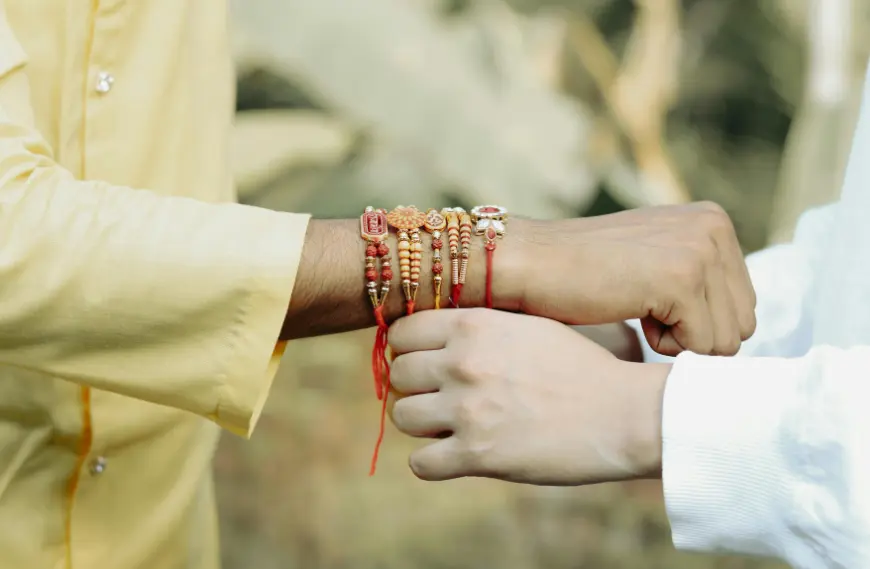
Raksha Bandhan’s sacred thread ties siblings in a timeless bond of love. It is an annual ritual that pulses with emotional significance. Celebrated on the full moon of Shravan, the festival symbolises protection, trust, and shared promises. Traditionally, sisters tie rakhis on their brothers’ wrists, praying for their well-being, while brothers vow to stand by them. Rooted in ancient myths like Draupadi and Krishna, this exchange of affection is more than a gesture, it’s a cultural cornerstone.
But Raksha Bandhan isn’t alone in its sentiment. Across the world, cultures celebrate sibling-like bonds with rituals that echo the festival’s spirit, honouring care, commitment, and unity. Let’s explore how different regions interpret this universal theme, each adding their own colour to the thread of love.
Nepal: Janai Purnima – Threads of Devotion and Renewal
In neighbouring Nepal, Janai Purnima is celebrated on the same full moon as Raksha Bandhan. Sisters tie sacred threads on their brothers’ wrists, praying for health and longevity. The rituals closely mirror Indian traditions—aarti, tilak, and sweets—but with an added dimension. Men change their janai, a sacred thread worn across the torso, symbolising spiritual renewal. Families come together to honour Shiva and share kwati, a seven-grain stew. The blending of familial love with spiritual practice highlights how the essence of Raksha Bandhan transcends borders.
Thailand: Rakhi Samman – Cultural Fusion and Symbolic Grace
Among Thai-Indian communities, Rakhi Samman is celebrated with artistic flair. Sisters tie intricately beaded rakhis, often featuring local Thai motifs, onto their brothers’ wrists. Families enjoy traditional Thai dishes alongside Hindu rituals, reflecting a graceful cultural fusion. A recent cultural study noted thousands participating each year—showcasing how Raksha Bandhan, when wrapped in new traditions, remains a celebration of connection and care.
Oceania: Raksha Bandhan with a Local Touch
In countries like Australia and New Zealand, Raksha Bandhan takes on a multicultural character. Temples and community halls host gatherings where sisters tie rakhis designed with Aboriginal or Māori influences—featuring coral, fern, or tribal patterns. Sweet platters include both mithai and local favourites like lamingtons, creating a joyful blend of cuisines and customs. These adaptations show how the Indian diaspora keeps traditions alive while embracing local identity.
Mauritius: Coastal Traditions, Deep Bonds
Mauritius, home to a large Hindu population, celebrates Raksha Bandhan with island charm. Sisters craft rakhis using shells and pearls, drawing inspiration from the sea. Families gather to enjoy sega music and Creole-influenced sweets. Though the ritual remains rooted in the Raksha Bandhan tradition, its coastal setting and island aesthetics give it a distinctive character—offering a glimpse into how Indian culture blossoms abroad.
Pakistan: Quiet Celebrations of Enduring Affection
In Hindu and Sikh households in Sindh, Pakistan, Raksha Bandhan is marked with quiet dignity. Simple cotton threads are tied in intimate family settings, accompanied by local folk songs. Though celebrated by a smaller community, the spirit remains powerful. Love, after all, transcends history and borders. These moments remind us that even in places of past conflict, shared traditions can nurture unity and mutual respect.
UAE: Grand Celebrations, Familiar Feelings
In the UAE, Indian expatriates celebrate Raksha Bandhan with grandeur. Temples in cities like Dubai host mass rakhi events, with sisters applying tilak and brothers offering gifts. Rakhis are often shipped from India’s artisan centres, preserving the handmade tradition. Despite the modern skyline, the festival retains its heart—showing how tradition adapts without losing meaning. The Rakhi thread, in this context, stretches from homes in India to skyscrapers abroad.
UK: Togetherness in a Multicultural World
In the UK, particularly in cities like London and Leicester, Raksha Bandhan is celebrated in community centres and homes. Families gather to tie rakhis and share sweets—traditional jalebi alongside British treats like scones. Interfaith participation is common, with non-Indians joining to honour the spirit of brotherhood. This inclusivity recalls Rabindranath Tagore’s vision of using rakhis to foster unity during times of social division. Here, Raksha Bandhan becomes not just cultural—but universal.
A Shared Spirit: Local Variations, Universal Message
These international celebrations may differ in form, but they all carry Raksha Bandhan’s soul: a vow of care, sealed with a thread. Nepal’s spiritual rituals, Thailand’s artistry, Oceania’s cultural fusion, Mauritius’s island warmth, Pakistan’s quiet resilience, and the UAE’s grandeur all reflect how love between siblings—or chosen family—connects us.
For Indian readers, it’s deeply affirming to see Raksha Bandhan’s spirit bloom globally. It proves that the festival is not just India’s—it belongs to humanity. From the banks of the Ganges to the beaches of Sydney, the thread of protection and love stretches wide.
More Than Tradition: A Global Invitation
This global tapestry invites reflection. Raksha Bandhan’s message—protection, affection, and mutual respect—transcends rituals and geography. In India, the festival evolves as women tie rakhis to mentors, to trees, or to one another, reshaping the idea of care. Around the world, these celebrations blend old and new, honouring traditions while making space for modern interpretations.
As India’s cultural influence grows, Raksha Bandhan has the potential to become a global emblem of unity and compassion. Imagine a world where people across cultures exchange symbolic threads—binding one another in empathy and shared humanity.
This is Raksha Bandhan’s power. It’s not just about wrists or rituals—it’s about relationships that hold us together. In every country, in every custom, there’s a common thread. And as we celebrate this ancient festival in new ways, we’re reminded: love doesn’t need translation—it just needs a thread.
