



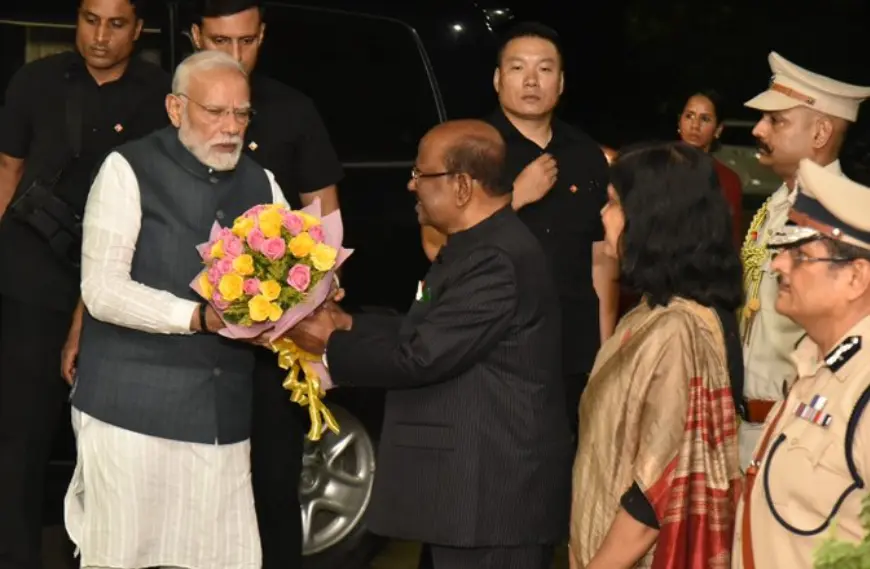
Prime Minister Narendra Modi on Monday inaugurated the 16th Combined Commanders’ Conference (CCC) at the Eastern Command headquarters in Kolkata. The three-day event, which runs from September 15 to 17, 2025, has brought together the highest military leadership of the Army, Navy, and Air Force, along with senior civilian officials including the Defence Minister and National Security Advisor.
This year’s theme, “Year of Reforms Transforming for the Future,” reflects the government’s focus on reshaping the armed forces through institutional reforms, stronger integration across services, adoption of advanced technology, and a greater push for indigenous defence systems. The CCC is expected to review how the armed forces can reorganise themselves for efficiency, cut duplication, streamline the chain of command, and strengthen coordination among the three services.
Another major area of discussion is joint integration. Officials are exploring ways to deepen cooperation between the Army, Navy, and Air Force through joint planning, theatre commands, unified logistics, and improved training mechanisms. Alongside this, there is a clear emphasis on technology and self-reliance. The government wants the armed forces to expand the use of indigenous weapons, surveillance systems, and secure communication platforms, reducing dependence on foreign imports under the larger vision of Atmanirbharta.
Operational readiness is also a priority. The conference is focusing on how the forces can prepare for multi-domain warfare, which now goes beyond land, sea, and air to include cyber and space. This means ensuring rapid-response capabilities, upgraded infrastructure, and modern training to handle complex future conflicts.
The timing of the conference adds to its importance. It is the first major meeting of military commanders since Operation Sindoor in May 2025, when India carried out a tri-services strike on terror infrastructure across the Line of Control and inside Pakistan. That operation highlighted the need for better coordination and modernisation, making the 2025 conference an important step in shaping the country’s defence preparedness.
The outcomes of the three-day event will be closely watched, especially on decisions related to theatre commands, indigenous defence procurement, and reforms in training and manpower. For India, the Combined Commanders’ Conference 2025 is more than just a biennial gathering. It marks a turning point in efforts to make the armed forces leaner, smarter, and more self-reliant, laying the foundation for future military transformation.
