



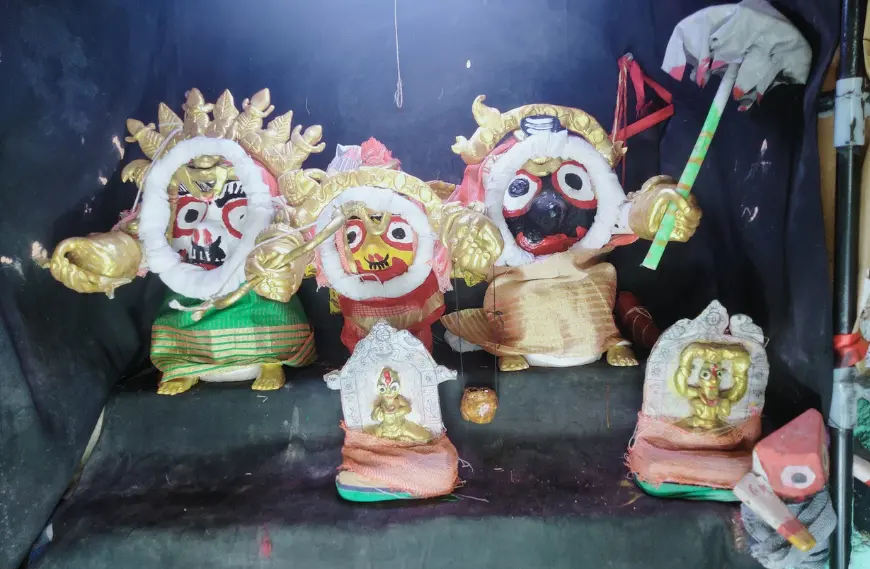
In an era where traditions often yield to modern impulses, the Balibamana Besha, a centuries-old ritual adorning Lord Jagannath as the Vamana (dwarf) incarnation continues to be celebrated with reverence at Puri’s Srimandira. This resilient practice underscores the temple’s steadfast commitment to ritual continuity amid evolving socio-cultural and technological landscapes.
A Living Tradition Across Centuries
Balibamana Besha is observed on Bhadra Shukla Dwadashi, the twelfth day of the bright fortnight of the month of Bhadrapada, when Lord Jagannath is adorned as Vamana, symbolising the cosmic dwarf who vanquished King Bali. Despite centuries of change from colonial disruptions to globalisation this ritual remains unbroken, testifying to a living heritage that transcends time.
A Spectrum of Beshas: Preservation Through Variety
Balibamana Besha is one among at least 32 distinct ritualistic costumes (beshas) that deities at the Jagannath Temple don throughout the year. Each besha embodies particular mythological themes or seasonal celebrations. This plurality of rituals has helped preserve Balibamana Besha as part of a broader, deeply entrenched cultural tapestry.
Modern-Day Resurgence Amid Infrastructure Growth
Puri has seen significant infrastructural enhancements such as the Heritage Corridor and expanded pilgrim facilities that allow more devotees to witness rituals like Balibamana Besha while also preserving temple sanctity. These upgrades coexist with ancient practices rather than replace them, blending modern capacity with spiritual continuity.
Ritual Rigour and Servitor Lineage
Performing Balibamana Besha requires the same lineage-based ceremonial structure: the Dwipahara Dhupa ritual precedes the costume change, and the attire remains until the Badasinghara Puja later in the day. Such adherence to procedural detail affirms how ritual formality anchors tradition, even as surrounding contexts evolve.
Community Resilience and Symbolic Significance
For local communities, the enactment of Balibamana Besha is more than religious duty; it’s a living connection to ancestral memory and identity. The visual narrative of childhood divinity Lord Jagannath as a diminutive Vamana offers devotees not just reverence but also emotional intimacy through a familiar, humanised form.
The Balibamana Besha endures not as a static relic, but as a living, evolving practice preserved through devout ritual performance, institutional continuity, and respectful incorporation of modern infrastructure. In an ever-changing world, this besha exemplifies how heritage can adapt without eroding its essence.
