









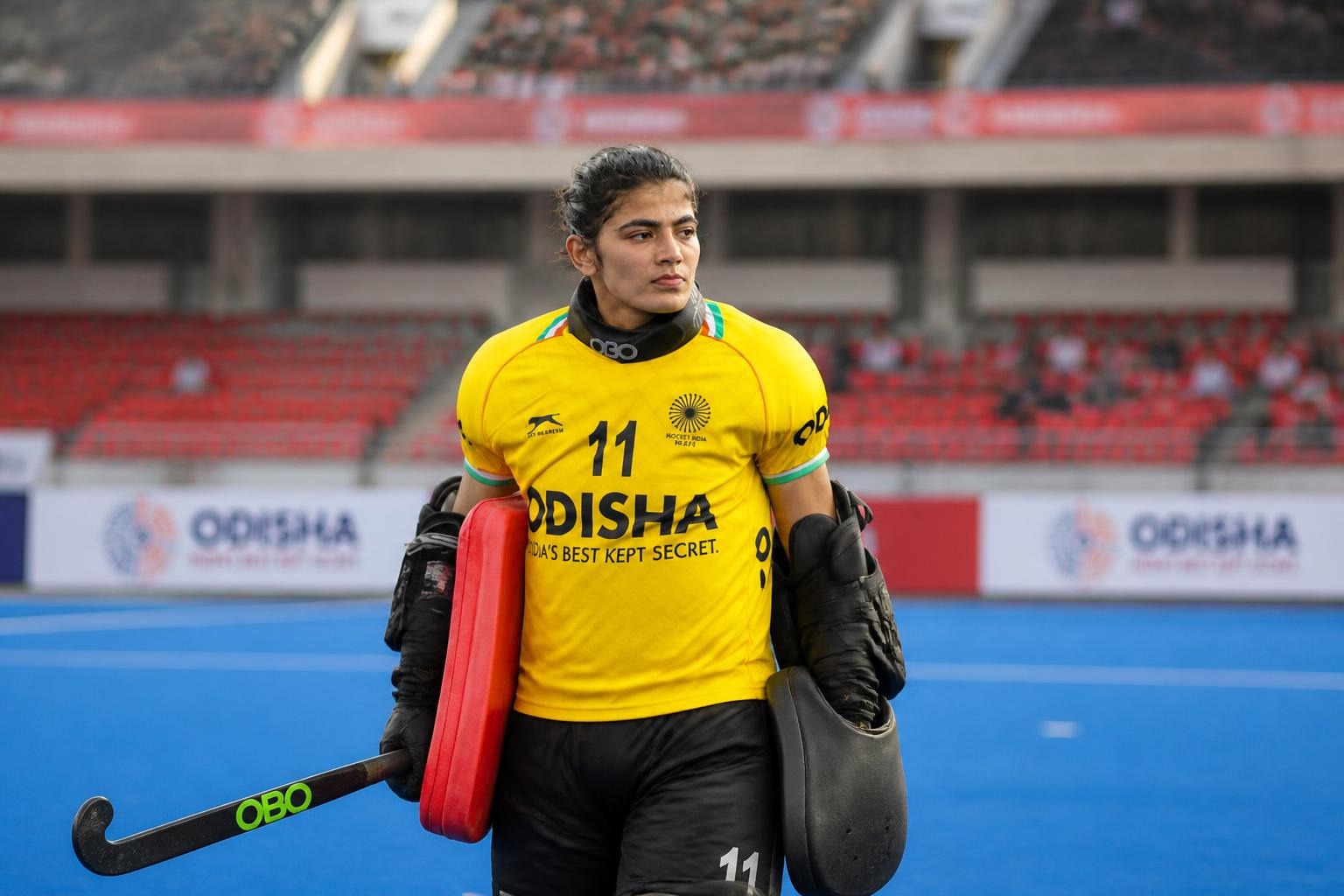
A goal can put a team ahead, but sometimes one crucial save keeps its dream alive. In India’s historic Asian Games women’s hockey final against China, goalkeeper Savita Punia delivered that moment, helping her team protect a narrow lead and end a 44-year wait for gold.
On 2 October 2026, India defeated defending champions China 1-0 in the final in Japan. The victory secured India’s first Asian Games women’s hockey gold since 1982 and earned the team direct qualification for the Los Angeles 2028 Olympics.
The moment that changed the match
India took the lead in the 10th minute when Lalremsiami scored with a powerful reverse-stick shot. The goal followed an attacking move in which Sakshi Rana delivered the decisive pass into the circle.
However, the early lead did not mean an easy finish. China increased the pressure and searched for an equaliser. India’s defence had to remain alert as the opposition created opportunities near the goal.
The biggest test arrived in the second quarter. China were awarded a penalty stroke, giving them a chance to level the score. With the pressure mounting, experienced goalkeeper Savita Punia came on to face the attempt.
China’s Zhang Ying took the shot, but Savita read the direction correctly and dived to her left to make a crucial save. The ball stayed out, and India retained their 1-0 advantage.
It was a defining moment because a successful conversion would have brought China back into the contest. Instead, Savita’s intervention gave India another chance to defend the lead.
A goalkeeper’s moment, a team’s achievement
A penalty-stroke save requires quick reactions and a willingness to commit to a direction in a fraction of a second. For Savita, the challenge was to read the attempt while knowing that one mistake could change the final.
Yet the victory was never the work of one player alone.
Lalremsiami’s goal gave India the advantage, while the defenders repeatedly disrupted Chinese attacks. Navneet Kaur made an important goal-line clearance, and captain Salima Tete and her teammates contributed to the defensive effort as China continued to press.
India faced sustained pressure after the break, including multiple penalty corners. The players blocked attempts, closed down spaces and worked together to prevent China from finding the net.
As the final minutes approached, China took greater risks in search of an equaliser. India remained organised and protected their slender lead until the final whistle.
Ending a long wait and looking ahead
The gold medal carried significance beyond the final score. India’s previous Asian Games women’s hockey title had come in 1982. Ending the long wait was a major achievement for a team that had to combine attacking quality with disciplined defending.
The victory also secured direct qualification for the 2028 Los Angeles Olympics, giving the players another major opportunity to represent India on the international stage.
Savita’s penalty-stroke save will remain one of the memorable moments of the final. But the larger story belongs to a team that scored when it mattered, stood firm under pressure and refused to surrender its advantage.
Sometimes, sporting history is made by scoring a goal. Sometimes, it is made by stopping one. In this final, India needed both.
Subscribe Deshwale on YouTube


