



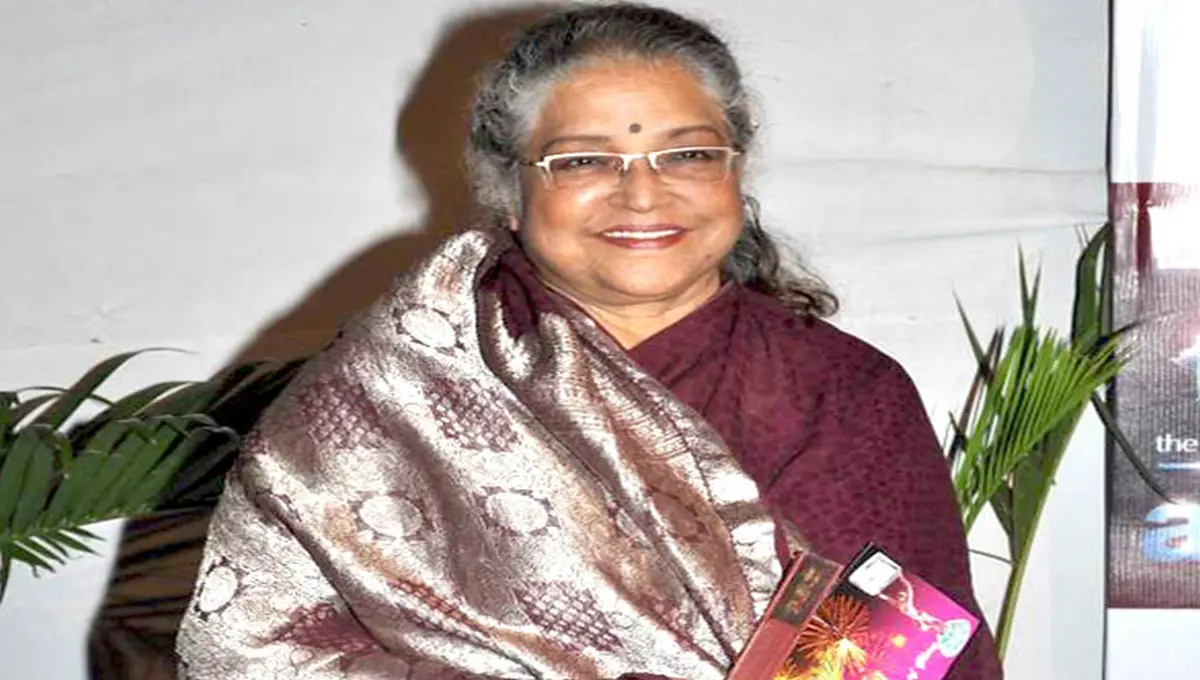
“Thanks to Mehmood, I had the opportunity to work with the man I still worship today—Dilip Kumar—in Sadhu Aur Shaitan in a passing shot,” says Shubha Khote speaks to Deshwale in a freewheeling conversation with Jyothi Venkatesh.
Shubha Khote, a veteran Indian actress and comedian, has carved a niche for herself in the Hindi and Marathi film industries over a remarkable career spanning seven decades. Born on 30 August 1937 in Mumbai, Maharashtra, Shubha belongs to a family with deep roots in the performing arts. Her father, Nandu Khote, was a well known stage actor. Her brother, Viju Khote, also gained fame in Indian cinema. Shubha began her cinematic journey with Ameya Chakraborty’s film Seema (1955) and quickly became a household name for her versatile roles in both comedic and dramatic genres. “My role in Seema was immensely popular, and overnight, I found myself recognised as a star. Thankfully, there has been no looking back, and I’m content with the way my career has evolved from Seema to Toilet: Ek Prem Katha,” she shares with a warm chuckle.
Renowned for her impeccable comic timing, she shared the screen with iconic actors such as Mehmood, Nutan, Dilip Kumar, and Shammi Kapoor. Her notable films include Sasural, Ek Duuje Ke Liye, Dekh Kabira Roya, and Choti Behen. Besides films, Shubha has also contributed to theatre and television, bringing characters to life with her lively performances. Her directorial venture in Marathi cinema, Chimukala Pahuna, showcased her talent behind the camera as well. At 87, Shubha Khote continues to inspire generations of actors with her dedication and passion for the craft.
In this exclusive interview, Khote expresses her excitement over receiving the PIFF Distinguished Award for Outstanding Contribution to Cinema at this year’s Pune International Film Festival. Edited excerpts…
How does it feel to receive the PIFF Award for Outstanding Contribution to Acting?
“Though I have been acting for seven decades, believe it or not, this is the first award I have received in my career. The recognition from PIFF feels truly special.”
Having worked in films for over 70 years, what differences do you notice in the industry then and now?
“Honestly, I believe the 1950s were the best years for the film industry. Back then, working on films felt like being part of a family.”
Not many know you were a champion cyclist before you ventured into acting. How did you transition into films?
“Yes, that’s true! Veteran filmmaker Ameya Chakraborty saw my picture in a newspaper as a cyclist and decided to offer me a role in Seema. Ameya had directed many films, including Patita, Daag, and Dekh Kabira Roya. He even gave a break to Dilip Kumar.”
Did you have to audition for Seema?
“No, Ameya didn’t take any screen test. I was nervous when I first faced the camera for Seema, but my stage experience helped me manage.”
Where did you learn acting?
“There were no acting institutes back then. Whatever I learned about acting in front of the camera was directly from Ameya. He was our teacher, and we actors always followed his guidance.”
Were you fluent in Hindi when you started?
“I didn’t learn Hindi in school. I improved my Hindi and Urdu by listening to Lata Mangeshkar’s songs. Ameya advised me to work on my diction and accent to succeed in Hindi films.”
People often mistake your name as Shobha Khote. How did that happen?
“I was shocked when the credits of Ek Duuje Ke Liye listed me as Shobha Khote. I had already worked with L. V. Prasad’s banner in three films. I told Prasad that whenever my name appeared incorrectly as Shobha, the film would flop. To my surprise, he changed the title cards in all the prints overnight.”
What did you learn from Ameya Chakraborty?
“He taught me to whisper loudly during song lip-syncing. His film Dekh Kabira Roya was a learning school for me.”
Who were your favourite co-actors?
“I’ve had the privilege of working with legends like Nutan, Meena Kumari, Dilip Kumar, Shammi Kapoor, and even Kamal Haasan in Ek Duuje Ke Liye. Dilip Kumar’s acting was so natural! You wouldn’t feel he was acting at all.”
Why didn’t you pursue leading roles?
“Ameya suggested I focus on comedy as there was less competition, especially among female comedians. He recognised my comic timing, which is crucial in comedy.”
Is it true you produced a Marathi film?
“Yes, I produced and directed Chimukala Pahuna. It was made on a modest budget of just a lakh of rupees. Though it didn’t do well at the box office, I was overjoyed by the response when it was later aired on Mumbai Doordarshan.”
Are you open to acting in other languages?
“Absolutely! I’m ready to act in Hindi, Marathi, Tamil, Telugu—any language.”
Tell us about your camaraderie with Mehmood and Dhumal.
“We shared a great bond and had an understanding that allowed impromptu repartee. Thanks to Mehmood, I got to work with Dilip Kumar in Sadhu Aur Shaitan.”
What advice would you give to newcomers?
“I would advise newcomers not to overact. While it might work on television, it certainly doesn’t in films. Staying positive and avoiding negativity is equally important.”
