 Deshwale
Falcon 9 Successfully Puts U.S. Military X-37B into Orbit
In brief · AI summary SpaceX launched the U.S. Space Force's X-37B spaceplane on Thursday night aboard a Falcon 9 rocket from NASA's Kennedy Space Center in Florida, as part of the secretive mission officially named "Mission 8." The mission focuses on testing advanced technologies such as laser communications, autonomous maneuvering systems, and quantum inertial sensors to improve U.S. space-based communications.
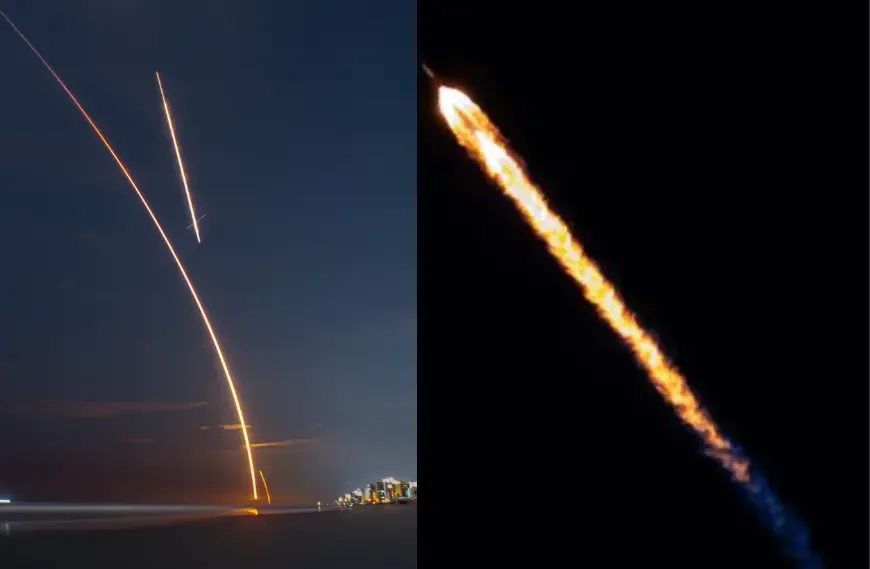
SpaceX successfully launched the U.S. military’s X-37B spaceplane on Thursday night aboard a Falcon 9 rocket from NASA’s Kennedy Space Center in Florida. This mission, officially named “Mission 8,” is part of an ongoing series of highly secretive space operations conducted by the U.S. Space Force.
The X-37B mission primarily focuses on testing advanced technologies such as laser communications, autonomous maneuvering systems, and quantum inertial sensors, aimed at improving the resilience, efficiency, and security of U.S. space-based communications infrastructure.
About the X-37B Spaceplane
The X-37B is approximately the size of a small bus and resembles a miniature version of NASA’s retired space shuttles. It is solar-powered and has been operational since 2010, conducting multiple classified experiments for both the Air Force and NASA.
The spaceplane was originally developed by United Launch Alliance (a joint venture between Boeing and Lockheed Martin), though recent launches are contracted through private providers like SpaceX. The craft is designed for long-duration missions, remaining in orbit for months or even years, before autonomously returning to Earth via runway landing.
Significance of Mission 8
This latest mission marks a notable collaboration between SpaceX and the U.S. Space Force, highlighting the growing role of private aerospace companies in national defense. It also underscores the increasing use of space for strategic technological testing, surveillance, and communications.
While details about the exact experiments are classified, analysts speculate the mission could support next-generation satellite networks, military communications, and advanced space-based sensors that improve situational awareness.
A Growing Role for Private Space Companies
The X-37B program demonstrates the evolving partnership between the U.S. military and private aerospace firms. SpaceX’s reusable Falcon 9 rocket provides cost-effective and reliable launches, allowing the military to test technologies in space with greater flexibility than traditional government-only launches.
Experts note that missions like X-37B are crucial for the development of resilient space capabilities, especially as more nations expand their presence in orbit.
As SpaceX continues to launch classified military spacecraft, the X-37B remains a symbol of both technological innovation and strategic ambition in U.S. space operations. Analysts expect the program to continue experimenting with cutting-edge autonomous systems and orbital technologies over the coming years, keeping the U.S. at the forefront of military space research.