



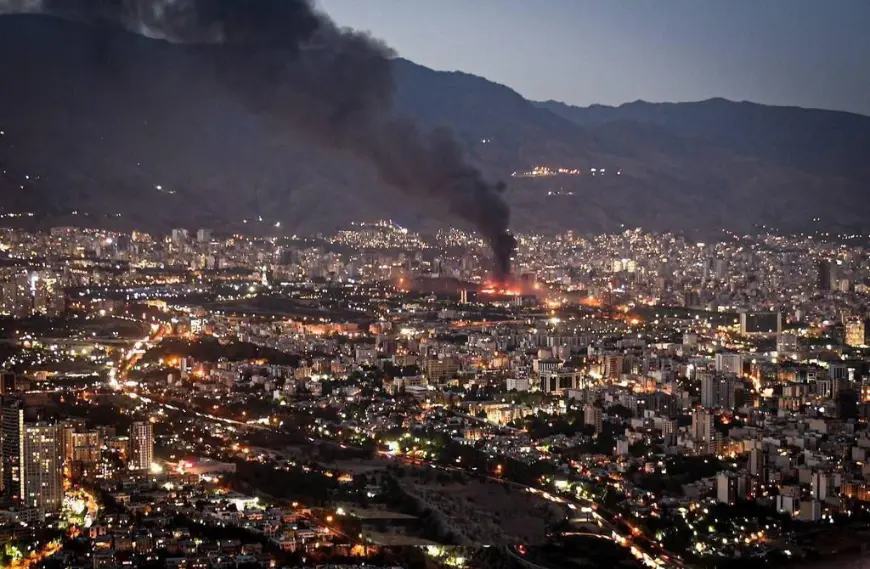
Beneath the Alborz Mountains, where peaks whisper to the stars, Tehran stands as a palimpsest of time. Its stones bear empires’ marks, its winds carry poets’ verses spun into eternity. Once a humble village, Tehran rose over millennia, a phoenix forged in history’s crucible. Its soul, blending Achaemenid ambition and Safavid artistry, pulses beneath a city scarred by war. Silk Road caravans wove its early wealth, trading spices and dreams. By the 16th century, Safavid kings made it a cultural beacon. Qajar rulers, in the 18th century, crowned it Iran’s heart, their Golestan Palace a mirror of paradise. “Tehran is the eye of Persia,” wrote 19th-century traveller James Morier, captivated by its vibrancy. As Israel’s airstrikes shake its skies in June 2025, Tehran’s flame burns defiantly, a city unbowed, its saga a light for scholars and dreamers.
Tehran’s ancient glory was unmatched. The Achaemenid Empire’s 2,500-kilometre Royal Road outpaced Rome’s reach. Messages crossed continents swiftly, a marvel of efficiency. Sassanid scholars near Tehran pioneered surgery, shaping Islamic and European medicine. Al-Biruni’s star maps humbled medieval Europe. “Persia’s astronomers see beyond the heavens,” marvelled 10th-century scholar Al-Masudi. By the 13th century, Persian observatories crafted unmatched star charts. This brilliance drew Zoroastrians to India, birthing the Parsi community. Fleeing Islamic persecution between the 8th and 10th centuries, they settled in Gujarat, welcomed by King Jadi Rana. Their Avestan language, akin to Sanskrit, tied Iran to India. Parsis preserved their Farohar symbol, a nod to Tehran’s Zoroastrian roots.
Tehran’s endurance is its hallmark. Mongols razed cities, yet Tehran rebuilt. Timurids and Ottomans stormed through, but its bazaars thrived. In the 19th century, Qajar palaces blended Persian art with European elegance. Coffeehouses buzzed, merging Rumi’s mysticism with Enlightenment ideas. “Tehran’s spirit is a bridge between worlds,” wrote poet Mirza Ghalib in 1850. Today, its universities and tech hubs defy isolation. In June 2025, as Israeli jets strike nuclear sites, residents flee, yet artists paint murals of defiance. Tehran’s history of surviving empires fuels its resolve, echoing the Parsis’ journey to India, where they flourished as traders and philanthropists.
Tehran’s people, the Tehraniha, blend warmth and grit. Shaped by conquest and revolt, their wit is sharp, their loyalty deep. In 1906, they sparked Asia’s first constitutional revolution, a democratic flame. Poets like Forugh Farrokhzad bared raw truths. Tehrani filmmaker Abbas Kiarostami rivalled global auteurs. Like their Parsi kin, who built Mumbai’s commerce, Tehranis innovate in scarcity. Parsis, Iran’s Zoroastrian descendants, funded Tehran’s schools in the 19th century, led by Manekji Limji Hataria. Today, as war rages, Tehranis’ resilience mirrors their ancestors’ exodus to Gujarat.
Tehran’s brilliance is under siege. The 1979 Islamic Revolution alienated the West. The Iran-Iraq War (1980–1988) scarred Tehran with missiles, killing 200,000 and costing $350 billion. The Gulf War (1990–1991) deepened isolation. U.S. sanctions since 1995 choked oil exports, 80% of Iran’s wealth. The rial fell 62% from January 2024 to January 2025. Inflation hit 32%, unemployment 25%. In June 2025, Israel’s airstrikes on nuclear sites and civilian areas, including a hospital, killed 224. Iran’s 380 missiles and 100 drones claimed 24 Israeli lives. Tehran’s airspace is closed, panic grips the capital. Yet, tech startups and underground art persist.
The Israel-Iran conflict, erupting in June 2025, darkens Tehran’s skies. Before 1979, they were allies. The revolution shifted Iran’s stance, denouncing Israel as a Western pawn. Support for Hezbollah and Hamas fuelled tensions. Israel’s nuclear arsenal and Iran’s atomic ambitions sparked covert wars. In 2002, Iran’s nuclear program triggered Israeli cyberattacks and assassinations. On June 13, 2025, Israel struck Tehran’s nuclear facilities, killing commanders. Iran’s retaliation escalated fears. Diplomacy falters, despite a 2023 Saudi-Iran détente. Tehran bleeds under war and sanctions.
Tehran’s Parsi ties run deep. Parsis carried Iran’s Zoroastrian flame to Gujarat, their Avestan hymns echoing Vedic chants. In the 19th century, Parsis like Manekji revived Tehran’s Zoroastrian schools. Today, Tehran’s 30,000 Zoroastrians condemn Israel’s attacks, their unity mirroring India’s Parsis. As missiles fly, Tehran’s spirit endures, its bazaars pulsing. If peace dawns, Tehran could reclaim its glory, its Parsi kin cheering from afar.
Tehran today is a paradox. Its streets hum, yet war looms. Universities thrive, but talent flees. Inflation erodes savings, yet art flourishes. On June 17, 2025, as Israel targets District 3, artists rally, their murals defying aggression. Tehran’s history fuels hope. Its Parsi cousins remind Tehranis of their grit. If diplomacy prevails, Tehran could rise, its markets global again. Tehran is Iran’s soul, a tale of defiance. Its flame burns for a future unwritten.
Tehran is a testament to endurance. Its past dazzles, its present aches, its future beckons. From Achaemenid roads to Parsi migrations, it has shaped the world. Now, battered by war, it stands unbowed. As missiles streak its skies, Tehran’s spirit, like the Parsis’ journey, whispers of survival. No force can dim its light. Tehran will rise, with courage and grace, a beacon for ages.
