



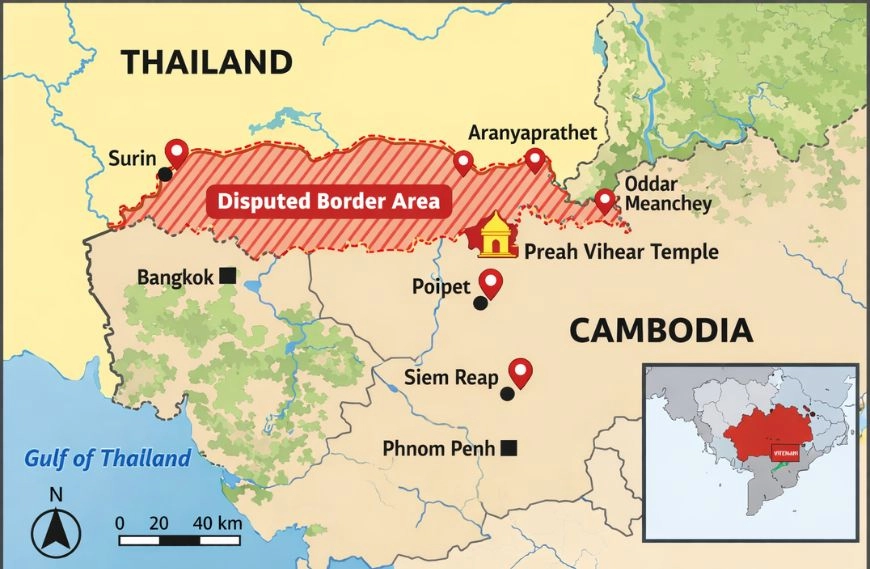
After weeks of fierce and deadly fighting along their shared border, Thailand and Cambodia have agreed to an immediate ceasefire, bringing a temporary halt to hostilities that threatened regional stability. The agreement was signed on 27 December 2025 and took effect at noon local time, offering a pause to some of the worst clashes in years over a long‑running territorial dispute.
The violence reignited in early December after previous efforts at peace broke down. Intense fighting involved artillery, rockets and other heavy weapons. The clashes marked a serious escalation of tensions rooted in a century‑old border dispute, including contested territory and historic temple sites. During the recent escalation, both sides reported casualties, and the conflict displaced hundreds of thousands of civilians on both sides of the frontier.
The ceasefire was formalised in a joint statement signed by the defence ministers of both nations. Under the agreement, all armed hostilities must stop immediately. This includes a halt to attacks on military targets, civilian areas, infrastructure and all offensive operations. Both countries have agreed to freeze troop movements and avoid further escalation along the disputed frontline.
An important part of the agreement is the provision that if the ceasefire holds uninterrupted for 72 hours, Thailand will repatriate 18 Cambodian soldiers who have been held in Thai custody since earlier clashes. This gesture is intended to build trust and goodwill as part of the broader effort to maintain peace.
The ceasefire also allows civilians who fled their homes to begin returning to their villages, though authorities have cautioned that some areas remain dangerous due to landmines and unexploded ordnance. The agreement includes commitments to cooperate on de‑escalation measures and restore basic safety for displaced residents.
Despite the ceasefire, underlying issues remain unresolved. The territorial dispute stems from unclear colonial‑era maps and competing national claims over segments of the long border shared by the two Southeast Asian neighbours. Both governments have signalled that diplomatic talks and border demarcation efforts will continue through joint committees to find a longer‑term solution.
For residents of the affected border areas, the ceasefire brings cautious hope. Markets, schools and local services disrupted by weeks of violence can begin to reopen, and families separated by the conflict may start rebuilding their lives. However, experts warn that lasting peace will require continued restraint, mutual trust and sustained diplomatic engagement. The ceasefire is a critical first step, but the path to durable stability remains fragile.
Subscribe Deshwale on YouTube
