 Deshwale
The Phone Call That Brought Families Together
In brief · AI summary Before mobile phones, a ringing landline could bring a whole household together, as family members gathered to wait for or hear a call from relatives. In India, getting a home telephone once took years, so many families relied on neighbours or on STD, ISD and PCO booths to make calls. The article suggests these calls were less about the technology than about the people who waited, shared and helped make them happen.
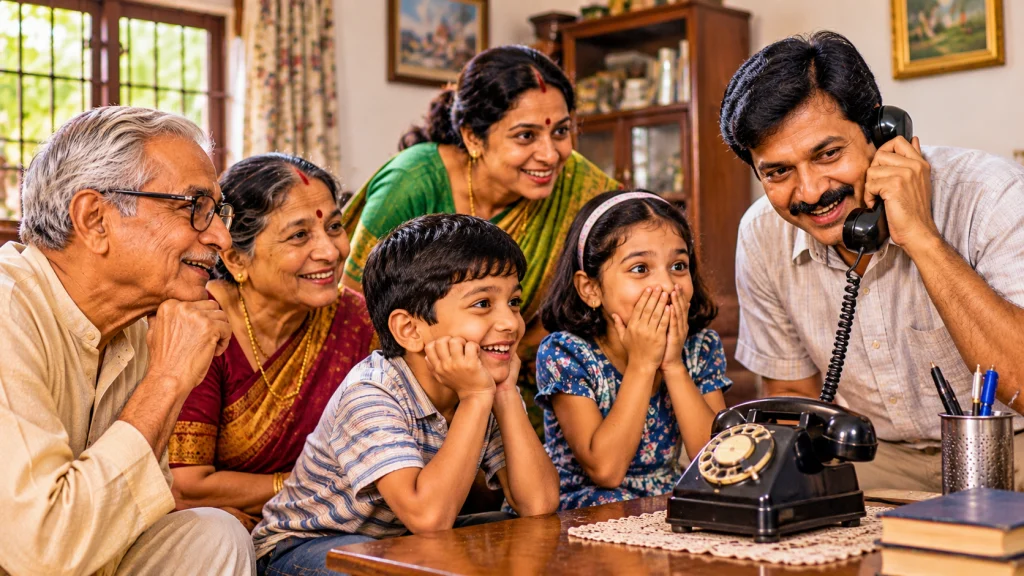
Before mobile phones, a simple ringing telephone could turn an ordinary day into a moment everyone waited for.
There was a time when a ringing telephone could change the atmosphere of an entire house. Someone would shout, “Phone aaya hai!” and another person would hurry to pick it up. If the call was from a relative living in another city or country, the news travelled from one room to another before the conversation even began. People gathered nearby, waiting for their turn to say hello.
A telephone call was once more than a conversation between two people. In many homes, it became a little family event.
When Having a Telephone Was a Big Deal
Today, almost everyone carries a phone in their pocket. But there was a time in India when getting a telephone connection at home could take years. For many families, having a landline was something they hoped to have one day.
If your home did not have a telephone, you might depend on a neighbour who had one. When a call was expected, the neighbour would inform you, and someone from your family would go over to receive it. A simple conversation could require planning, patience and a little cooperation.
Sometimes, the person answering the phone was not even the one the caller wanted to speak to. They would call out someone’s name, pass the receiver and wait while the conversation began.
The Yellow STD Booth That Connected India
As telephone services expanded, STD, ISD and PCO booths became a familiar sight on India’s streets. Small shops and roadside booths offered people a way to make calls without having a telephone at home.
These booths made it easier to speak to relatives living in distant cities, friends studying elsewhere or family members working abroad. People would walk in, dial a number, speak as long as their budget allowed and pay for the call.
Some booths had enclosed cabins where people could talk with a little privacy. Others were simple setups inside a shop. The sound of a telephone ringing, the call meter ticking and the shopkeeper waiting for payment became part of everyday life.
For many people, these booths were not just businesses. They were a bridge to someone they missed.
Every Minute Had Something to Say
Long-distance calls were not always affordable for everyone. Families often kept conversations short, especially when calling another city or overseas. Some people even waited until late at night to take advantage of cheaper calling rates.
There was no video call to see someone’s face or instant message to share a photograph. You had to make the most of the voice on the other end.
“How are you?”
“How is everyone at home?”
“Did you eat?”
“Tell your mother I called.”
These simple questions carried a lot. A few minutes of conversation could bring reassurance to parents, make children happy or help someone living away from home feel a little less alone.
And when the call ended, there was often another person waiting to speak.
The Person Who Answered Was Part of the Memory
What made those calls special was not only the technology. It was the people around it.
The neighbour who informed you when a relative was calling. The shopkeeper who knew which family was waiting for a call from abroad. The parent who handed the receiver to a child and smiled while listening from nearby.
Communication was slower, but it often involved more people than the two voices connected through the line.
Today, we can call anyone at almost any moment. We can send pictures, videos, voice notes and messages without thinking twice. That convenience is something the earlier generation could only imagine.
But perhaps we still remember those old calls because they were not just about talking. They were about waiting, sharing and making time for one another.
A voice could travel hundreds of kilometres, yet for a few minutes, make the distance feel much smaller.
And sometimes, when the phone rang, it was not just one person who answered. It was the whole family.
Subscribe Deshwale on YouTube