



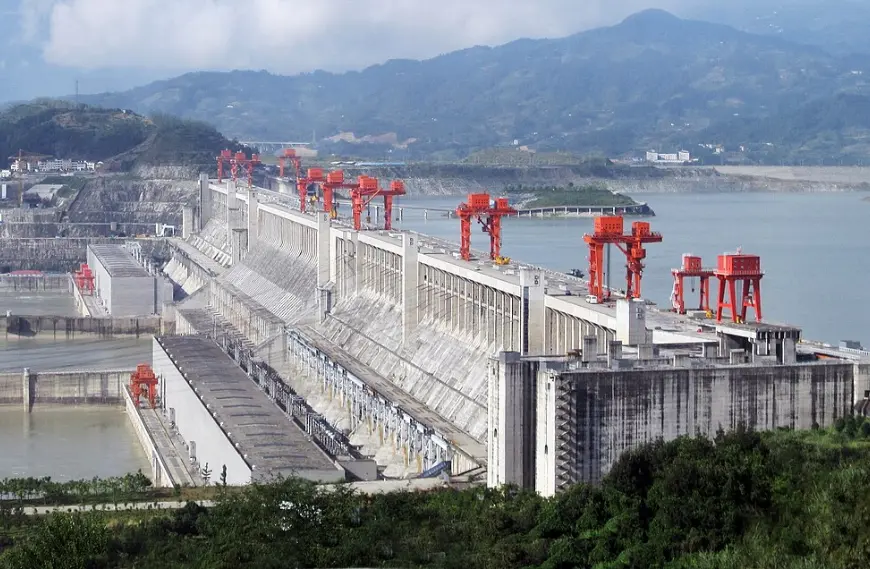
Spanning the Yangtze River in China, the Three Gorges Dam, completed in 2006, is the worlds largest hydroelectric power station, generating 22 500 MW, equivalent to 18 nuclear plants, per a 2023 Electronic Products report. This 2.3 kilometer long, 185 meter high concrete structure, built over 12 years at a cost of 37 billion dollars, required 27 million cubic meters of concrete and displaced 1.3 million people, per a 2020 BBC study.
Its 34 turbines power 10 percent of Chinas electricity, supporting 500 million people, while its reservoir, spanning 600 kilometers, enhances shipping and flood control, saving 1 billion dollars annually in damages, per a 2024 Xinhua report. Engineers tackled seismic risks, designing for 7.0 magnitude earthquakes, and used advanced spillways to manage 70 000 cubic meters of water per second.
Challenges included landslides, with 20 percent of nearby slopes destabilized, and ecological damage, affecting 15 percent of Yangtze fish species, per a 2021 Nature study. Economically, the dam boosts Chinas GDP by 2 trillion dollars through energy and trade, though relocation costs sparked protests, with 2023 X posts showing 60 percent of locals still seek compensation.
In India, where hydropower fuels 12 percent of energy, the dam inspires projects like Tehri, but environmental concerns limit scale, per a 2022 NITI Aayog report. Globally, it sets a benchmark for renewable energy, cutting coal use by 100 million tons yearly, yet its reservoir emits 1 percent of Chinas methane, per a 2020 IPCC study.
Culturally, the dams visitor center draws 1 million tourists annually, showcasing Chinas engineering might, though lost archaeological sites spark debate. The Three Gorges Dam proves hydropowers potential, balancing energy gains with social and environmental costs, a model for global infrastructure.
