



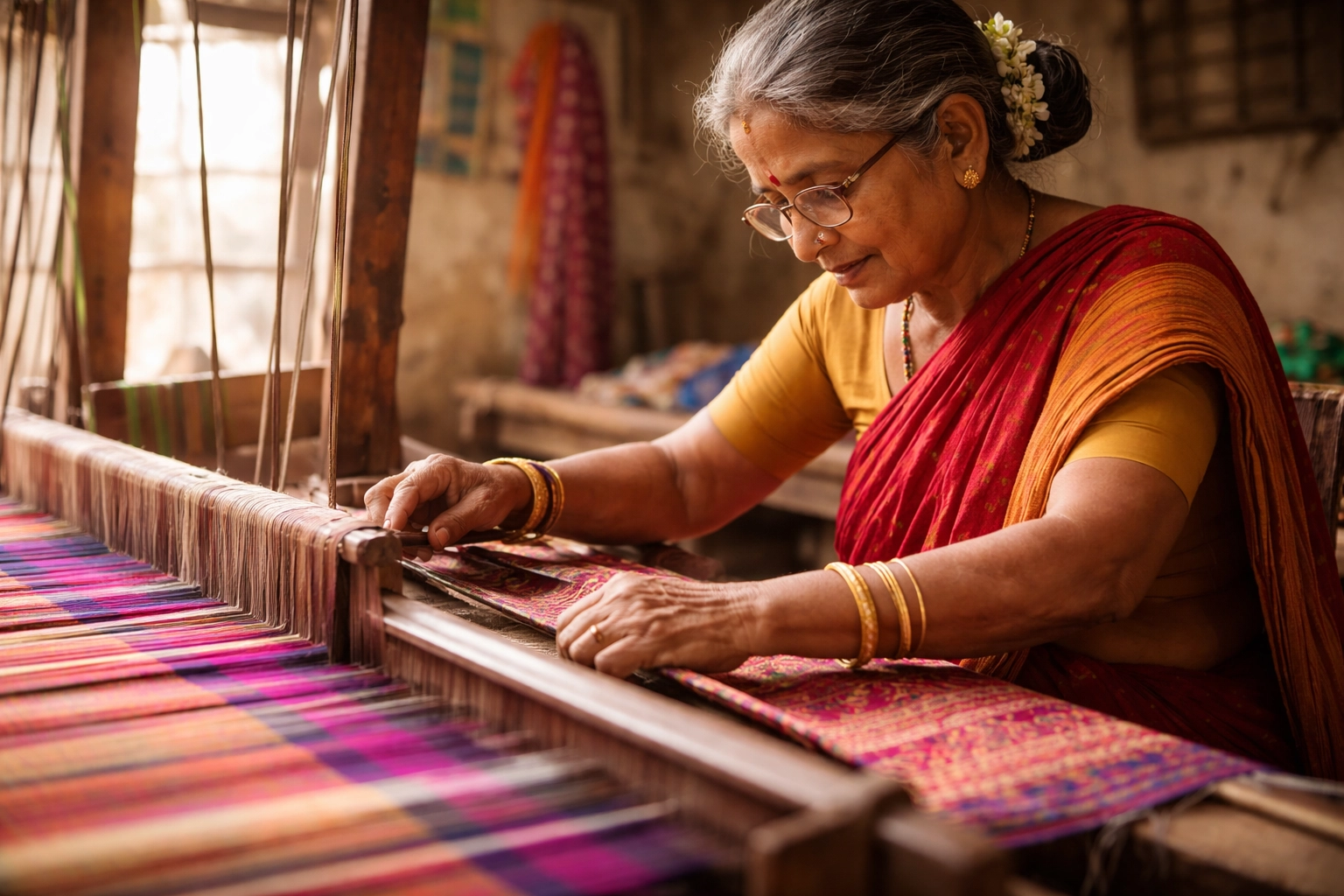
In a modest home that doubles as a workspace, the steady rhythm of a handloom fills the afternoon air. The weaver’s hands move with quiet precision, guided by patterns passed down through generations. For years, this skill struggled to compete with mass-produced textiles. Orders were irregular, incomes uncertain, and younger family members wondered whether the craft had a future at all.
Today, that question sounds different.
Across India, traditional artisans, weavers, potters, metal workers, bamboo craftsmen, embroidery artists and tribal painters are finding new pathways to sustain and grow their livelihoods. The revival is not about nostalgia; it is about adaptation.
Design institutes, social enterprises and cooperative societies are helping artisans refine product lines to suit contemporary tastes while preserving core techniques. A traditional weave may now appear in modern home furnishings. Tribal art once confined to local markets might find buyers in cities through curated exhibitions and online platforms. Potters are experimenting with new forms of utility ware while retaining traditional firing methods.
Women’s self-help groups are playing a crucial role in this transformation. By organising into collectives, artisans gain bargaining power for raw materials, shared access to tools, and the ability to fulfil larger orders. Financial literacy training and access to microcredit help families invest in their own enterprises rather than relying solely on middlemen.
Digital connectivity has opened further possibilities. Younger members of artisan families often manage social media pages, online catalogues and direct customer communication. What was once a local craft now reaches buyers across regions, sometimes even internationally, without losing its identity.
Importantly, this revival strengthens more than incomes. It reinforces cultural confidence. When a craft regains value, the knowledge associated with it becomes worth transmitting. Younger generations who once saw tradition as a burden begin to view it as an asset, a skill set that can coexist with modern education and aspirations.
Government initiatives supporting handloom, handicrafts and rural enterprises, along with exhibitions and craft fairs, provide additional platforms for visibility. Yet the true engine of change lies in the artisans’ own willingness to innovate within tradition to adjust colours, forms and uses while keeping the soul of their work intact.
These stories remind us that development does not always mean replacing the old with the new. Sometimes it means reimagining the old so it thrives in a new context. In villages and small towns across India, traditional skills are not fading quietly into memory. They are weaving themselves into the future, thread by resilient thread.
Subscribe Deshwale on YouTube
