




By: Hiren Gandhi
Speculation around former US President Donald Trump imposing tariffs as high as 500 percent on Indian goods has once again stirred debate in global trade circles. However, trade analysts say the remarks should be seen not as an immediate threat, but as part of Washington’s broader strategy of applying “strategic pressure” to influence negotiations with India.
Trump has repeatedly raised concerns over what he calls a trade imbalance between the United States and India, arguing that India exports more to the US than it imports. Using this argument, pressure has been built on key Indian sectors including steel, pharmaceuticals, textiles, agriculture and IT services.
According to trade experts, tariffs under Trump’s approach function less as an economic correction tool and more as a political instrument. Similar tactics were earlier used against China, Mexico and the European Union, where sharp statements and media-driven pressure were employed to weaken the opposing side’s negotiating position.
The “Buy American” policy continues to be another pressure point. The policy has direct implications for H-1B visas, Indian IT companies and service exports. Analysts note that such measures are driven largely by domestic political considerations in the US rather than pure trade logic.
On the much-discussed 500 percent tariff figure, experts caution against overreaction. They say the likelihood of an immediate tariff at that level is low. A more realistic scenario, if tensions rise, would involve tariffs in the range of 25 to 50 percent, applied selectively and in phases. The higher figure is largely viewed as a signaling tactic meant to create uncertainty and bargaining leverage.
Despite the noise, the Indian government has not issued any sharp public response. Observers say this reflects India’s improved position in global trade, supported by a large domestic market and alternative trade partners such as the European Union, the Middle East, Russia and Africa. India also retains options such as approaching the WTO and imposing reciprocal tariffs if required.
Trade experts describe the current situation not as a trade war but as a strategic contest, where both sides are carefully calculating their next moves. Rather than immediate confrontation, the focus remains on long-term negotiation and positioning.
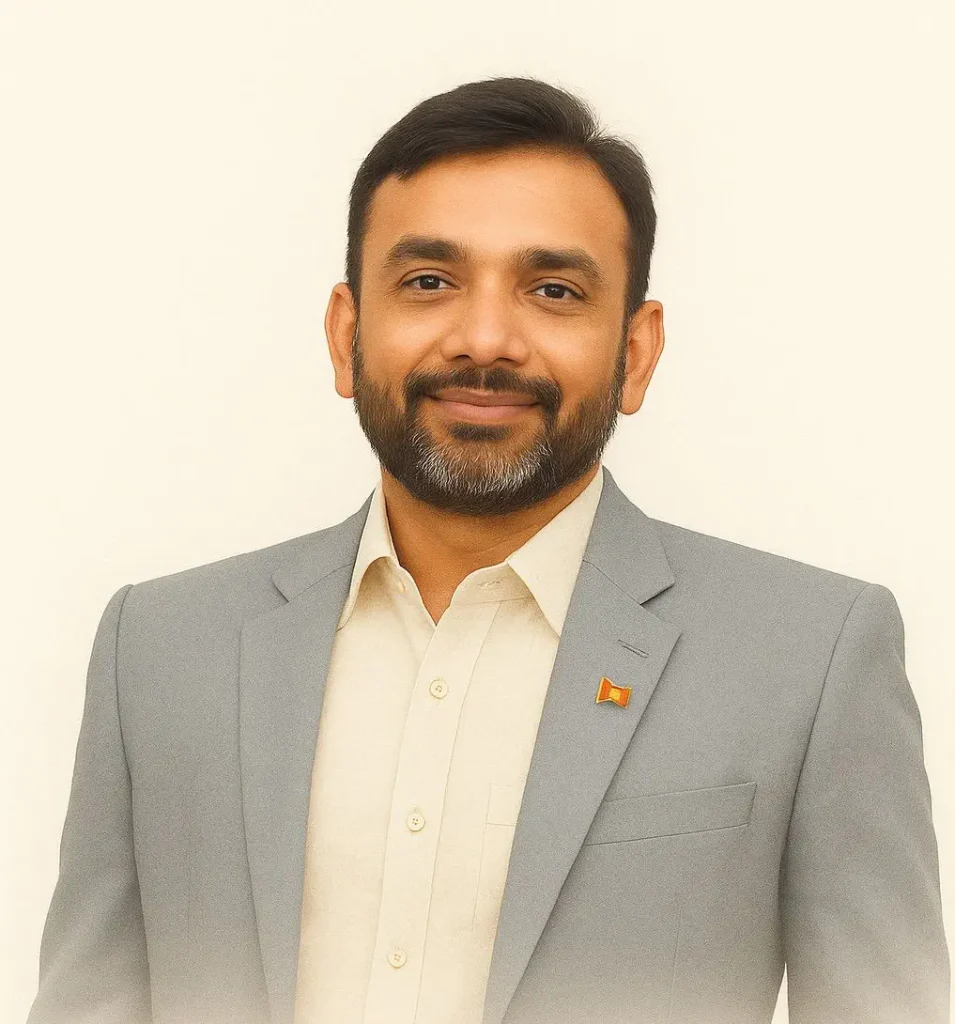
Secretary – InGlobal Business Foundation (IBF)
Director – ReNis Agro International LLP, Ahmedabad, India
Subscribe Deshwale on YouTube
