 Deshwale
Trump Mobile: A Golden Venture in a Contested Arena
In brief · AI summary Trump Mobile launched on June 16, 2025, as a Mobile Virtual Network Operator that uses the 5G networks of AT&T, Verizon, and T-Mobile, offering a $499 gold T1 phone and a $47.45 monthly "47 Plan." The T1 Phone is set for release in August 2025, but the Trump Organization neither designs nor manufactures it, and experts doubt the "Made in America" claim. Critics question the venture's ethics, while its success remains untested and depends largely on Trump's loyal base.
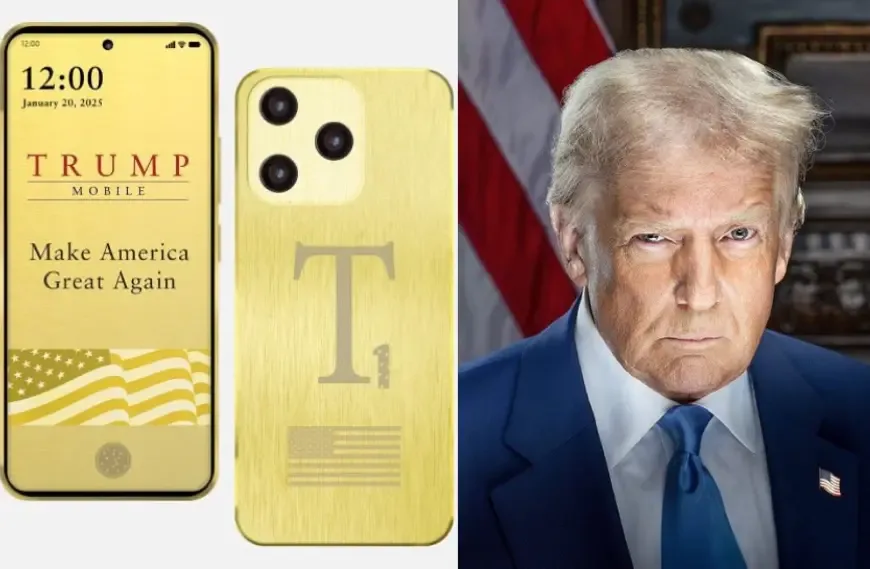
Can a president wield power and profit simultaneously? Does a brand eclipse governance? Beneath Manhattan’s skyline, where ambition meets audacity, Trump Mobile emerged on June 16, 2025. Announced at Trump Tower, this venture marries Donald Trump’s name to a $499 gold smartphone and a $47.45 monthly wireless plan. The launch, timed to mark a decade since Trump’s 2016 campaign, stirs questions of ethics and ambition. Its gleam promises innovation, yet its roots lie in a licensing deal, not a factory. As America’s telecom giants loom, Trump Mobile dares to challenge, its golden T1 phone a symbol of defiance. “Trump’s genius lies in turning his name into gold,” remarked entrepreneur Mark Cuban in 2016. Yet, in a nation divided, can this venture unite or merely polarise?
Trump Mobile is no ordinary enterprise. It operates as a Mobile Virtual Network Operator, piggybacking on AT&T, Verizon, and T-Mobile’s 5G networks. The “47 Plan,” priced at $47.45, nods to Trump’s 45th and 47th presidencies. It offers unlimited talk, text, and data, throttled after 20GB, alongside telemedicine, roadside assistance, and free calls to 100 countries. The T1 Phone, set for release in August 2025, boasts a 6.8-inch AMOLED display, 50MP camera, and Android 15. Its gold hue, etched with an American flag, screams patriotism. Donald Trump Jr. heralded it as “a game-changer for real Americans.” Yet, the Trump Organization neither designs nor manufactures it. T1 Mobile LLC, a Florida-registered entity, licenses the Trump name, its ownership veiled in mystery.
The venture’s “Made in America” claim sparks scepticism. Eric Trump, on The Benny Show, hedged that “eventually” phones will be U.S.-built. Experts scoff at the timeline. “It’s virtually impossible to manufacture smartphones domestically by August,” said Professor Tinglong Dai of Johns Hopkins. The U.S. lacks the high-tech supply chain needed. Analyst Leo Gebbie suggests assembly with imported parts as a workaround. Trump’s push for domestic production, including a threatened 25% tariff on non-U.S.-made iPhones, adds irony. Apple’s Tim Cook faces pressure, yet Trump Mobile’s own phones may rely on foreign components. This gap between rhetoric and reality fuels doubt, even as the brand courts loyalists.
Trump’s business legacy is a tapestry of triumphs and controversies. From hotels to steaks, his name has adorned ventures for decades. “He sells dreams, not just products,” observed branding expert Laura Ries in 2017. Since entering politics, his brand’s value soared. Forbes pegged his 2025 net worth at $5.3 billion, half from Truth Social’s parent company. Last year, Trump earned $600 million from bibles, sneakers, and watches. Trump Mobile joins this lineage, targeting conservative consumers. Its St. Louis call centre and military discounts resonate with “America First” values. Yet, critics like Meghan Faulkner of Citizens for Ethics decry the ethics. With Trump’s FCC regulating telecoms, conflicts loom. Will customers seek influence through subscriptions?
The Indian-American diaspora offers a curious lens. Over 4 million strong, this community thrives in tech and telecom. Indian entrepreneurs in Silicon Valley, like Sanjay Jha, former Motorola CEO, reshaped mobile markets. Could Trump Mobile appeal here? Its high price—$47.45 versus Mint Mobile’s $30—may deter cost-conscious consumers. Yet, its patriotic pitch might echo with some Indian-Americans aligned with Trump’s politics. India’s own telecom giants, like Reliance Jio, disrupted markets with low-cost plans. Trump Mobile’s premium branding contrasts sharply. If it courts this diaspora, it must navigate cultural nuances, balancing aspiration with affordability, a challenge Trump’s brand has rarely faced.
The market is a coliseum of giants. AT&T, Verizon, and T-Mobile dominate, serving millions. Smaller MVNOs, like Mint Mobile, sold for $1.35 billion in 2023, boast niche appeal. Trump Mobile’s $47.45 plan, pricier than Visible’s $25, bets on brand loyalty. Social media buzz on X reflects division. Some cheer the T1 Phone’s bold design; others mock its cost and ethics. “It’s just branding, not innovation,” posted one user. The venture’s success hinges on Trump’s base, estimated at 74 million voters in 2024. Yet, scaling beyond this risks dilution. The Federal Communications Commission reports MVNOs rarely exceed 10 million subscribers, a ceiling Trump Mobile must shatter.
Trump Mobile’s launch is a mirror of America’s soul. It reflects ambition, division, and the allure of a name. “Trump’s brand is a movement,” said political strategist Roger Stone in 2020. As missiles streak Middle Eastern skies, Tehran’s defiance parallels Trump’s audacity. Both challenge giants, their flames unquenched. Yet, ethical shadows linger. Will Trump Mobile redefine telecom or merely cash in? Its gold phone gleams, but its promise is untested. If it falters, it risks joining Trump University’s ashes. If it soars, it could reshape markets, a testament to a name that divides yet endures.
This venture is more than a phone. It is a gamble on loyalty, a test of ethics. From Manhattan’s towers to Indian-American homes, it seeks to conquer. Its past is Trump’s brand, its present a bold launch, its future unwritten. As America watches, Trump Mobile strides into battle. No tariff can dim its ambition. No critic can silence its call. It will rise or fall, a golden beacon in a contested arena, its story a saga for ages.