



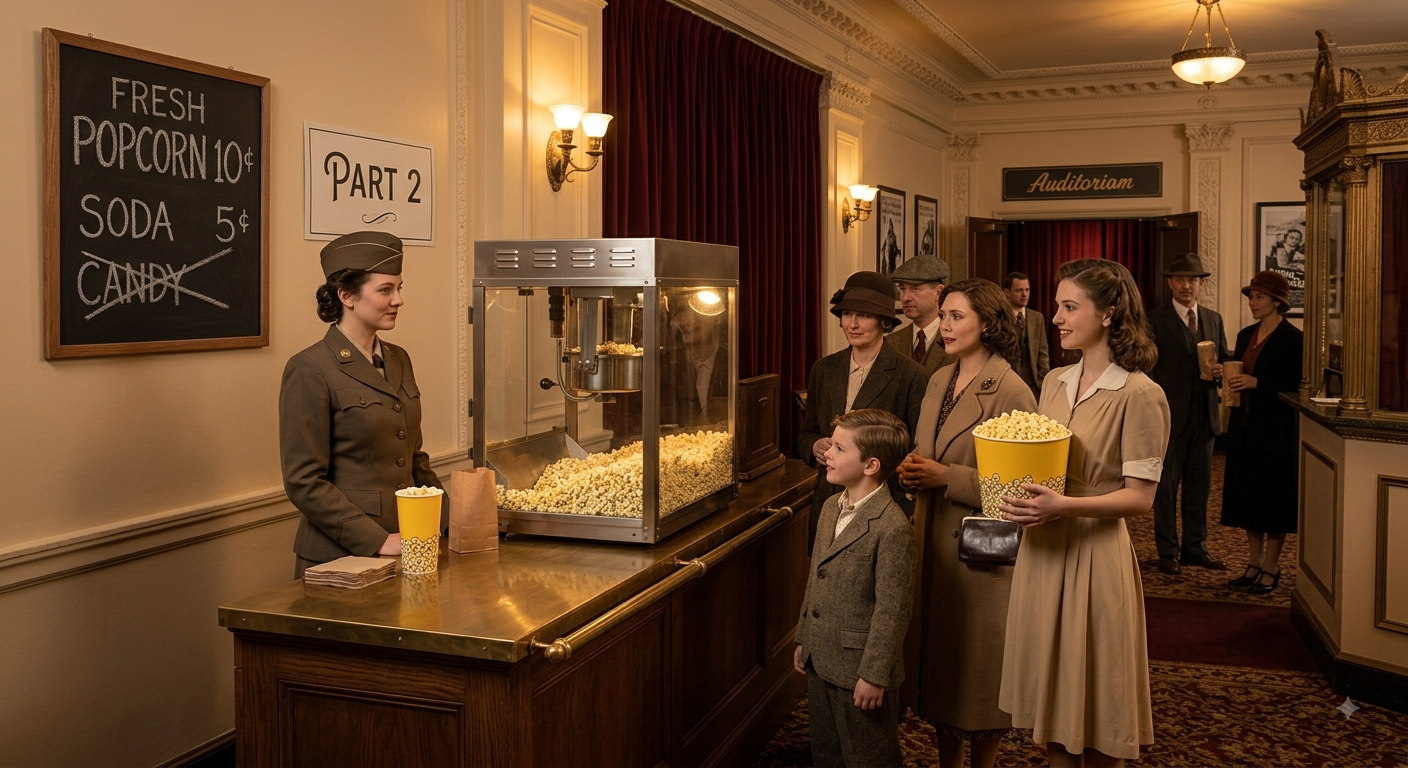
A snack that theatres once rejected eventually became one of their most profitable products and one of the strongest symbols of moviegoing.
The Great Depression changed the relationship between popcorn and cinema.
Theatre owners realised that selling food could bring in additional money from customers who were already inside the building.
Popcorn was particularly attractive because it was cheap to produce, easy to prepare and simple to serve.
Cinemas Finally Brought Popcorn Inside
As demand grew, theatres began allowing popcorn vendors into their buildings.
Some initially rented space to outside sellers. Eventually, many theatre owners decided to operate their own concession stands.
This changed the cinema experience.
Popcorn was no longer something people bought outside before a film.
It became part of the movie itself.
The transition from silent films to sound films also helped. With dialogue, music and other sounds filling the auditorium, the occasional crunch of popcorn became less noticeable.
Cinema was slowly becoming an experience that included both watching and eating.
World War II Gave Popcorn Another Boost
The Second World War created another opportunity for popcorn.
Sugar became scarce and was rationed in the United States. This affected the production and availability of many sweets and confectionery products.
Popcorn did not depend on sugar.
As a result, it became an even more attractive cinema snack.
By the mid-1940s, popcorn had become deeply connected with moviegoing in the United States.
A powerful habit had formed.
People expected popcorn at the cinema, and cinemas expected customers to buy it.
Why Did Popcorn Win?
Several simple qualities helped popcorn become the perfect cinema snack.
It was inexpensive.
It could be prepared quickly.
It was easy to carry.
It did not require plates or cutlery.
It could be eaten with one hand.
And, perhaps most importantly, its smell attracted customers.
The snack was almost designed for the cinema business.
A theatre already had the audience. It simply needed to offer them something inexpensive to eat while they watched the film.
Cinema Helped Change Popcorn Itself
The relationship worked both ways.
Popcorn became part of cinema culture, but cinema also influenced what consumers expected from popcorn.
Yellow popcorn became particularly associated with theatres because of its appearance and ability to expand well.
Flavourings, butter-style toppings and large tubs further shaped the modern cinema popcorn experience.
The snack was no longer simply popped corn.
It had become a product designed around the moviegoing ritual.
Popcorn Became Part of the Experience
Theatres soon learned that they could sell more than just films.
They could sell the entire experience.
Bright concession counters, the sound of popcorn popping and the smell filling the lobby all became part of the ritual.
Cinema advertisements also encouraged audiences to buy refreshments.
Over time, popcorn stopped being just something people ate during a film.
It became something people expected when they went to see one.
Then Popcorn Entered Our Homes
Television changed the entertainment industry, but it did not destroy the popcorn tradition.
Instead, popcorn followed people home.
Products such as Jiffy Pop made preparation easier, while microwave ovens later made popcorn even more convenient.
The connection gradually changed.
It was no longer simply:
Cinema = popcorn.
It became:
Movie = popcorn.
People began eating it while watching films at home, streaming programmes and even watching sports.
The cinema had helped create a habit that could exist almost anywhere.
Why Is Cinema Popcorn So Expensive?
There is an amusing irony here.
Popcorn is still relatively inexpensive to produce, yet cinema customers often pay a surprisingly high price for it.
The reason is not simply the cost of the kernels.
Cinemas have to pay for staff, equipment, packaging, electricity, rent, wastage and other operating expenses.
However, concessions remain an important part of the cinema business because they provide an additional source of revenue from people who have already bought tickets.
That makes popcorn particularly valuable.
From Snack to Collectible
Popcorn has now entered another stage.
Cinema chains sometimes release special popcorn containers linked to major films. These can become collectibles and even generate attention online.
The humble snack has therefore travelled a remarkable path:
Corn became popcorn.
Popcorn became a street snack.
The street snack entered cinemas.
The cinema turned it into a ritual.
And the ritual eventually became merchandise.
Popcorn Is Not Every Country’s Cinema Food
There is one important point to remember.
Popcorn is strongly associated with cinema, particularly in the United States and countries influenced by American movie culture.
But it is not the only cinema snack around the world.
In India, for example, audiences may also enjoy samosas and other savoury snacks. Other countries have their own local favourites.
So popcorn is not naturally a movie food.
Cinema culture made it one.
The Real Reason Popcorn Won
Popcorn succeeded because several things came together at the right time.
It was cheap. New machines made it easy to produce. Vendors placed it close to cinemas. The Great Depression made inexpensive snacks more attractive. Theatre owners discovered the financial value of concessions. Later, marketing turned popcorn into part of the moviegoing experience.
What started as a snack sold outside theatres eventually became something people expected to find inside them.
Today, the smell of popcorn can instantly remind us of a cinema.
That is the real story behind the snack.
Cinema did not invent popcorn.
It simply turned a humble food into a cultural ritual.
And the next time you buy an expensive tub before a film, remember that those little kernels have travelled a surprisingly long journey—from ancient maize to one of the world’s most recognisable movie traditions.
Subscribe Deshwale on YouTube
