



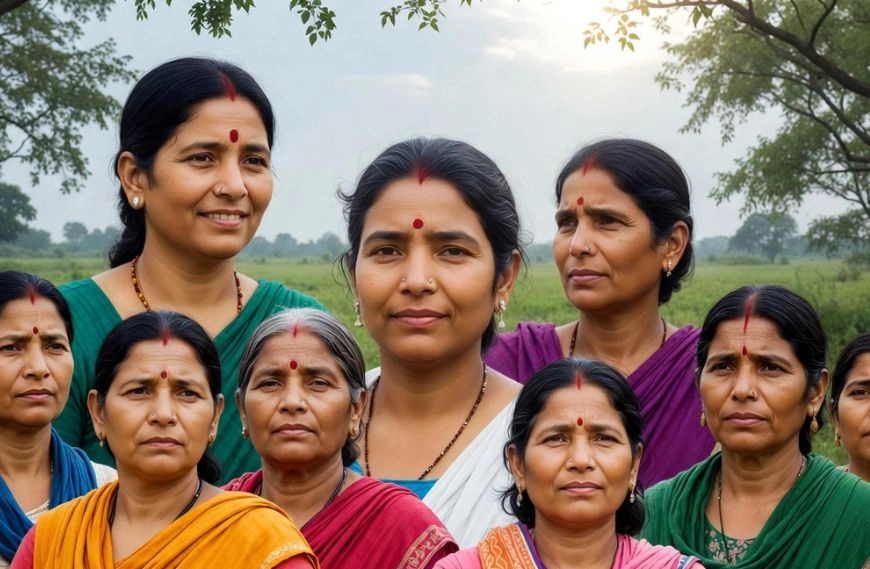
Bihar has taken steps to encourage women’s participation in politics, yet their actual representation and decision-making power remain limited. Despite 50% reservation for women in panchayat elections and 35% in government jobs, many women still face social, economic, and political barriers that prevent them from fully participating in the state’s political processes.
Over the years, the number of women holding office in Bihar has increased. Out of 8,442 village heads (mukhiya), around 5,000 are women. Women are also slowly becoming visible in district councils and municipal corporations. However, despite these gains, women continue to struggle with real influence and leadership roles, especially beyond local governance.
The upcoming Bihar Assembly elections highlight the political focus on women voters. In the first phase of polling on November 6, 2025, parties fielded candidates with promises targeting women. The Rashtriya Janata Dal (RJD) proposed schemes like the “Mai Bahin Yojana,” offering one-time financial grants and closer government postings for female employees. The Nitish Kumar-led NDA launched the Mukhyamantri Mahila Rozgar Yojana, providing ₹10,000 to millions of women to support employment and economic independence.
Voting trends show that women in Bihar are actively participating as voters. From 2000 to 2020, female voter turnout consistently rose, sometimes exceeding male turnout. Increased migration of men from Bihar to other states and abroad has also contributed to a higher proportion of women voters, giving them significant influence in elections.
Despite their voting power, women candidates still face obstacles such as social norms, lack of political networks, and limited financial resources. Many women are restricted to supporting roles in parties or local offices, without real decision-making authority. Analysts argue that political empowerment must go beyond quotas and include mentorship, leadership training, and economic support for women to thrive in politics.
Experts emphasize that empowering women in politics is not only a matter of equality but also crucial for effective governance. Women leaders bring different perspectives, focus on community issues like health, education, and social welfare, and can help make policy more inclusive. Ensuring women have meaningful participation in Bihar’s political system is essential for a stronger democracy.
Subscribe Deshwale on YouTube
