



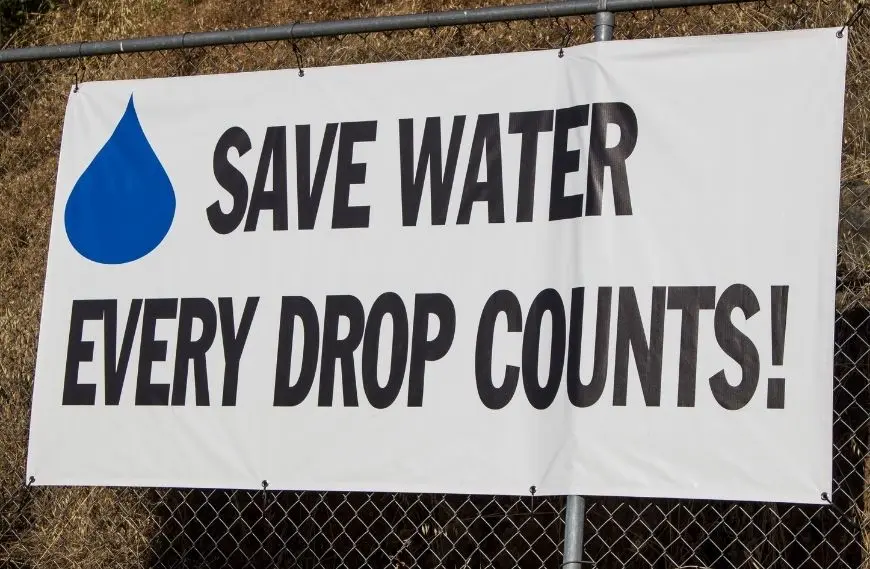
Life on Earth is unimaginable without water. Water is not just a resource; it is the foundation of existence for all living beings. Despite the immense advancements in science and technology, even reaching the Moon and Mars, the first thing humans search for on these celestial bodies is water. This proves that more valuable than gold, silver, or diamonds is water itself.
Water exists in three primary forms – ice, liquid, and gas. The human body is composed of about 60% water, with even bones containing 30% water. Similarly, around 75% of a tree is made up of water. A newborn baby’s body consists of 78% water, which gradually decreases to about 55-60% in adulthood.
Although 71% of the Earth’s surface is covered with water, only a small portion of it is usable. About 97% of the total water on Earth is saline ocean water, unsuitable for drinking. Only 3% of the water is freshwater, of which 68% is stored in glaciers and ice caps, and 30% is groundwater. This leaves an extremely limited amount of water available for daily use.
The rate of water consumption varies significantly across the world. About 70% of the world’s water is used for agriculture, 22% for industrial purposes, and only 8% for domestic consumption. However, water usage per person differs drastically across countries:
- Developed countries like the USA have the highest per capita water consumption.
- Turkmenistan is known for its extreme water conservation and careful usage.
- Countries like the Democratic Republic of Congo, Benin, and the Maldives have the lowest per capita water usage.
Major Causes of Water Scarcity
- Climate Change – Rising temperatures are causing glaciers to melt, disrupting the water cycle.
- Industrialization and Urbanization – Increased pollution is contaminating water sources.
- Groundwater Depletion – Excessive extraction of groundwater is causing severe droughts in many regions.
- Unregulated Agricultural Practices – High water-consuming crops are worsening the crisis.
Rajasthan: A Case Study of Groundwater Crisis
In states like Rajasthan, more groundwater is extracted than is replenished by rainfall. For every unit of water that enters the ground, 1.5 times that amount is drawn out. This imbalance could lead to a severe water crisis in the near future if proper conservation methods are not adopted.
Unique Characteristics of Ocean Water
Ocean water is not just rich in salt but also contains millions of bacteria, viruses, and other microorganisms. About 3.75 liters of seawater contains roughly one cup of salt. Interestingly, the saltiest water in the world is found in Don Juan Pond, Antarctica.
Measures for Water Conservation
- Rainwater Harvesting – Collecting and storing rainwater can help replenish groundwater levels.
- Water Recycling – Treating and reusing industrial and domestic wastewater is crucial.
- Efficient Agricultural Practices – Using drip irrigation and cultivating drought-resistant crops can save significant amounts of water.
- Public Awareness – Educating people about the importance of water conservation is essential.
If we do not take effective steps toward water conservation, future generations will face severe consequences. Scientists believe that meteors falling from the sky and comets around us also deposit water on Earth. Scientists think that comets are made of solid water.
World Water Day should not be observed as just a one-day event; it should be integrated into our daily lives. Changing our mindset and valuing every drop of water is crucial for a sustainable future.
- Even after reaching the Moon and Mars, humans first search for water because life is impossible without it. Water is more valuable than gold and diamonds.
- Water exists in three forms – ice, liquid, and gas.
- The human body is 60% water, with bones containing 30%. A newborn has 78% water, which reduces to 55-60% in adults.
- 71% of Earth is covered with water, but only 3% is freshwater. Of this, 68% is stored in glaciers and 30% as groundwater.
- 70% of global water usage is for agriculture, 22% for industries, and only 8% for domestic use.
- Only 0.001% of water exists as atmospheric vapor, yet it drives rainfall.
- 3.75 liters of seawater contains one cup of salt and millions of bacteria and viruses.
- The world’s saltiest water is in Don Juan Pond, Antarctica.
- Comets are primarily made of ice and may have contributed to Earth’s water supply.
- A human can survive a month without food but only a week without water.
- Turkmenistan has utilized all of its water resources. The per capita water usage there is significantly high.
- DR Congo, Benin, and the Maldives have the lowest per capita water usage.
- Causes of the water crisis – climate change, industrialization, urbanization, groundwater depletion, and unplanned agriculture.
- In Rajasthan, groundwater extraction is 1.5 times higher than rainfall recharge, worsening the water crisis.
