



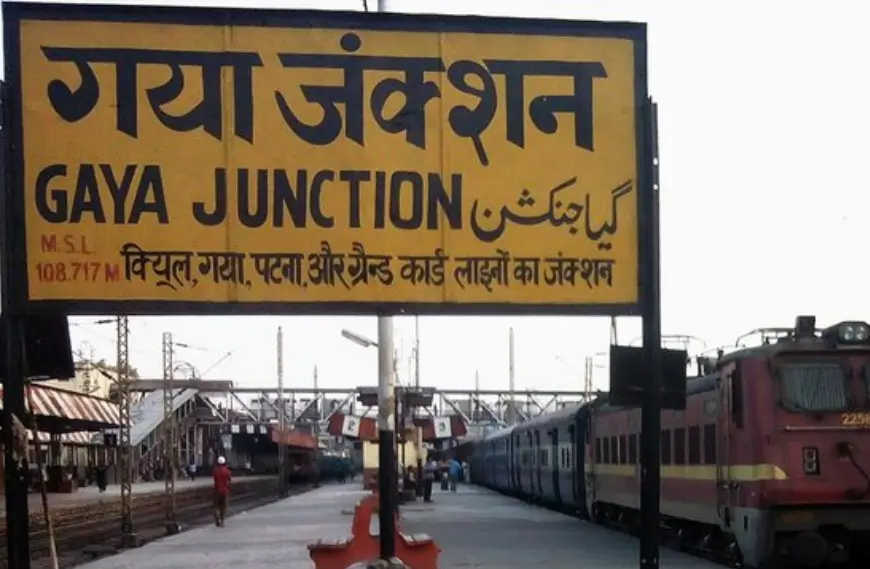
The Bihar government has officially renamed the town of Gaya as Gaya Ji. The decision was approved during a state cabinet meeting chaired by Chief Minister Nitish Kumar. This change aims to reflect the religious and cultural sentiments attached to the town.Gaya is one of the holiest cities in Hinduism and Buddhism. It is widely known for Pind Daan, a Hindu ritual performed to honour ancestors.
Why the name change?
Locals and spiritual groups have referred to the town as Gaya Ji for generations. The suffix “Ji” is often used to show respect in Indian languages. The cabinet formalised this practice by making the change official.Cabinet Secretary S Siddharth confirmed the development on Thursday, 16 May. He said the new name will now be used in all official documents and communication.
Religious and cultural importance
Gaya Ji is located around 100 km from Patna. It is home to the Vishnupad Temple and the nearby Bodh Gaya Bodh Gaya is where Gautama Buddha attained enlightenment.The region attracts lakhs of domestic and international pilgrims every year. Many rituals and festivals are linked to Gaya Ji’s spiritual legacy.The annual Pitru Paksha Mela sees devotees from across India visiting the town.
They perform sacred rites for their ancestors near the Falgu River.
Not the first renaming in Bihar
This is not the first city to be renamed in Bihar. In the past, Bakhtiyarpur Junction was renamed as Islampur Junction. Deedarganj was also renamed as Kumhrar Halt.
These changes reflect the government’s efforts to align with local identity and heritage. Supporters say the new names bring emotional connection and historical recognition.
With the cabinet’s decision, administrative departments will now issue revised notifications. Maps, signage, official records, and public communications will adopt the name Gaya Ji. Tourism boards and transport services are also expected to update their documents soon.
Political reactions?
So far, there has been limited political debate on the issue. The renaming has received a mixed response online. Some called it a much-needed correction. Others questioned the priority of symbolic actions over real development. But for many locals and spiritual leaders, the move brings a long-awaited recognition. To them, Gaya was always Gaya Ji.
